
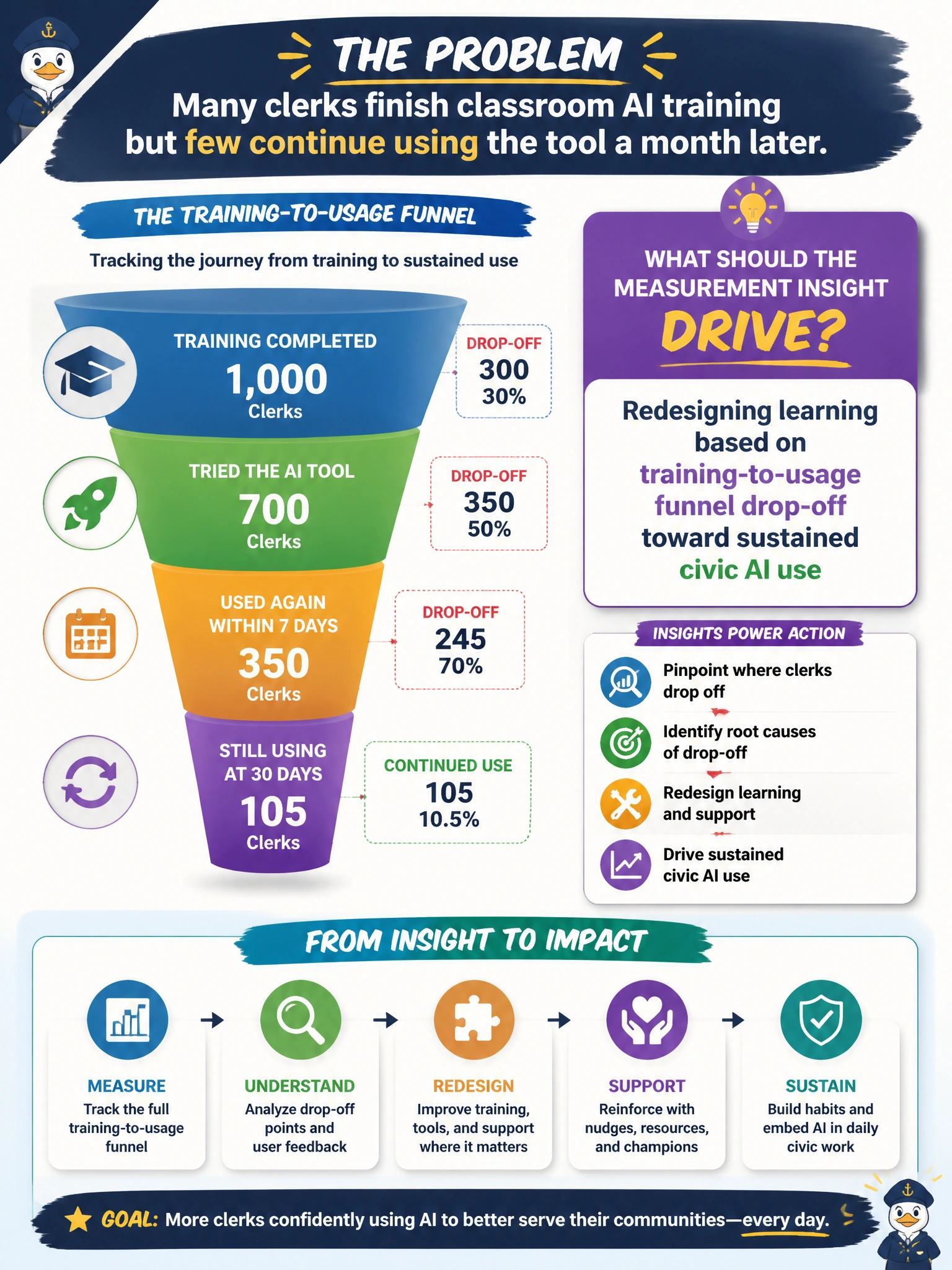
Many clerks finish classroom AI training but few continue using the tool a month later. What should the measurement insight drive?
Select an answer to reveal the explanation.
Short Explanation
A packed classroom with empty tool logs is a leaky funnel. Follow who actually keeps using the assistant, then redesign learning so the skills stick on the job.
Full Explanation
Training-to-usage funnels reveal whether enablement converts into sustained work practice. When many clerks finish classroom AI training but few continue using the tool a month later, measurement should drive redesign of learning—more practice, coaching, workflow integration, job aids, and supervisor reinforcement—rather than celebrating seat fill. Declaring training successful solely because classroom seats were filled mistakes attendance for transfer of learning into municipal casework. Stopping all measurement of post-training usage to avoid awkward findings is anti-learning and hides program failure from leadership. Blaming staff motivation exclusively without reviewing learning design ignores common causes: no time on the job to practice, tools not embedded in the case system, unclear policy on AI use, or fear without safe sandbox support. Exam caveat: funnel drop-off after training points to learning and integration redesign, not only individual willpower. Operational check: track completion → first use → 30-day sustained use, interview drop-offs, add grounded practicals and office hours, embed the assistant in daily workflows, and revise curricula when conversion lags despite high attendance.