
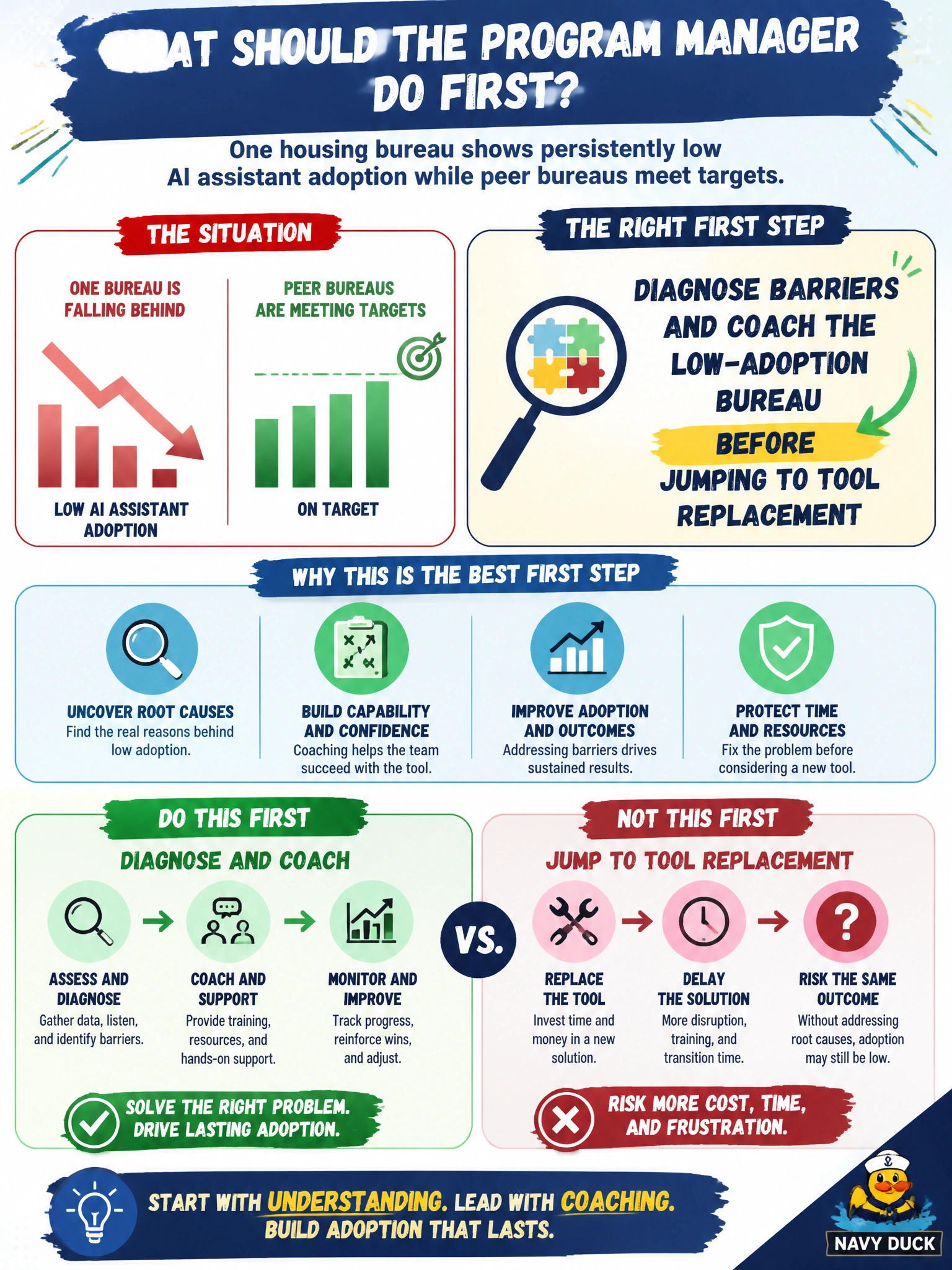
One housing bureau shows persistently low AI assistant adoption while peer bureaus meet targets. What should the program manager do first?
Select an answer to reveal the explanation.
Short Explanation
One quiet bureau isn’t always a broken product—sometimes it’s a missing coach, unclear workflow, or local fear. Diagnose and help before you rip out the tool everyone else is using.
Full Explanation
Uneven municipal AI adoption—one housing bureau persistently low while peers meet targets—should first trigger diagnosis and enablement coaching, not wholesale tool replacement. Local barriers often include unclear workflows, supervisor norms, fear of errors, access issues, or case-mix differences that do not prove the enterprise product is unfit everywhere. Diagnosing and coaching preserves portfolio capital, respects peer success, and targets the actual friction before spending on replacement. Immediately replacing the enterprise tool based on one bureau’s low usage overfits to a single site and creates fragmentation other bureaus must then absorb. Publicly shaming the bureau in a citywide newsletter to force compliance damages psychological safety and rarely fixes root causes of non-use. Ignoring the gap because portfolio averages still look acceptable hides inequitable enablement and lets one bureau fall further behind residents they serve. Exam caveat: choose diagnose-and-coach before rip-and-replace or punitive optics when adoption is uneven. Operational check: interview the low-adoption bureau, review access logs and error fears, run targeted coaching and workflow redesign, set a time-boxed improvement plan with shared metrics, and only escalate to tool-fit reassessment if barriers prove product-related after enablement support.