
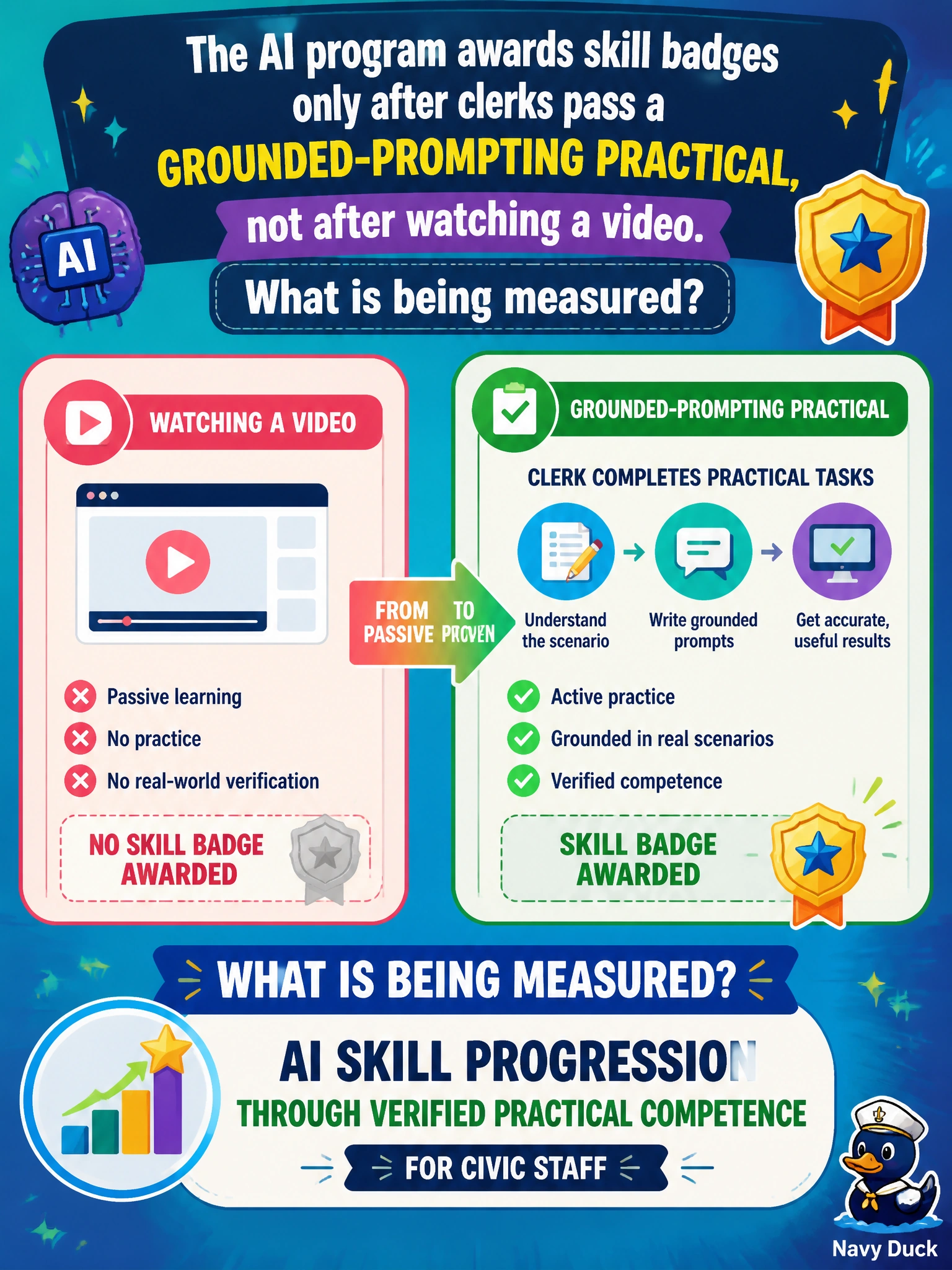
The AI program awards skill badges only after clerks pass a grounded-prompting practical, not after watching a video. What is being measured?
Select an answer to reveal the explanation.
Short Explanation
A badge for watching a video is a participation sticker. Tie badges to a hands-on grounded-prompting practical and you’re measuring real skill growth, not seat time.
Full Explanation
Skill progression in civic AI programs should evidence demonstrated capability, such as awarding badges only after clerks pass a grounded-prompting practical. That measurement design separates competence from passive exposure: staff must show they can ground prompts in authoritative sources, avoid leaking sensitive data, and follow municipal prompting standards under observation or scored tasks. Attendance at optional lunch-and-learns with no demonstrated skill measures presence, not proficiency, and can inflate enablement reports without changing behavior. Vendor marketing completion rates as a proxy for clerk competence outsource assessment to promotional content that may not match local systems, SOPs, or policy constraints. Measuring how quickly staff click through slides without answering questions rewards speed of consumption, not safe or effective practice on resident cases. Exam caveat: items contrast completion theater with competency-based markers; choose verified practical skill as the enablement quality signal. Operational check: define practical rubrics for grounded prompting, require pass thresholds before badges or expanded production access, refresh assessments when tools or policies change, track pass rates by bureau, and feed failure patterns back into coaching rather than only issuing certificates for video views.