
A city wants to know whether clerks actually use an AI drafting assistant at work. Which measurement approach best reflects meaningful adoption?
Select an answer to reveal the explanation.
Short Explanation
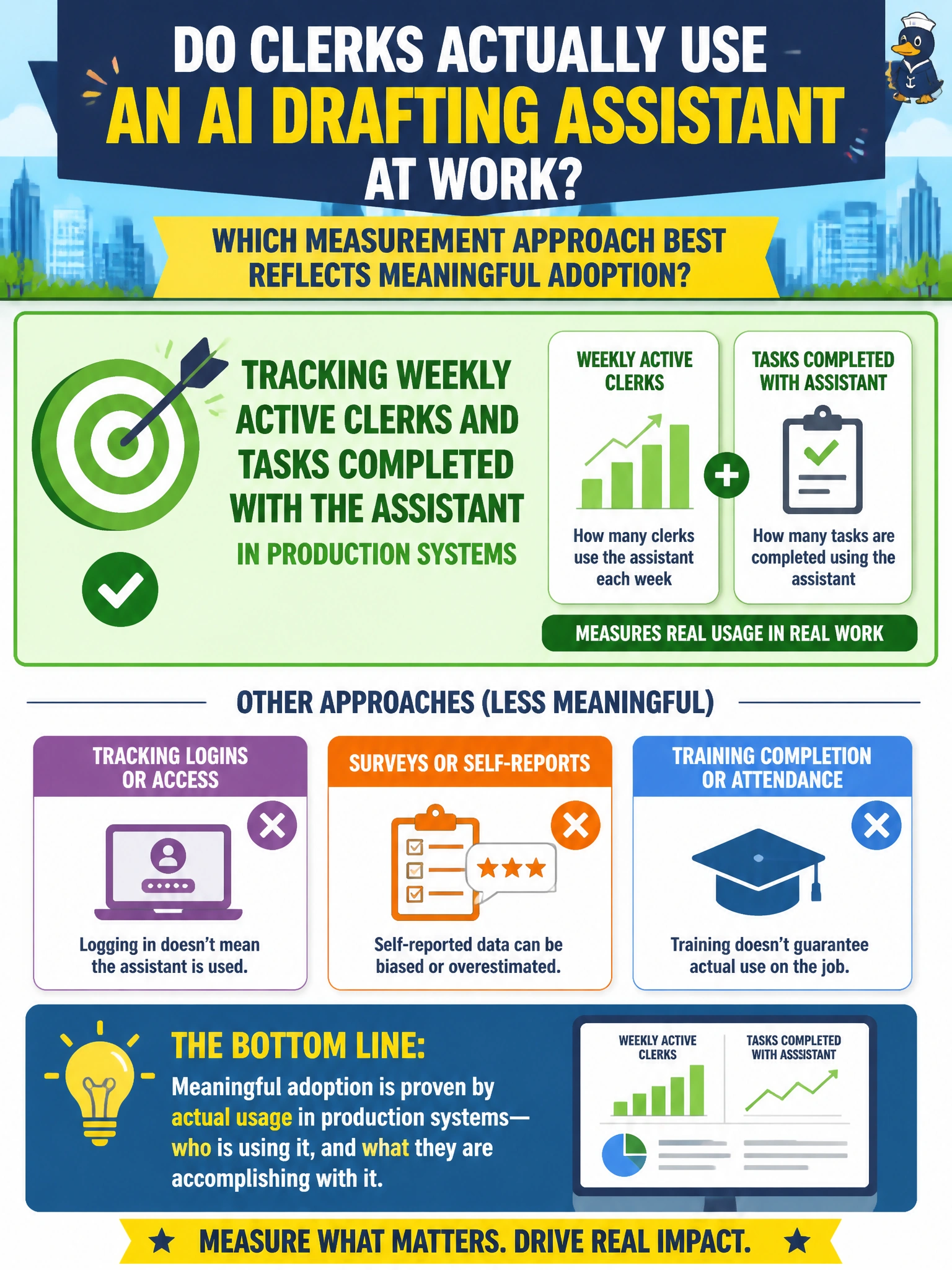
Buying licenses isn’t the same as using the wrench. Watch who actually opens the assistant each week and finishes real tasks with it—that’s adoption you can stand behind.
Full Explanation
Meaningful municipal AI adoption metrics focus on sustained use in production work: weekly active clerks and tasks completed with the assistant inside real case systems. Those measures show whether the tool changes how work gets done, not whether people noticed an announcement or received a license key. Counting only splash-page email opens measures awareness or curiosity, not adoption, and can look healthy while the assistant sits unused beside the case queue. Assuming adoption is complete because licenses were purchased for every seat confuses procurement coverage with behavioral change—shelfware is common when enablement, trust, or workflow fit are weak. Measuring success solely by the number of vendor webinars staff were invited to tracks vendor activity and calendar invites, not clerk practice on live cases. Exam caveat: distractors elevate vanity or commercial metrics; the exam answer privileges usage tied to real casework over seats, opens, and marketing events. Operational check: instrument production systems for weekly active users and completed AI-assisted tasks, segment by bureau, pair usage with quality sampling so high volume of bad drafts is not celebrated, retire seat-count as a primary success KPI, and review adoption in steering meetings with enablement actions for low-usage teams.