
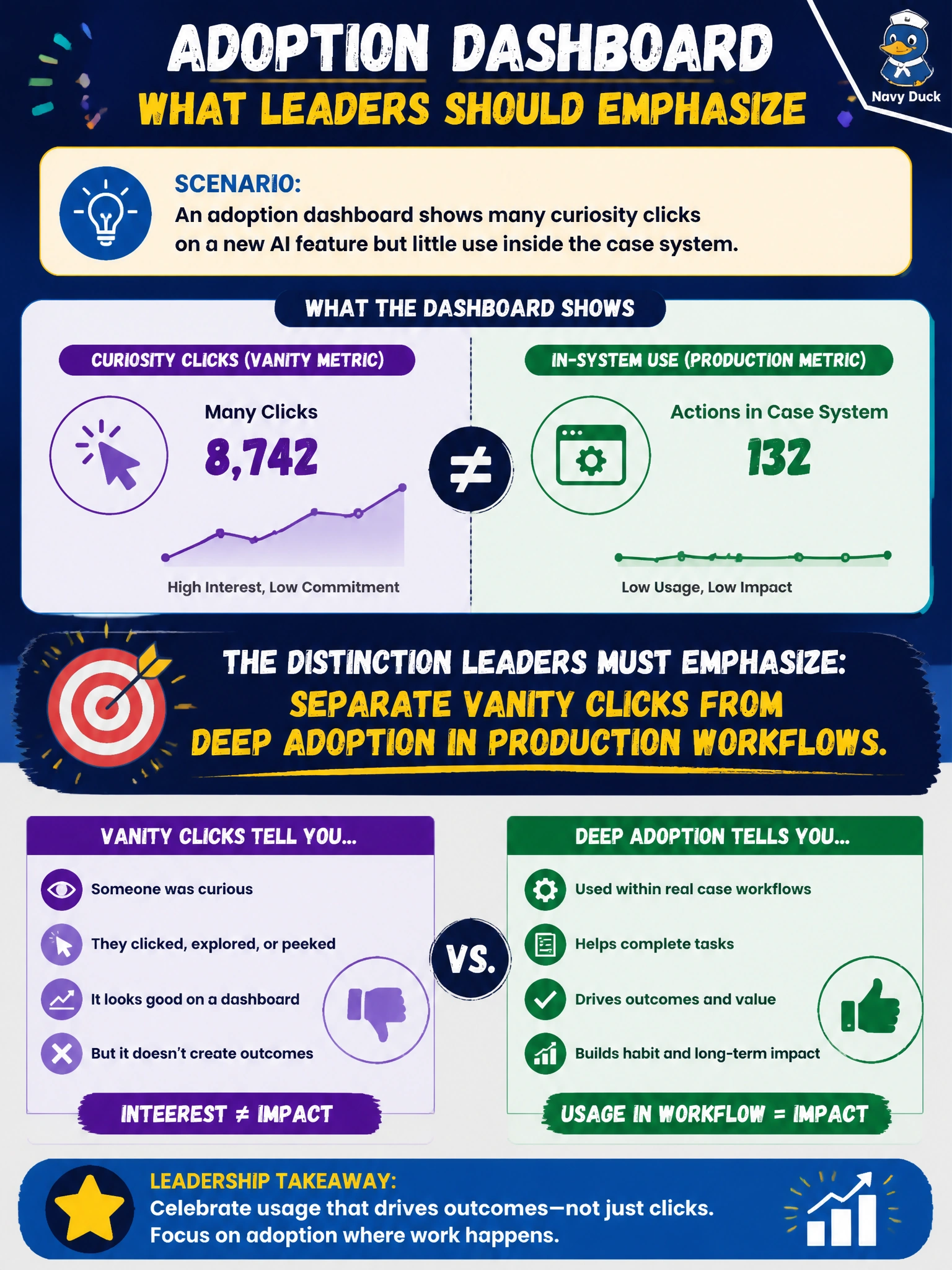
An adoption dashboard shows many curiosity clicks on a new AI feature but little use inside the case system. What distinction should leaders emphasize?
Select an answer to reveal the explanation.
Short Explanation
Curiosity clicks are window-shopping; case-system use is putting items in the cart. Keep those signals apart so you don’t confuse browsing with real adoption.
Full Explanation
Effective adoption measurement separates exploratory or vanity clicks from sustained use in production case systems. Many curiosity clicks alongside little case-system use should lead you to emphasize deep workflow adoption—not browse metrics—as the primary transformation signal. Treating clicks as proof that transformation is complete mistakes interest for embedded practice; treating them as a reliable proxy for sustained AI use overstates what the dashboard shows. Calling case-system usage irrelevant because a marketing page is popular reverses priorities for operational municipal AI. Conflating vanity metrics with production use can overstate progress, justify premature scale, or leave enablement underfunded when the tool never becomes part of daily casework. It also undermines oversight credibility when auditors or council ask what actually changed for residents and clerks. Exam caveat: stems often pair high click counts with low workflow use; distinguish vanity activity from deep adoption. Practical check: report both metrics with clear labels, set targets for case-system-assisted tasks, investigate UX, trust, or policy barriers when clicks do not convert, and do not brief council on “adoption success” using marketing analytics alone.