
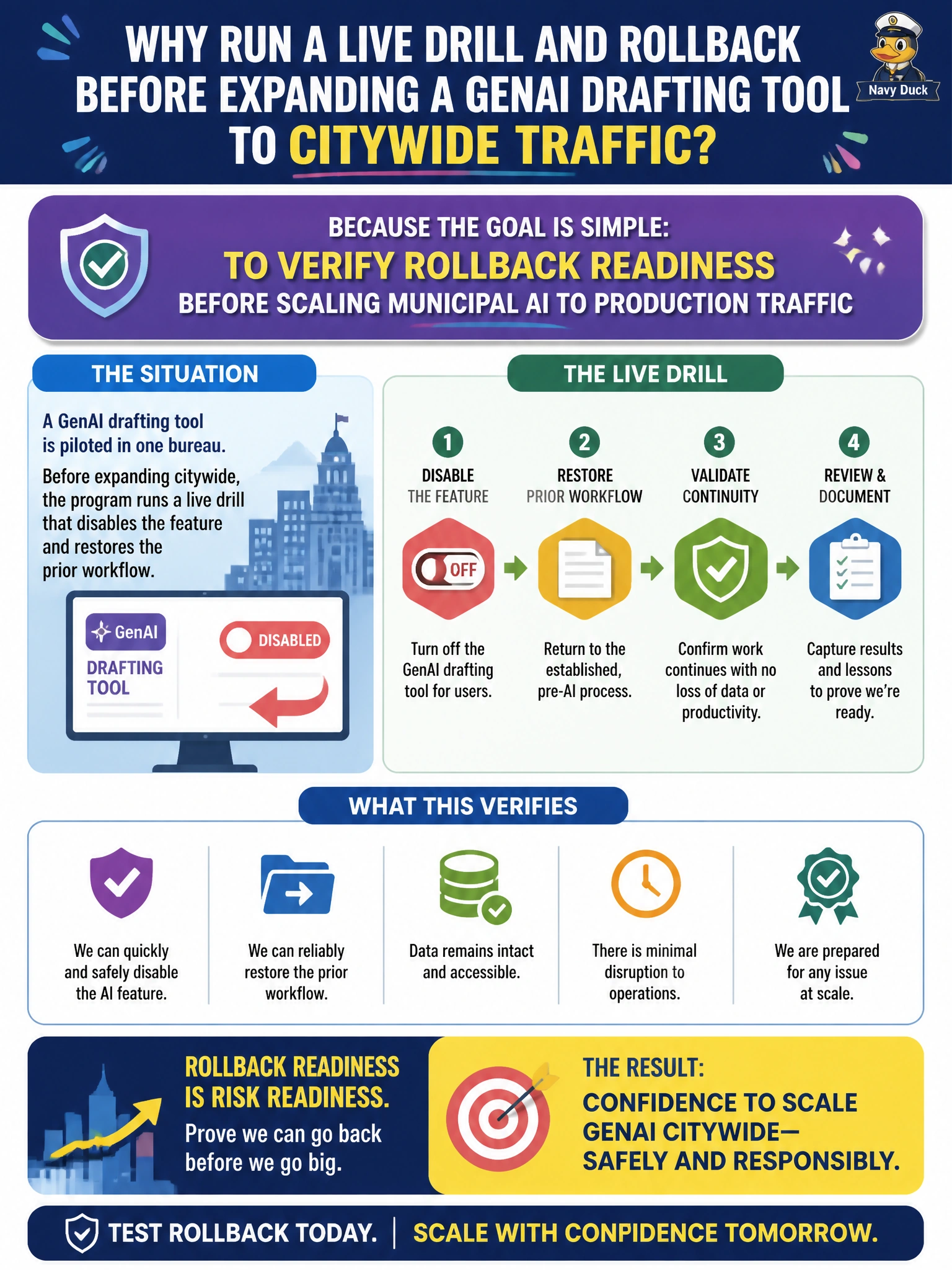
Before expanding a GenAI drafting tool from a pilot bureau to citywide traffic, the program runs a live drill that disables the feature and restores the prior workflow. Why?
Select an answer to reveal the explanation.
Short Explanation
A rollback drill is a fire extinguisher check—you want to know it works before the kitchen gets busy. Practice flipping the AI feature off and restoring the old path before you flood it with citywide traffic.
Full Explanation
Before scaling a GenAI drafting tool from a pilot bureau to citywide traffic, live drills that disable the feature and restore the prior workflow verify rollback readiness under realistic pressure. Scale-up multiplies blast radius; if quality, privacy, or compliance issues appear, the organization must flip the capability off quickly without improvising during an incident. Drills surface missing feature flags, broken communications trees, stale SOP links, and support scripts that only existed on slides. Proving rollback is unnecessary because executives liked the pilot demo substitutes admiration for resilience engineering and ignores that production mix differs from pilot cherry-picks. Replacing rollback planning with a longer marketing announcement confuses communications with technical and operational reversibility. Practicing deletion of the entire permitting system during business hours misstates rollback: the goal is selective AI-feature disablement and safe reversion to the known prior path, not reckless destruction of core municipal systems. Exam caveat: items bait “big bang confidence” or dramatic over-correction; the sound concept is verified, reversible progressive delivery for civic AI. Operational check: maintain feature flags or configuration switches, document the pre-AI workflow as the fallback, run timed drills with on-call clerks and IT, measure mean time to disable and restore, fix gaps found in the drill, and treat successful drill evidence as a hard gate before citywide expansion.