
After a permitting chatbot go-live, the city schedules two weeks of extra clerk coverage to catch AI mistakes in real time. What deployment practice is this?
Select an answer to reveal the explanation.
Short Explanation
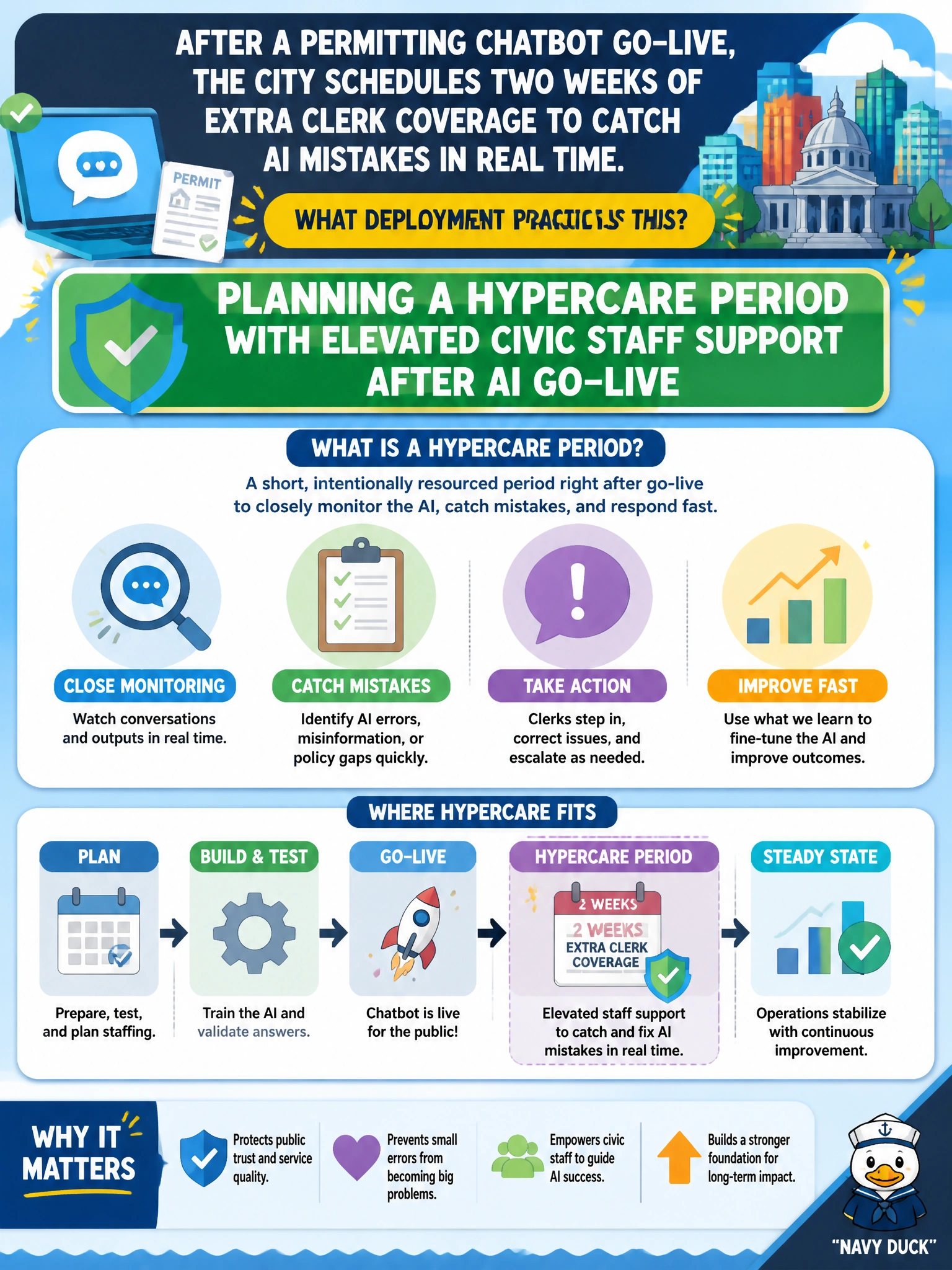
Hypercare is the seatbelt for the first weeks after go-live—extra eyes on the road while the new assistant finds its quirks. Staff up briefly so AI slips get caught before they become policy headaches.
Full Explanation
Hypercare is a planned, time-boxed surge of local support immediately after AI go-live so early defects, prompt edge cases, and process surprises are caught before they harden into resident harm or political incidents. Scheduling two weeks of extra clerk coverage after a permitting chatbot launch is that practice: elevated civic staff review escalations, correct wrong answers quickly, refine FAQs, and feed defects back to the product team while volume is still manageable. Municipal launches especially need this because vendor uptime SLAs do not equal local answer correctness, policy nuance, or bilingual edge cases. Removing all human review the moment the chatbot turns on maximizes blast radius during the highest-uncertainty window and contradicts responsible civic AI operations. Assuming vendor SLAs alone replace local error-catching capacity confuses infrastructure availability with content and decision quality—an API that responds in 200 ms can still cite obsolete fees. Delaying any staffing plan until the first major resident complaint arrives is lagging risk management; complaints are lagging indicators, and by then incorrect permits or fees may already be in motion. Exam caveat: candidates may equate “go-live” with “automation complete”; exam items reward recognizing temporary elevated human capacity as a deliberate deployment control, not a failure of the model. Operational check: staff a hypercare roster with clear hours, escalation channels, defect logging, daily triage with product/vendor, exit criteria to normal support levels, and authority to pause or tighten the assistant if defect rates exceed agreed thresholds during the surge window.