
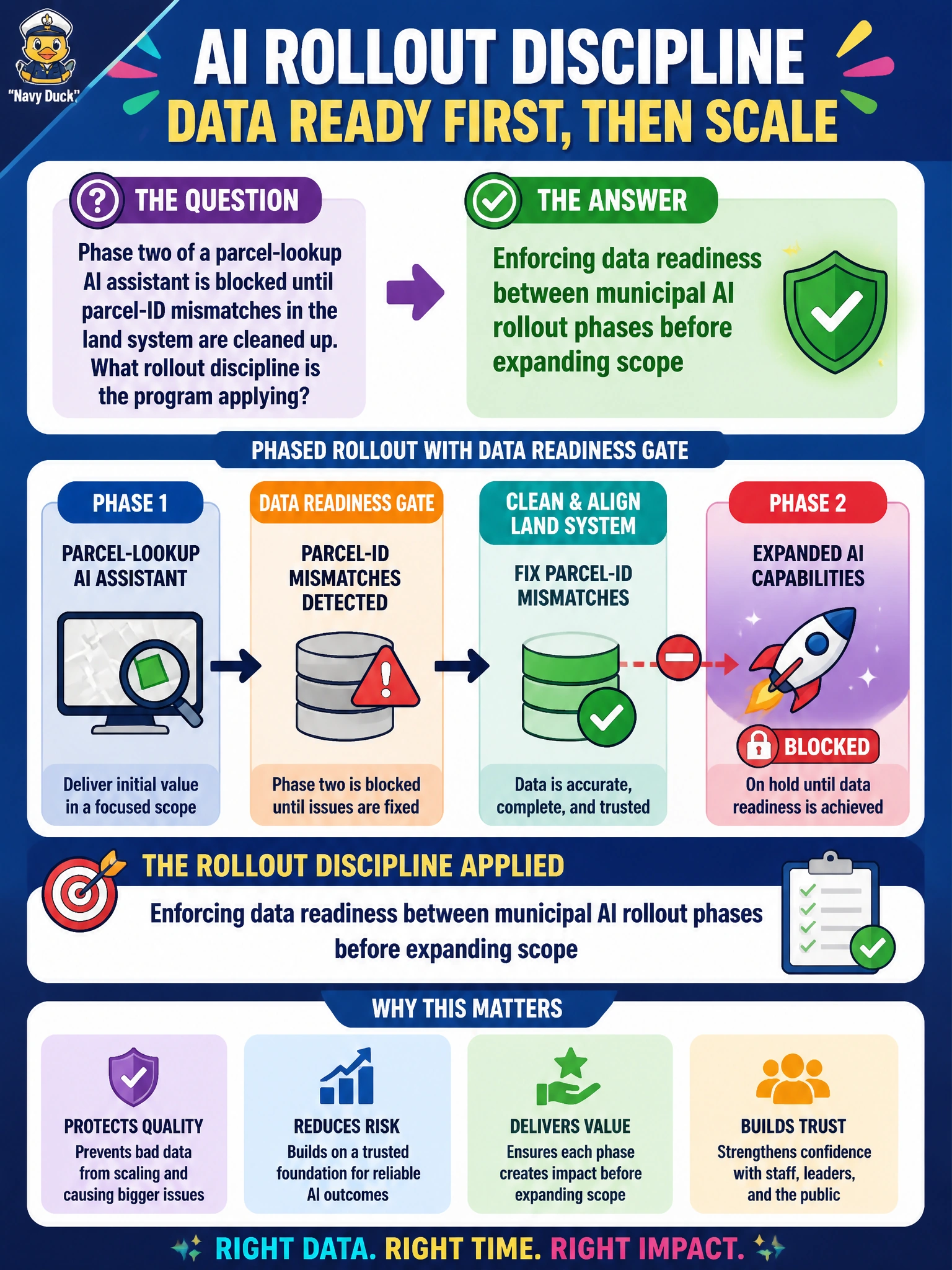
Phase two of a parcel-lookup AI assistant is blocked until parcel-ID mismatches in the land system are cleaned up. What rollout discipline is the program applying?
Select an answer to reveal the explanation.
Short Explanation
Bad parcel IDs are like wrong street signs—scaling the map just sends more people down the wrong road. Clear the data debt before phase two, or the assistant scales the mistakes.
Full Explanation
Phased municipal AI rollouts must treat data readiness as a first-class gate between phases, not a backlog item deferred until residents discover errors. Blocking phase two of a parcel-lookup assistant until parcel-ID mismatches in the land system are cleaned up is correct discipline: the assistant’s answers inherit identifier quality, so expanding scope while IDs conflict multiplies wrong parcel guidance, clerk rework, and credibility damage with property owners and assessors. Program managers enforce thresholds—match rates, null rates, crosswalk completeness—before widening traffic or adding features that depend on those keys. Expanding phase two immediately and fixing parcel IDs only if residents notice errors privatizes quality control onto the public and scales defects faster than support can absorb them. Declaring data quality out of scope because the model can guess missing IDs mistakes generative fluency for authoritative cadastral truth; civic lookup systems must resolve to governed land records, not invent identifiers. Replacing the land system mid-pilot so phase gates never apply is a scope explosion that abandons controlled learning, introduces migration risk, and usually delays safe expansion rather than enabling it. Exam caveat: distractors often romanticize model cleverness or big-bang system replacement; the tested concept is gating expansion on data readiness for identifiers the AI depends on. Operational check: publish parcel-ID data quality SLOs, run reconciliation jobs before each phase gate, sample AI answers against authoritative parcels, and refuse phase-two traffic until mismatch rates clear the agreed threshold with an owner accountable for residual exceptions.