
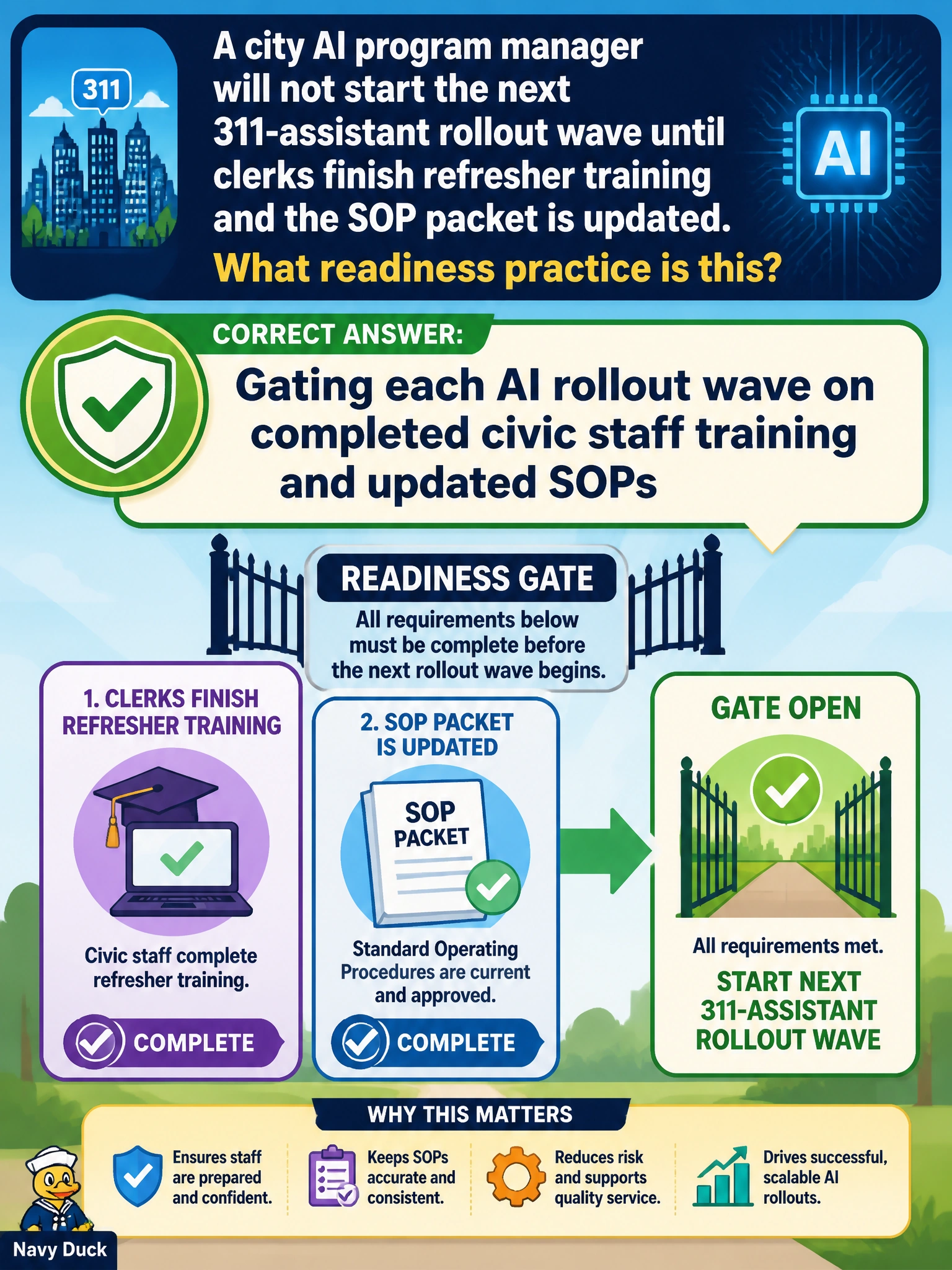
A city AI program manager will not start the next 311-assistant rollout wave until clerks finish refresher training and the SOP packet is updated. What readiness practice is this?
Select an answer to reveal the explanation.
Short Explanation
Think of each rollout wave like opening a new service window—you don’t unlock it until the clerks have the playbook and the practice. Training and SOP updates are gates, not nice-to-haves taped on later.
Full Explanation
In municipal AI delivery, rollout readiness is a gate that mixes technology cutover with people and process enablement. Holding the next 311-assistant wave until clerks finish refresher training and the SOP packet is updated is disciplined phased deployment: each expansion tranche only proceeds when staff can operate the assistant consistently under documented procedures. That reduces inconsistent resident answers, ticket thrash, and political backlash when a new bureau goes live. Training completion proves clerks know escalation paths, grounding limits, and when to override; SOP updates encode those expectations so coverage clerks and new hires share the same playbook. Skipping staff training to protect a vendor slide-deck calendar confuses marketing milestones with operational readiness and transfers risk onto residents who receive uneven service. Publishing the SOP only after residents complain is reactive governance—harm has already occurred and trust debt accumulates before documentation exists. Treating enablement as optional because the pilot team already knows the tool ignores that later waves include different clerks, different case mixes, and different supervisors who never lived through the pilot learning curve. Exam caveat: items often tempt candidates to prioritize schedule optics or pilot heroics over enablement gates; CAIPM-style program management treats training and SOPs as hard readiness criteria between waves. Operational check: define wave exit criteria that include named training completion rates, signed SOP revision identifiers, a short quiz or practical for escalations, and a go/no-go review that blocks expansion if enablement evidence is incomplete even when the model and vendor are ready.