
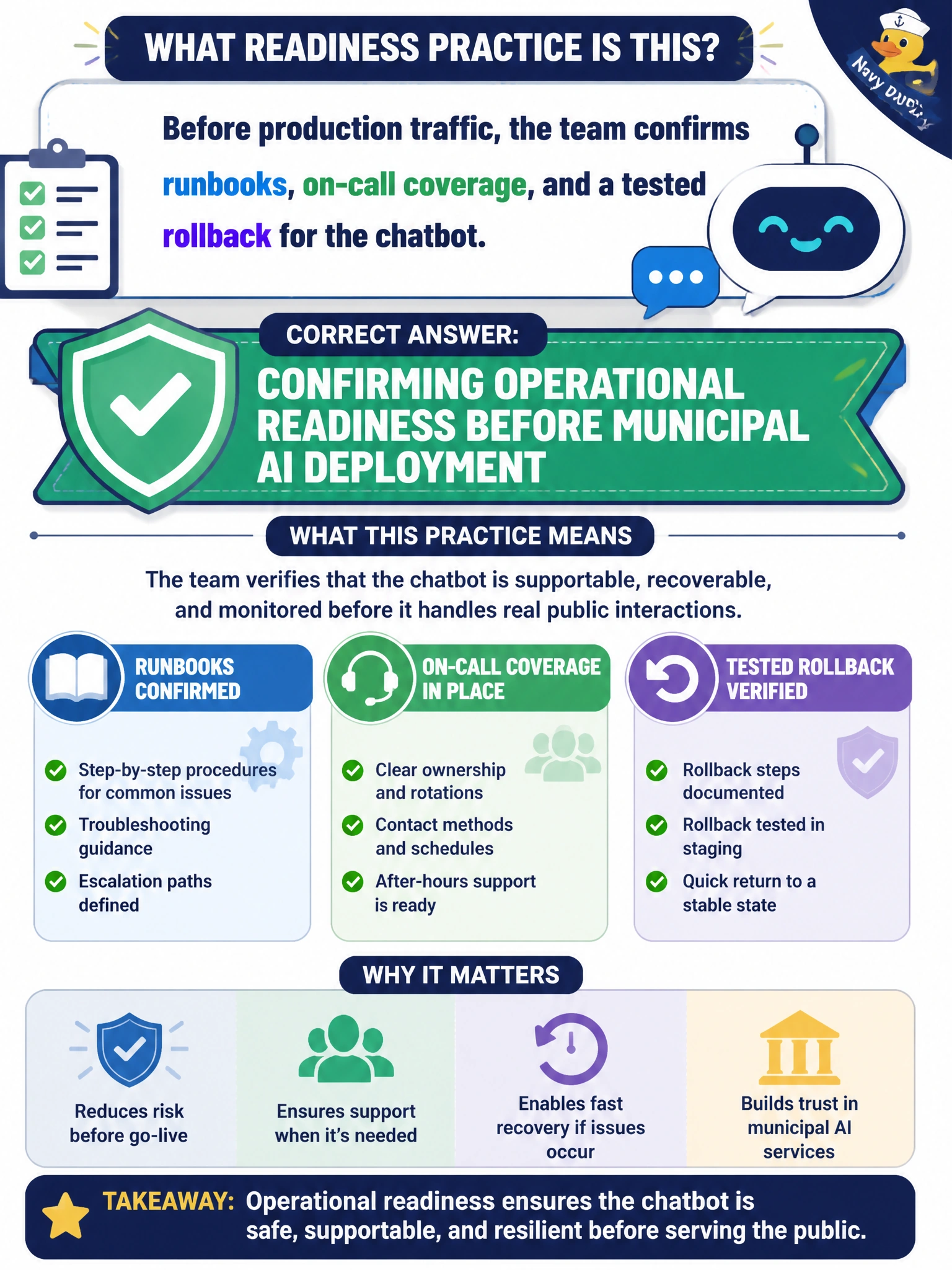
Before production traffic, the team confirms runbooks, on-call coverage, and a tested rollback for the chatbot. What readiness practice is this?
Select an answer to reveal the explanation.
Short Explanation
Chatbots still need runbooks, on-call, and a rollback switch. 'It is just a bot' is famous last words—operational readiness is the boring stuff that saves Friday night.
Full Explanation
Confirming operational readiness before municipal AI deployment is the correct readiness practice when, before production traffic, the team confirms runbooks, on-call coverage, and a tested rollback for the chatbot. That works because resident-facing AI is a production service: it can misroute, degrade, or fail in ways that create 311 overload and trust damage. Runbooks, named on-call, and a tested rollback mean the city can detect, respond, and unwind quickly—capabilities that 'it is just a chatbot' thinking typically skips until Friday night.
Going live without an on-call owner because 'it is just a chatbot' fails by concept: chatbots still create incidents, wrong answers, and vendor outages that need owners. Writing the runbook after the first major outage fails by concept—runbooks are preventive operational design, not post-mortem paperwork. Assuming the vendor's status page replaces city rollback plans fails by concept: vendor status does not execute municipal rollback, communications, or queue rerouting under city control.
Exam caveat: rollback must be tested in a realistic drill; an untested flag or ticket is not readiness. Keep chatbot / production traffic framing. Operational check: complete runbooks for common failures; name on-call and escalation; test disable/rollback; confirm monitoring and alert routes; and withhold production traffic until the readiness checklist is signed.