
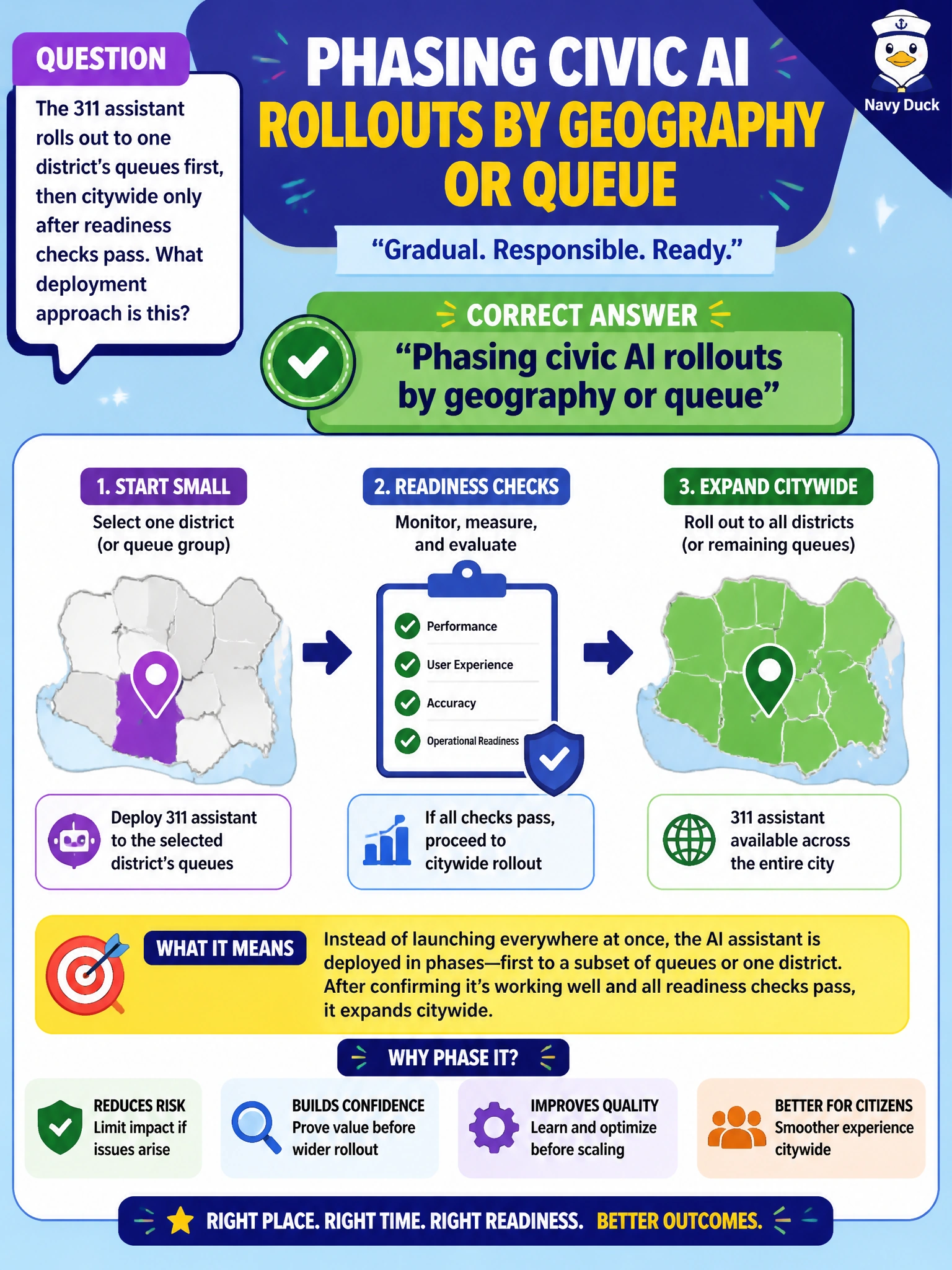
The 311 assistant rolls out to one district's queues first, then citywide only after readiness checks pass. What deployment approach is this?
Select an answer to reveal the explanation.
Short Explanation
One district first is how cities avoid boiling the ocean on go-live night. Pass the readiness checks, then widen—big-bang flips are excitement, not control.
Full Explanation
Phasing civic AI rollouts by geography or queue is the correct deployment approach when the 311 assistant rolls out to one district's queues first, then citywide only after readiness checks pass. That works because phased expansion limits blast radius: problems in content, routing, or operations surface in one district before every queue depends on the assistant. Readiness checks between waves convert lessons into controls so citywide enablement is an evidence-based decision rather than a big-bang leap of faith.
Flipping on every queue citywide on the same night with no waves fails by concept: simultaneous full enablement maximizes outage and quality blast radius with no staging learning. Skipping district pilots because phased rollouts feel slow fails by concept—perceived speed that skips learning trades short calendar time for long remediation. Expanding to all districts while readiness checks are still red fails by concept: red checks mean known unreadiness; expanding anyway ignores the control purpose of phasing.
Exam caveat: phases need explicit exit criteria and owners; a 'phase' without gates is just a slow big-bang. Keep 311 / district queue framing. Operational check: choose a first district or queue; define readiness checks (accuracy, support, runbooks); review results before each expansion wave; and block citywide enablement while checks remain red.