
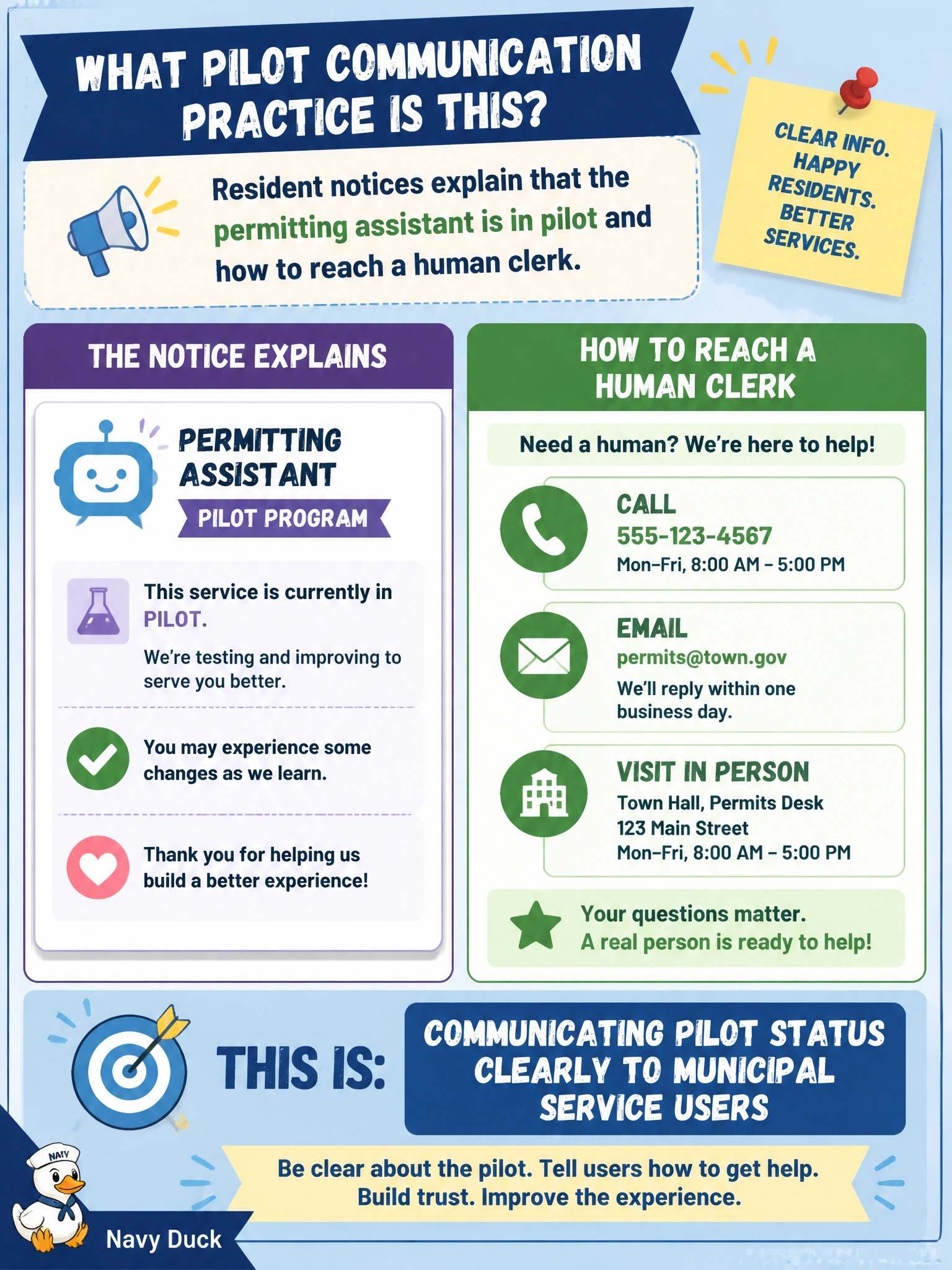
Resident notices explain that the permitting assistant is in pilot and how to reach a human clerk. What pilot communication practice is this?
Select an answer to reveal the explanation.
Short Explanation
Tell people it is a pilot and how to get a human—simple as a 'wet floor' sign. Pretending it is finished production sets everyone up for a fall.
Full Explanation
Communicating pilot status clearly to municipal service users is the correct pilot communication practice when resident notices explain that the permitting assistant is in pilot and how to reach a human clerk. That works because residents set expectations from the channel they use; if a pilot is presented as finished production, errors look like city incompetence or deception rather than expected learning risk. Clear pilot status plus a human fallback path preserves trust, enables informed choice, and routes edge cases to clerks while evidence is still being gathered.
Hiding pilot status so residents assume full production quality fails by concept: concealment inflates expectations and damages trust when mistakes appear. Providing no human fallback path during the pilot window fails by concept—pilots are when uncertainty is highest, so human escape hatches are most needed. Announcing the pilot only inside IT after residents complain fails by concept: internal-only communication leaves service users without notice or recourse until harm surfaces.
Exam caveat: notices must stay accurate when the pilot ends—either promote with production messaging or remove the channel; stale 'pilot' labels also mislead. Keep permitting assistant / resident notice framing. Operational check: place pilot disclosure and human contact on notices and UI; train clerks on the fallback path; monitor complaint themes; and update messaging at promote/stop decisions.