
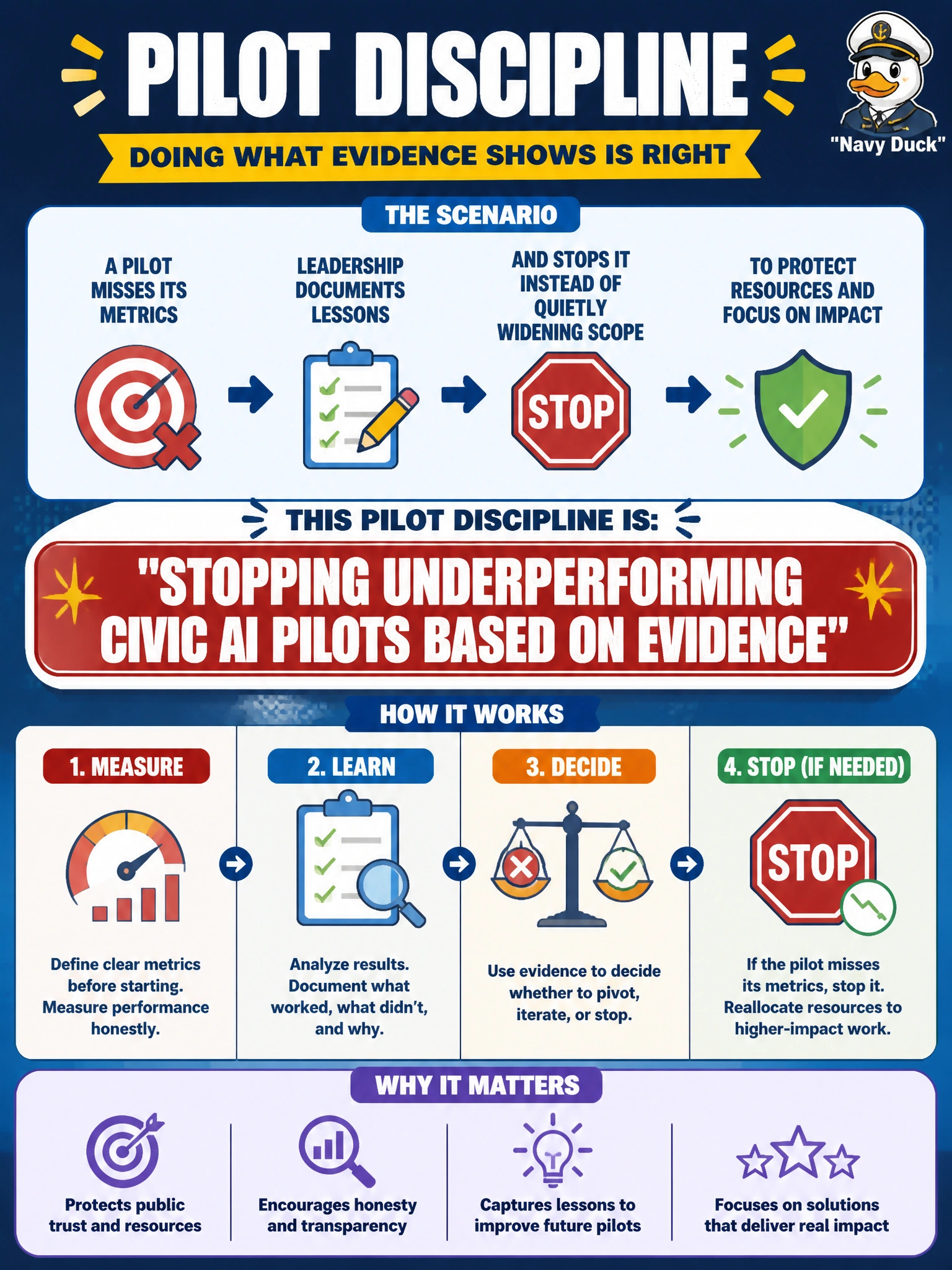
A pilot misses its metrics; leadership documents lessons and stops it instead of quietly widening scope. What pilot discipline is this?
Select an answer to reveal the explanation.
Short Explanation
When the numbers say no, stop and write down what you learned. Quietly widening a failing pilot is how bad tools become permanent fixtures.
Full Explanation
Stopping underperforming civic AI pilots based on evidence is the correct pilot discipline when a pilot misses its metrics and leadership documents lessons and stops it instead of quietly widening scope. That works because pilots exist to learn under bounded risk; when evidence shows failure, continuing or widening scope converts a controlled test into unmanaged production debt. Documenting lessons preserves institutional learning so the next attempt improves rather than repeating the same miss under a new label.
Widening a failing pilot to 'give it more data' without review fails by concept: more exposure without diagnosis amplifies harm and cost rather than proving value. Hiding the miss and declaring a soft launch citywide fails by concept—concealment replaces evidence with optics and locks the city into a weak system. Blaming clerks for not believing in the model hard enough fails by concept: adoption theater does not fix accuracy, process fit, or metric misses attributable to the system design.
Exam caveat: stopping should include resident-facing communication and clean decommission (access off, data retention handled), not just a verbal pause. Keep municipal pilot / leadership decision framing. Operational check: compare results to pre-written metrics; if missed, record decision to stop; capture lessons in the AI program knowledge base; disable the feature; and require a new charter before any restart.