
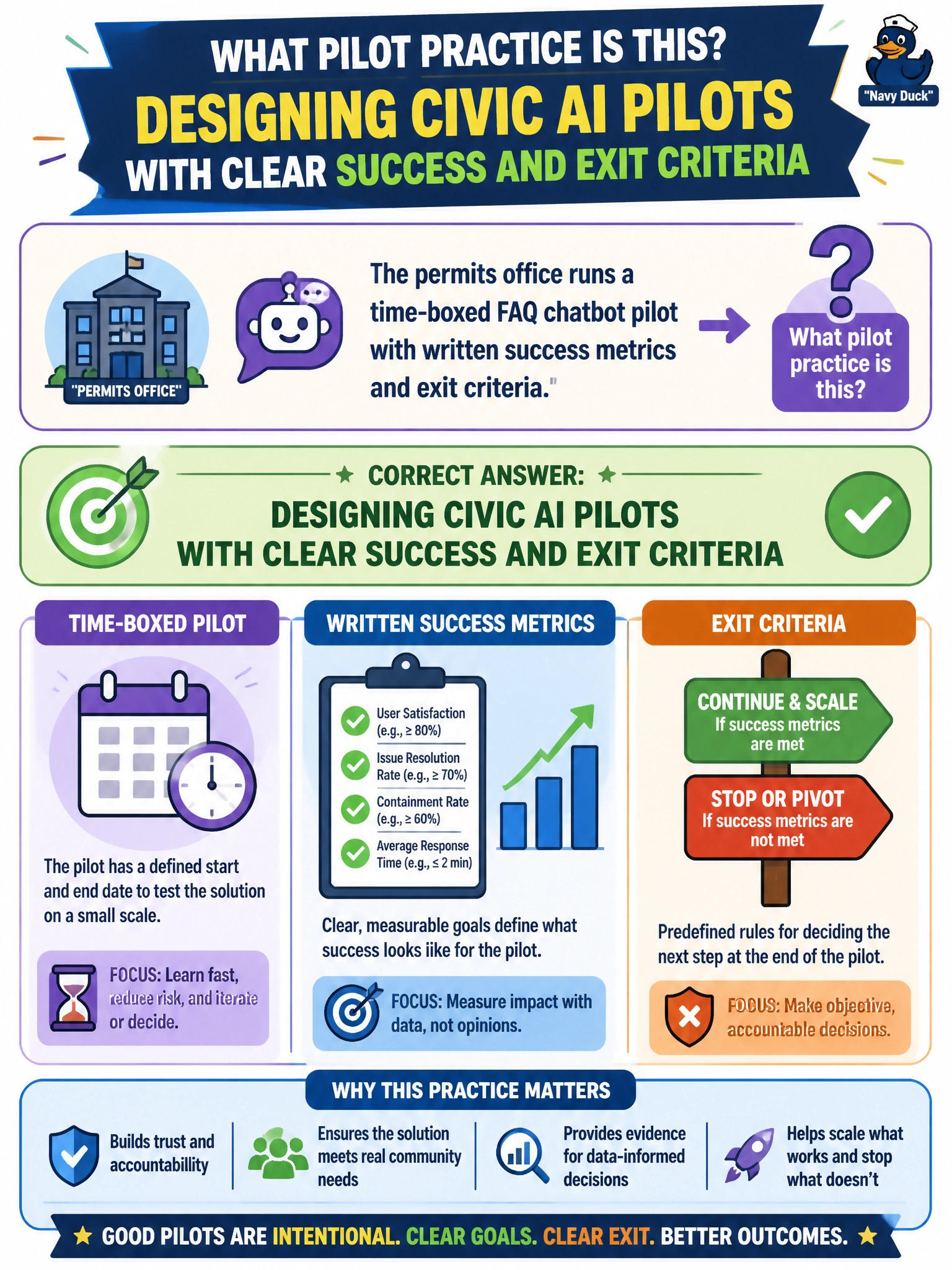
The permits office runs a time-boxed FAQ chatbot pilot with written success metrics and exit criteria. What pilot practice is this?
Select an answer to reveal the explanation.
Short Explanation
A pilot without a finish line is just production in a trench coat. Time-box it, write the win/lose scores, and know when to stop—demos alone do not count as evidence.
Full Explanation
Designing civic AI pilots with clear success and exit criteria is the correct pilot practice when the permits office runs a time-boxed FAQ chatbot pilot with written success metrics and exit criteria. That works because a pilot without a finish line becomes stealth production: no shared definition of success, no authorized stop, and no clean comparison to baseline. Written metrics and exit criteria force honesty—continue, redesign, or stop—based on evidence rather than sunk-cost momentum or vendor enthusiasm.
Running an open-ended pilot with no end date or success definition fails by concept: unbounded pilots cannot be evaluated and quietly consume budget and attention. Declaring success based only on positive vendor demos fails by concept—demos are sales artifacts, not municipal outcome evidence under real tickets and residents. Skipping exit criteria so underperforming bots stay forever fails by concept: without an exit path, failure becomes permanent infrastructure.
Exam caveat: criteria must be measurable and owned before the pilot starts; rewriting success after weak results is gaming, not learning. Keep permits office / FAQ chatbot framing. Operational check: write time box, success metrics, and exit criteria in the pilot charter; baseline before go-live; review at the end date with decision authority named; and either promote under gates, iterate with a new charter, or stop and document lessons.