
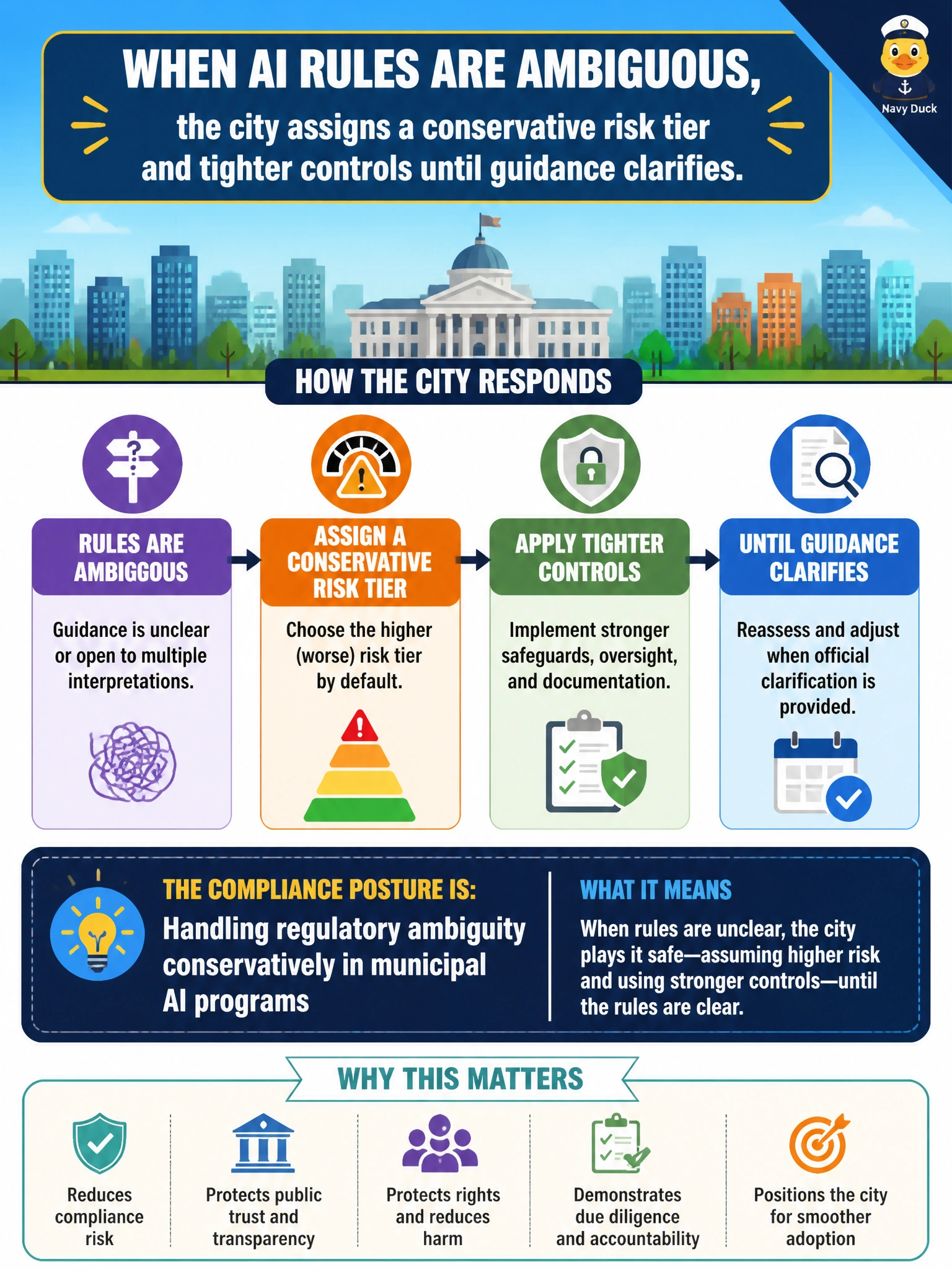
When AI rules are ambiguous, the city assigns a conservative risk tier and tighter controls until guidance clarifies. What compliance posture is this?
Select an answer to reveal the explanation.
Short Explanation
Foggy rules are not a green light. Park the use in a higher risk tier with tighter brakes until the fog lifts—neither 'YOLO deploy' nor endless freeze with no controls.
Full Explanation
Handling regulatory ambiguity conservatively in municipal AI programs is the correct compliance posture when, if AI rules are ambiguous, the city assigns a conservative risk tier and tighter controls until guidance clarifies. That works because ambiguity is not permission; public bodies that guess toward maximum freedom can create resident harm and later noncompliance. Elevating the interim risk tier and applying tighter controls (limits on data, human review, narrower scope, stronger logging) protects residents while the city watches for clarifying guidance—without pretending the fog is a green light.
Treating ambiguity as permission to skip all controls fails by concept: uncertainty increases, not decreases, the need for safeguards. Deploying the riskiest use first to force regulators to respond fails by concept and ethics—using residents as leverage against regulators is reckless governance. Waiting forever with zero interim controls while guidance is pending fails by concept: paralysis without interim controls either blocks needed services indefinitely or, in practice, lets uncontrolled shadow use fill the vacuum.
Exam caveat: conservative interim tiers should have review dates so the city revisits when guidance arrives—neither YOLO nor permanent fog without reassessment. Keep municipal AI / regulatory ambiguity framing. Operational check: document the ambiguity and interim tier; apply tighter controls and narrower scope; set a calendar to reassess when guidance updates; escalate high-stakes uses to counsel; and record the rationale for auditors.