
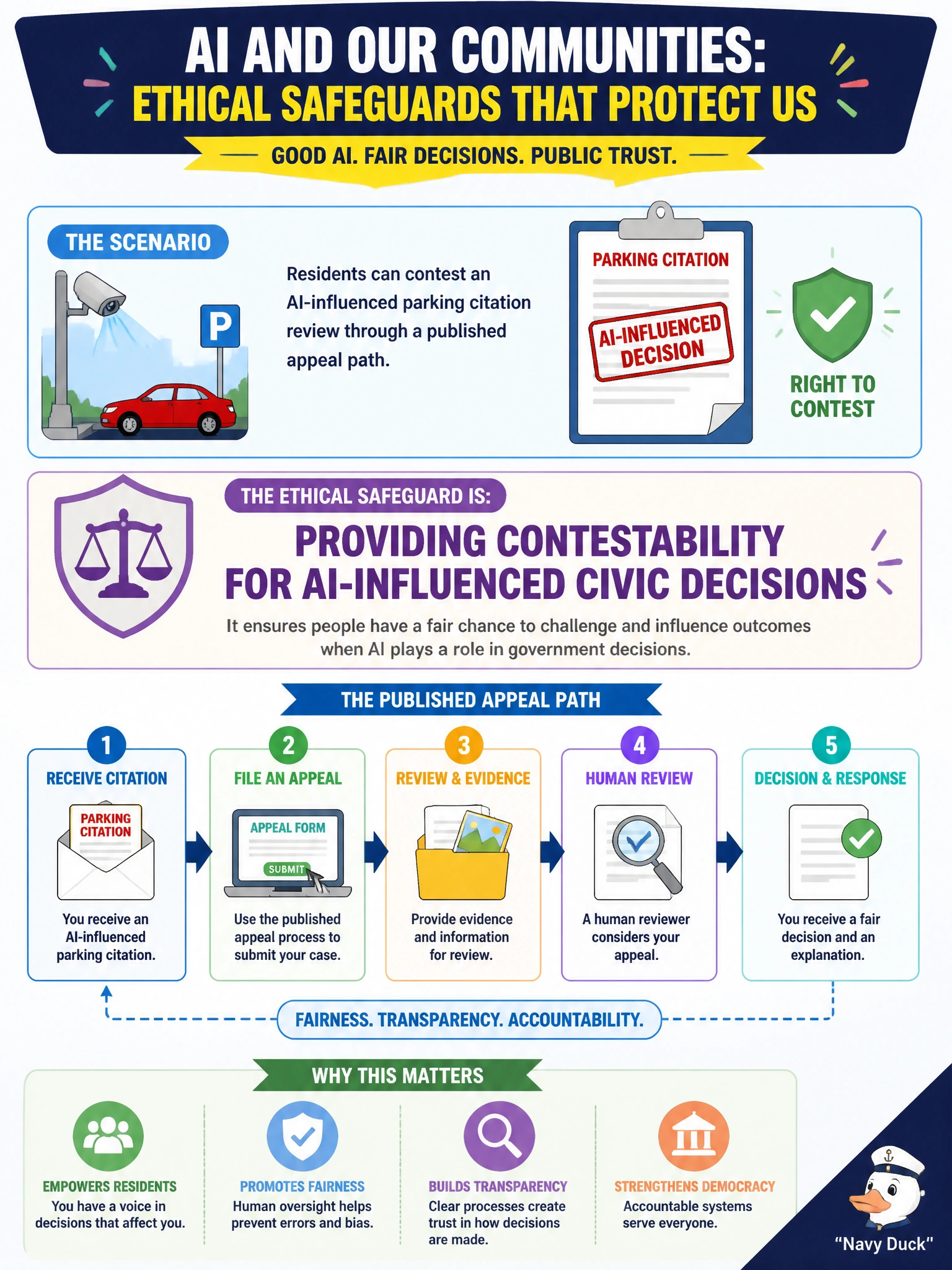
Residents can contest an AI-influenced parking citation review through a published appeal path. What ethical safeguard is this?
Select an answer to reveal the explanation.
Short Explanation
If AI nudged a citation review, residents still need a door to knock on. Publish a normal appeal path—not 'email the vendor' or 'explain the neural net yourself.'
Full Explanation
Providing contestability for AI-influenced civic decisions is the correct ethical safeguard when residents can contest an AI-influenced parking citation review through a published appeal path. That works because AI assistance does not erase due process; residents still need a clear, city-owned path to challenge outcomes that affect fines, records, and trust. A published appeal path makes contestability practical—known, reachable, and not dependent on understanding model internals.
Making AI outcomes final with no appeal to reduce backlog fails by concept: backlog reduction is not a lawful substitute for contestability of civic decisions. Allowing contests only by emailing the model vendor overseas fails by concept—vendors are not the city's appeal body and foreign email channels deny accessible municipal remedy. Requiring residents to prove how the neural network weighted features fails by concept: placing an impossible technical burden on residents defeats contestability; the city must offer a workable human review path.
Exam caveat: contestability requires usable process (deadlines, contacts, language access), not merely a theoretical right buried in a PDF. Keep parking citation / resident appeal framing. Operational check: publish appeal instructions on notices and the city site; route contests to trained human reviewers with authority to overturn; log AI influence and appeal outcomes; and ensure language-access and accessibility for the contest channel.