
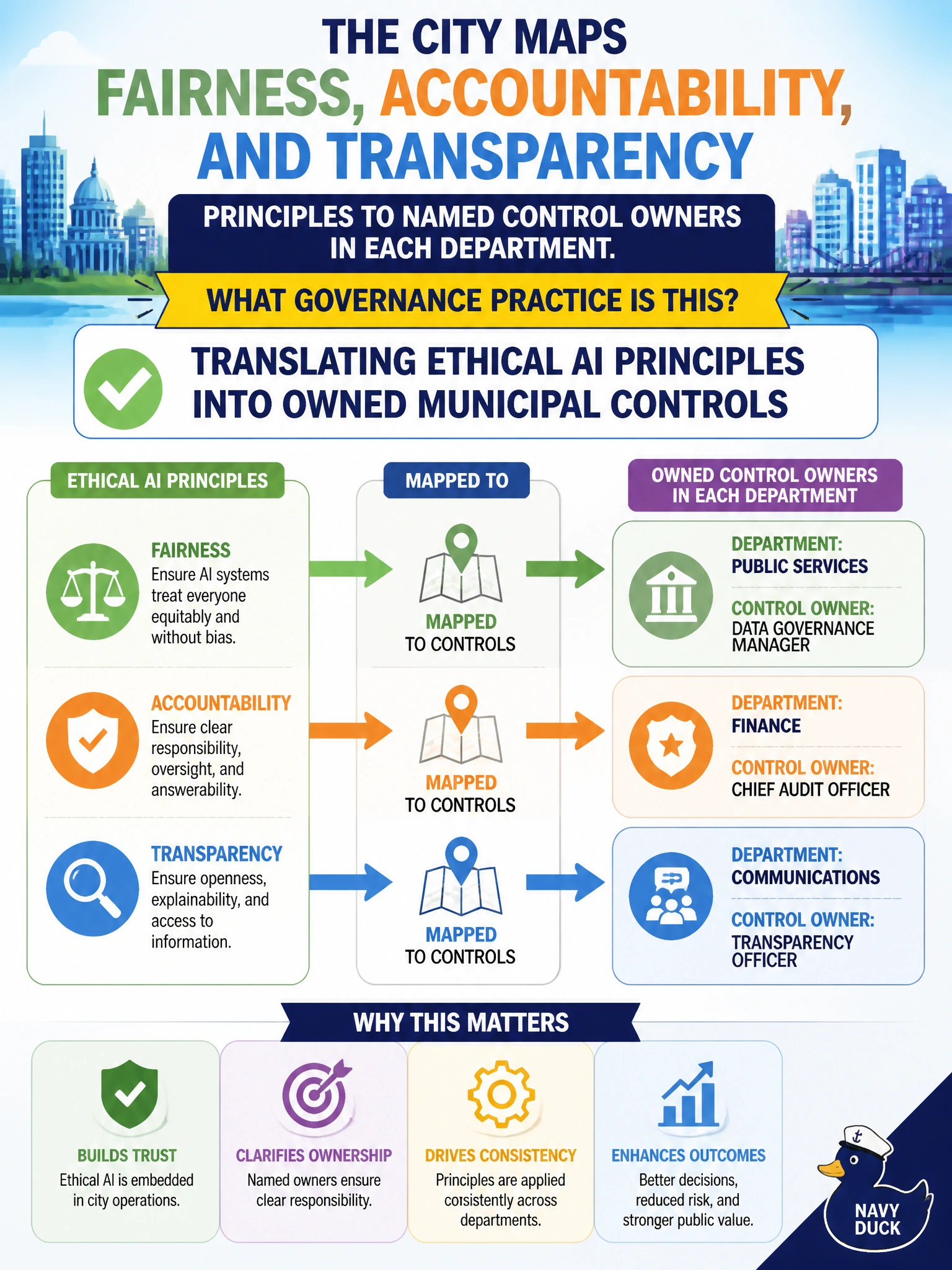
The city maps fairness, accountability, and transparency principles to named control owners in each department. What governance practice is this?
Select an answer to reveal the explanation.
Short Explanation
Principles without owners are wallpaper. Name who owns fairness checks, accountability logs, and transparency notices—then ethics has a phone number, not just a poster.
Full Explanation
Translating ethical AI principles into owned municipal controls is the correct governance practice when the city maps fairness, accountability, and transparency principles to named control owners in each department. That works because principles without owners remain aspirational posters; naming who owns fairness checks, accountability logs, and transparency notices turns ethics into operational duties with escalation paths. Departmental ownership also matches how municipal work is funded and staffed, so AI ethics is not orphaned in a central slideshow.
Posting principles on a poster with no assigned owners fails by concept: visibility without accountability does not change behavior or produce auditable controls. Leaving ethics to vendors because city staff are too busy fails by concept—vendors do not carry the city's public duties or know local policy; outsourcing ethics abandons municipal responsibility. Treating principles as optional slogans for grant applications only fails by concept: ethics that appear only in funding narratives are not operational governance.
Exam caveat: ownership must include authority and capacity—a named owner without budget or mandate is still wallpaper. Keep departmental / municipal control-owner framing. Operational check: map each principle to concrete controls; assign named owners and deputies; put controls in RACI and review calendars; verify owners can produce evidence (logs, notices, fairness tests); and escalate gaps to the AI program office when departments cannot staff a control.