
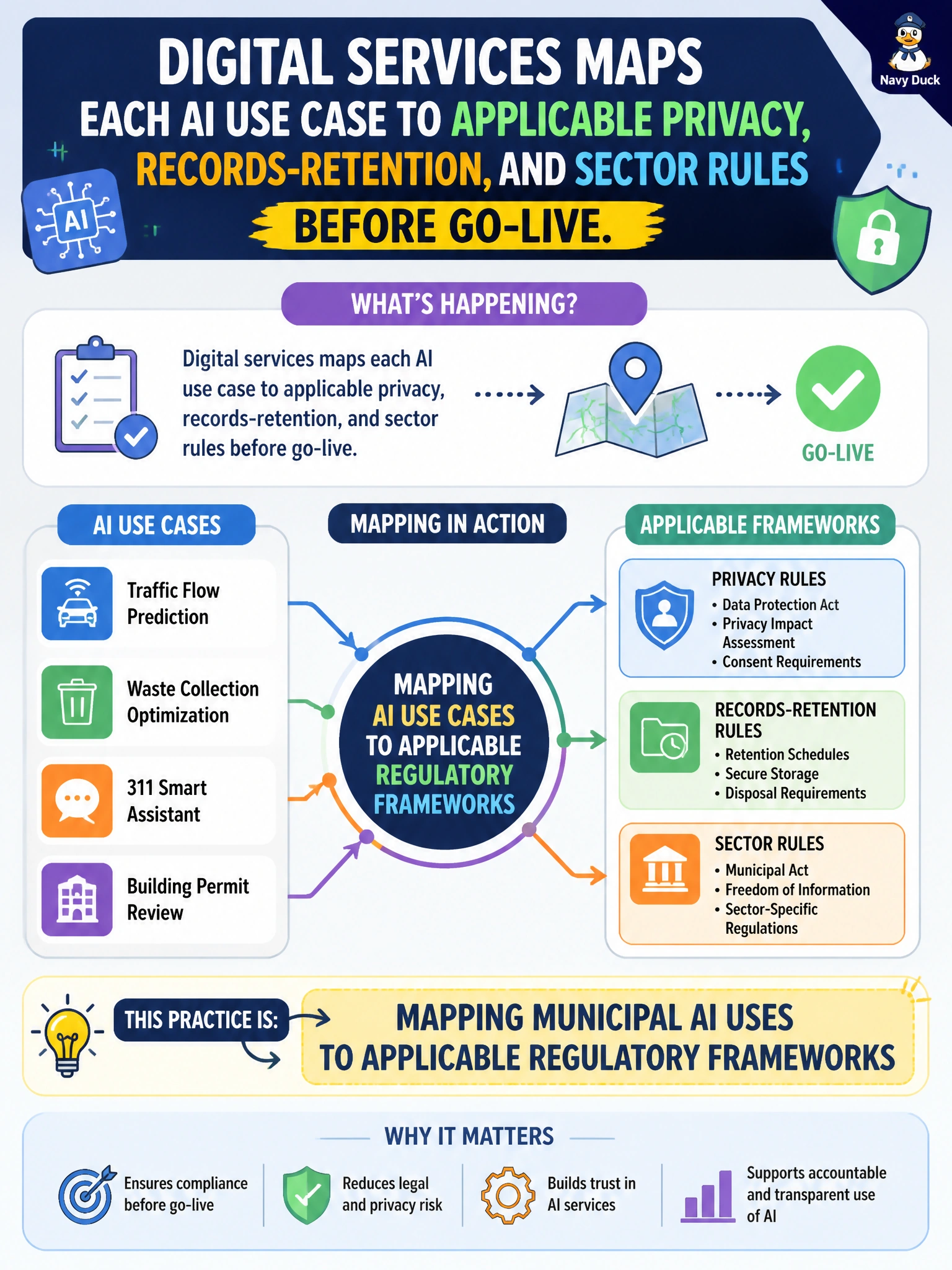
Digital services maps each AI use case to applicable privacy, records-retention, and sector rules before go-live. What compliance practice is this?
Select an answer to reveal the explanation.
Short Explanation
Every use case needs a regulatory map like a parcel needs a zoning check. Consumer SaaS terms and 'open source' stickers do not erase privacy or records duties.
Full Explanation
Mapping municipal AI uses to applicable regulatory frameworks is the correct compliance practice when digital services maps each AI use case to applicable privacy, records-retention, and sector rules before go-live. That works because public-sector AI sits inside overlapping duties—privacy, retention, accessibility, procurement, and sector law—that consumer SaaS terms do not automatically satisfy. A per-use-case regulatory map before go-live identifies which controls, notices, and retention schedules are mandatory so compliance is designed in rather than patched after a complaint or audit letter.
Assuming consumer SaaS terms satisfy all public-sector duties fails by concept: private terms rarely cover municipal records, retention, or public transparency obligations. Delaying any legal mapping until after a regulator sends a letter fails by concept—reactive compliance accepts avoidable risk and signals weak control design. Treating open-source models as exempt from privacy and records rules fails by concept: hosting or using open weights does not erase duties over prompts, logs, outputs, or retained municipal records.
Exam caveat: mapping must be maintained when use cases expand or vendors change subprocessors—one-time maps go stale. Keep digital services / municipal go-live framing. Operational check: inventory each AI use case; list applicable privacy, records, and sector rules; assign control owners; block go-live until gaps are closed or formally accepted; and revisit the map at major changes or scheduled reviews.