
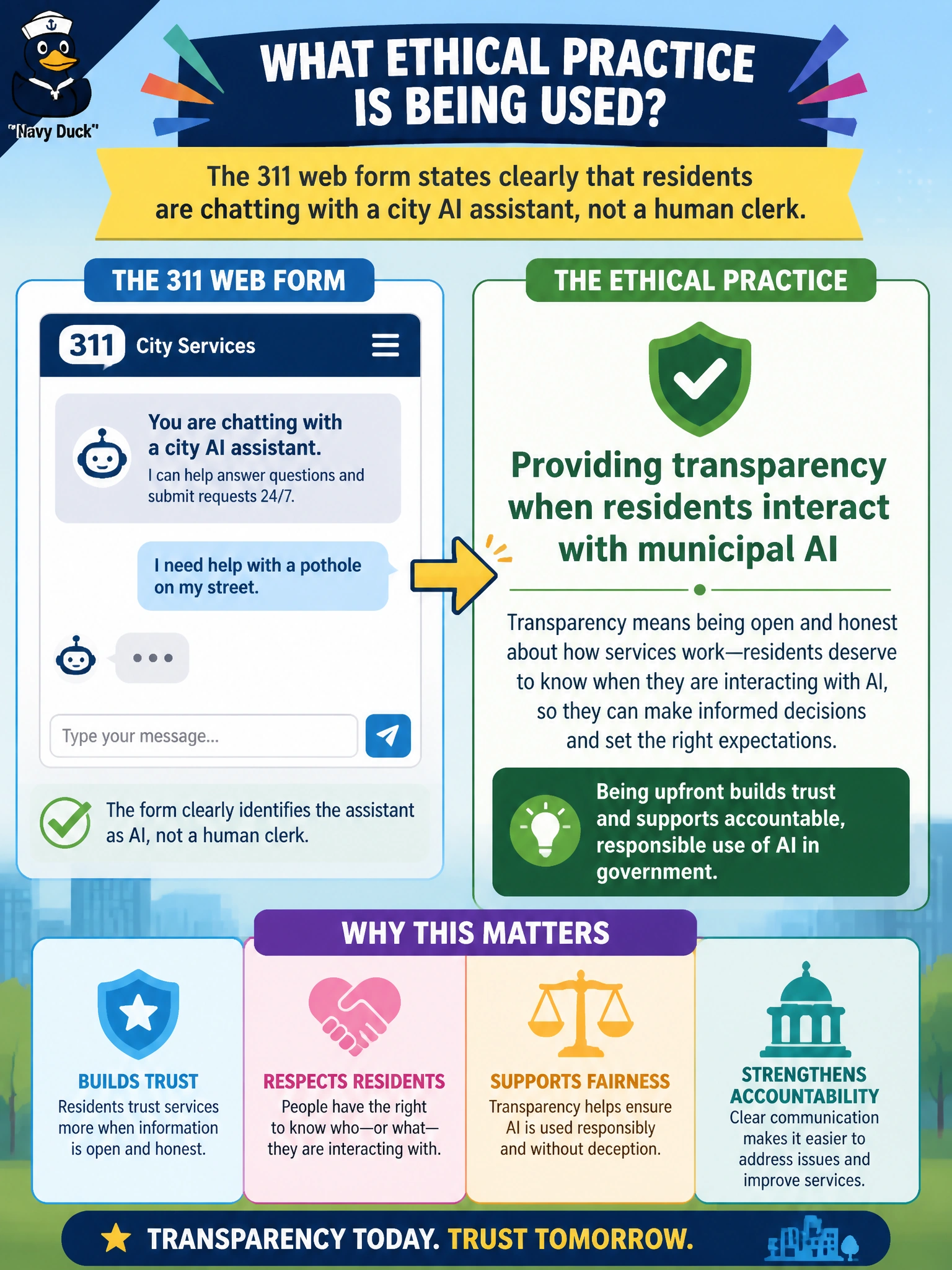
The 311 web form states clearly that residents are chatting with a city AI assistant, not a human clerk. What ethical practice is this?
Select an answer to reveal the explanation.
Short Explanation
You deserve to know whether a person or a bot is responding, so the form should say so up front. Transparency means being honest about the AI—not disguising it as a named clerk or waiting for a complaint.
Full Explanation
Providing transparency when residents interact with municipal AI is the ethical practice because the 311 form clearly identifies the assistant as AI rather than a human clerk. Residents use that information to calibrate expectations, make privacy choices, and decide whether to escalate an issue. Up-front disclosure prevents deceptive anthropomorphism, supports informed use of the service, and aligns municipal design with duties of honesty. Disguising the bot as a named clerk to increase trust scores fails because manufactured trust relies on deception and, if discovered, can damage city credibility. Revealing the AI only if a resident files a formal complaint fails because disclosure after harm or conflict is too late and makes transparency conditional. Omitting disclosure because answers come from city knowledge articles fails because the quality of the source does not change the fact that an automated system mediates the interaction. Exam caveat: disclosure should be clear at the start and remain visible, not buried in a terms link residents may not open. Practical check: put plain-language AI disclosure on the form and chat interface, avoid human names or photos for the bot, provide a way to reach a human clerk, and periodically confirm that disclosure stays accurate as channels or vendors change.