
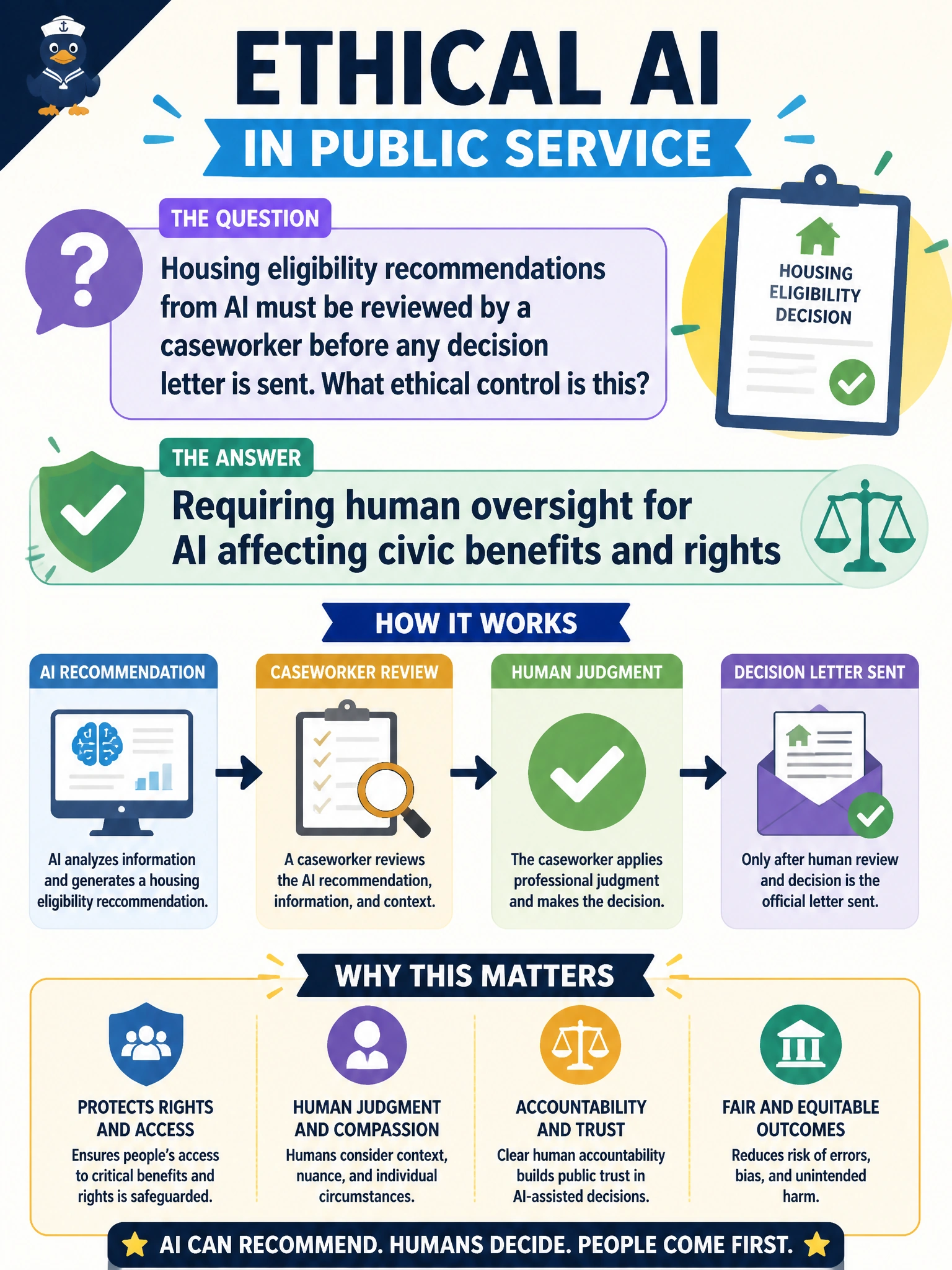
Housing eligibility recommendations from AI must be reviewed by a caseworker before any decision letter is sent. What ethical control is this?
Select an answer to reveal the explanation.
Short Explanation
Eligibility letters change lives—do not let a model stamp and mail them alone. Keep a caseworker in the loop like a notary on a deed: AI can draft, humans decide.
Full Explanation
Requiring human oversight for AI affecting civic benefits and rights is the correct ethical control when housing eligibility recommendations from AI must be reviewed by a caseworker before any decision letter is sent. That works because eligibility determinations change access to housing and due-process interests; automated recommendations can err from bad data, brittle rules, or model drift. A mandatory caseworker review before letters go out keeps legal and moral accountability with a human decision-maker while still allowing AI to draft or prioritize.
Letting the model auto-send denial letters to cut wait times fails by concept: speed is not a justification for unsupervised adverse action on benefits and rights. Hiding the AI role so residents think every decision was fully manual fails by concept and transparency—concealment undermines trust and contestability even if a human later rubber-stamps. Using AI only after decisions so staff never see recommendations fails by concept relative to the control described: the point is meaningful oversight of AI influence before consequential notices, not post-hoc theater or unused recommendations.
Exam caveat: human oversight must be substantive (authority and time to change outcomes), not a click-through that always accepts the model. Keep housing eligibility / caseworker framing. Operational check: block auto-send of decision letters; require recorded caseworker review and rationale; log when recommendations are accepted or overridden; disclose AI assistance where policy requires; and audit override rates for signs of rubber-stamping or systematic bias.