
The city keeps a controlled register of AI systems with named owners and risk tiers. What governance inventory practice is this?
Select an answer to reveal the explanation.
Short Explanation
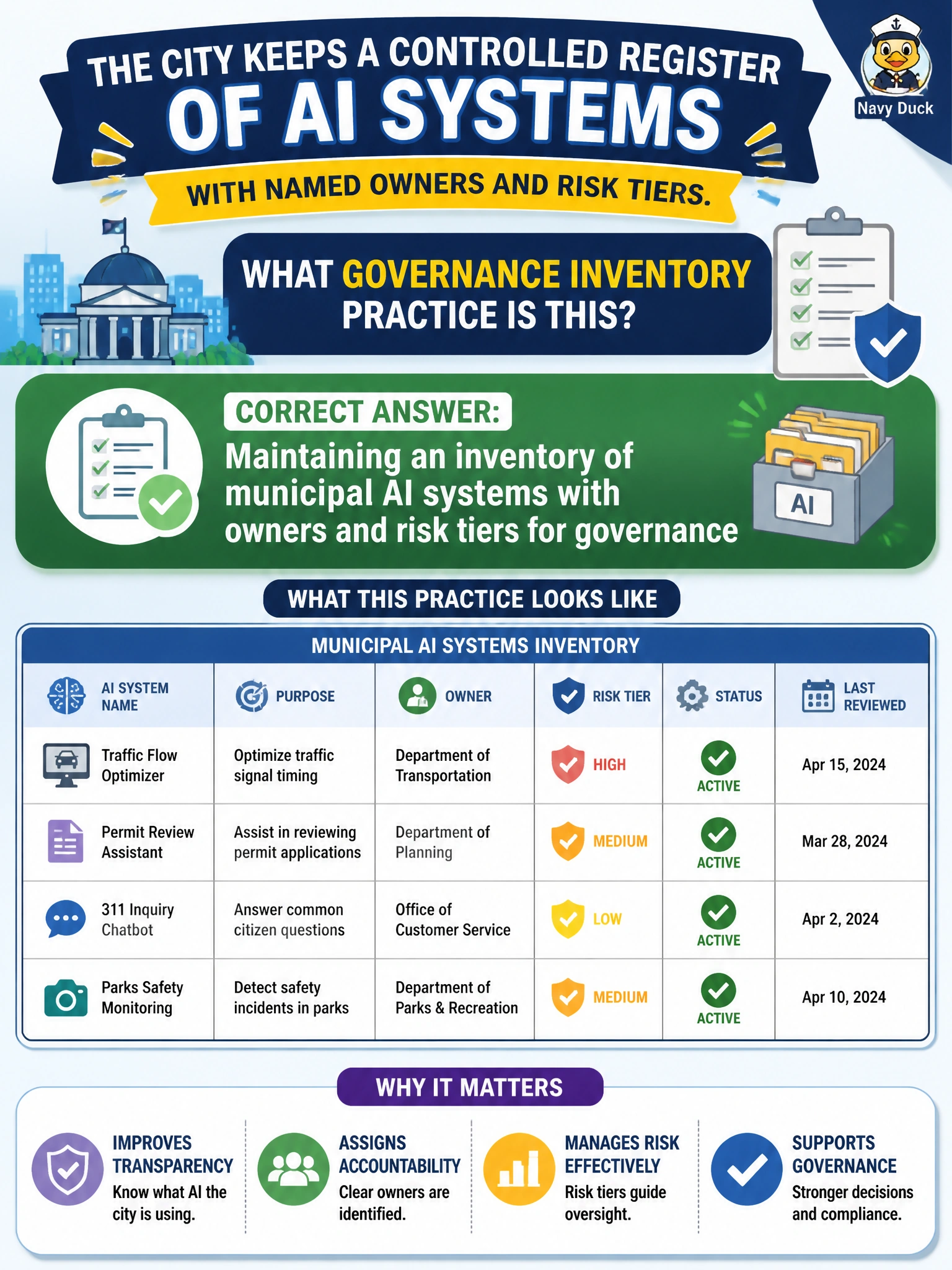
You can’t govern what you can’t find. Keep a living register of AI systems with owners and risk tiers—hallway lore doesn’t survive staff turnover or an audit request.
Full Explanation
Maintaining an inventory of municipal AI systems with owners and risk tiers for governance is the correct inventory practice. You cannot oversee, monitor, or retire what you cannot find. A controlled register that names system owners and risk tiers enables targeted reviews, incident routing, and shadow-AI discovery. Hallway conversations and marketing lists without owners leave blind spots exactly where accountability is needed. The practice works because durable inventory is a prerequisite for scalable municipal AI governance.
Tracking AI only in hallway conversations with no durable inventory fails by concept: oral lore disappears with staff turnover and cannot support audits. Listing tools in a marketing brochure without owners or risk tiers fails by concept—brochures are not governance registers and lack accountability fields. Deleting the inventory data so shadow AI stays invisible fails by concept and integrity: deliberate blindness increases risk rather than reducing paperwork.
Exam caveat: inventory quality matters—owners and risk tiers are essential attributes, not optional metadata. Keep city AI-register framing. Operational check: stand up a controlled AI system register; require an owner and risk tier for each entry; reconcile against procurement and SSO app lists to find shadow AI; and review high-tier systems on a defined cadence.