
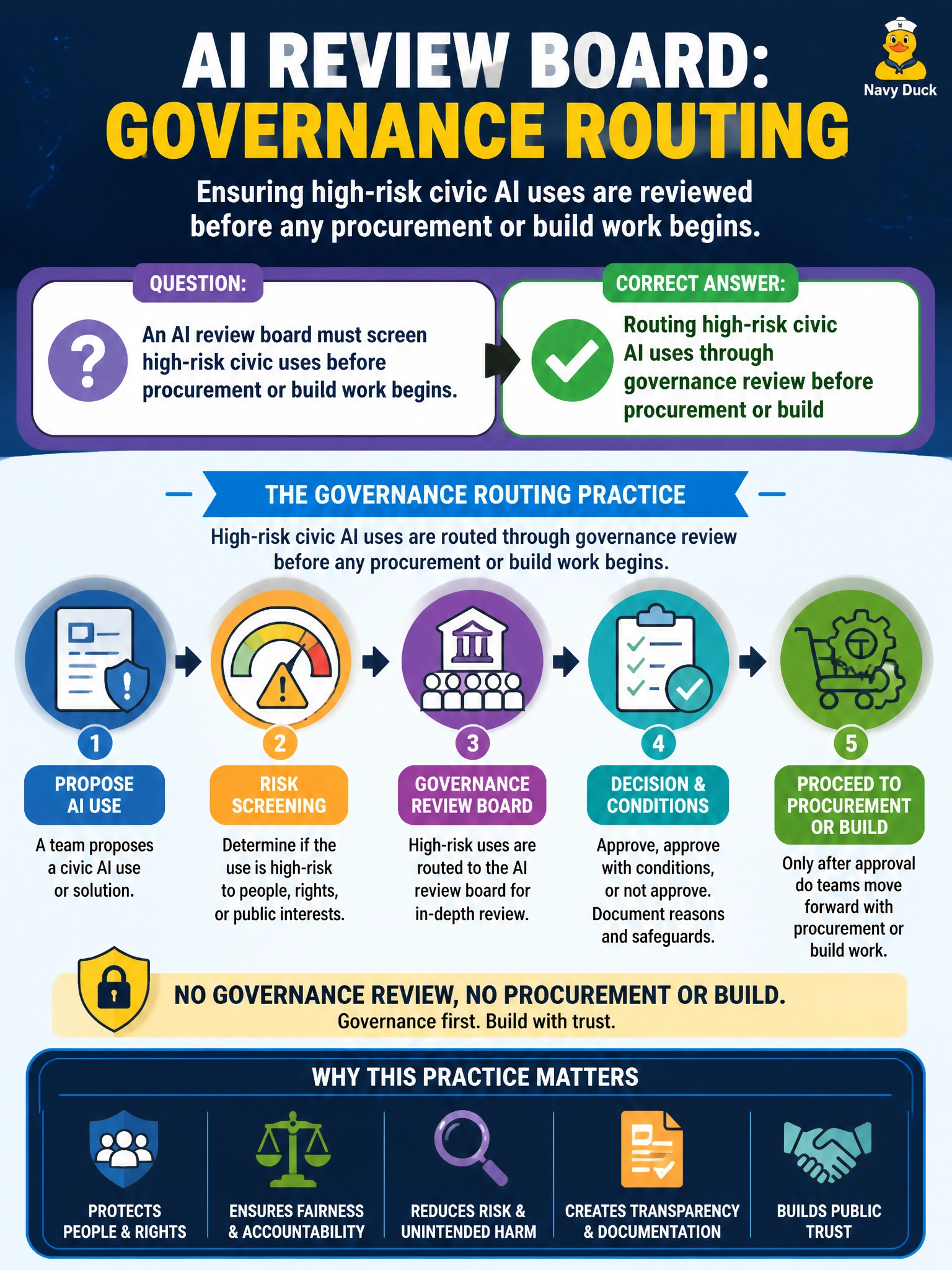
An AI review board must screen high-risk civic uses before procurement or build work begins. What governance routing practice is this?
Select an answer to reveal the explanation.
Short Explanation
You’re right to send high-risk civic AI through governance review before procurement or build begins. That early screening gives you a chance to shape controls before money or code commits; review after purchase is too late.
Full Explanation
Routing high-risk civic AI uses through governance review before procurement or build is the right practice. Uses affecting rights, eligibility, safety, or sensitive data need early screening so controls, vendors, and designs can be constrained before money or code locks in a bad path. Review after purchase is too late to reshape architecture or stop an inappropriate buy; governance works best before commitment, not after departments are already live with high-risk AI. Allowing departments to procure high-risk AI first and seek review only after purchase fails because committed spending and embedded data flows cannot be undone by later notice. Treating every AI use as zero-risk until a resident files a lawsuit fails because waiting for harm is reactive and can harm residents. Exempting vendor demos that touch live resident data from review fails because using that data is already a processing activity requiring governance and safeguards. Exam caveat: not every trivial AI use needs a full board hearing; the routing rule applies to high-risk uses before procurement or build. Practical check: define high-risk criteria, require review-board intake before a purchase order or build kickoff for those uses, block unreviewed demo exceptions involving live resident data, and track cycle time so governance is early without becoming performative delay.