
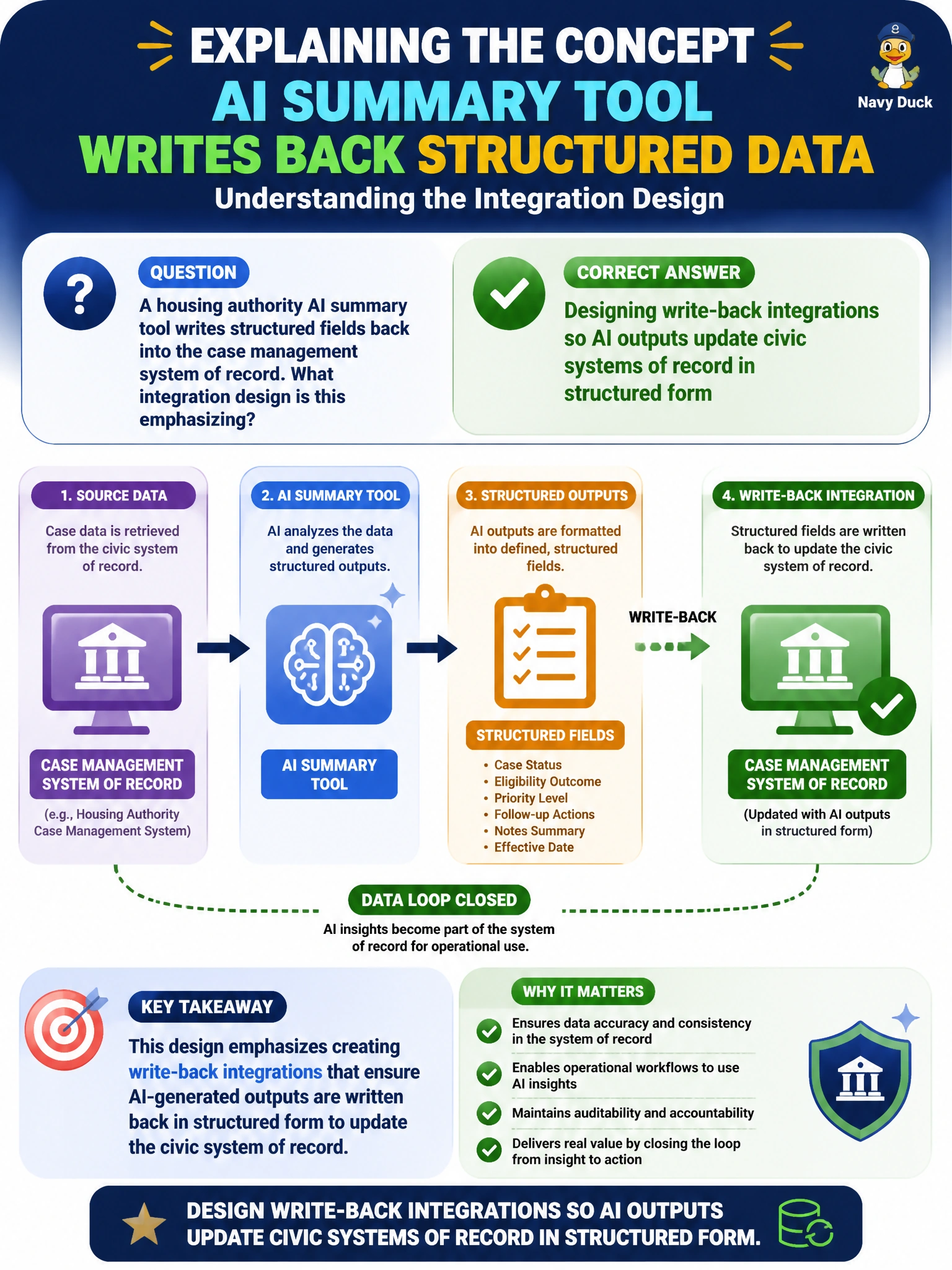
A housing authority AI summary tool writes structured fields back into the case management system of record. What integration design is this emphasizing?
Select an answer to reveal the explanation.
Short Explanation
You want the summary to update the housing case record, not leave you with two versions of the case. Structured write-back makes the AI output part of the system of record, rather than just a chat message.
Full Explanation
Designing write-back integrations so AI outputs update civic systems of record in structured form is the right emphasis for a housing authority summary tool. Writing structured fields into the case management system makes AI assistance operationally durable: caseworkers do not have to re-key the summary, the case record stays current, and downstream reporting can use the updated information. Municipal casework depends on its system of record, not on a separate chat transcript. Keeping AI-generated summaries in a standalone chat log fails because the case record remains unchanged, creating duplicate versions of the information and extra work. Emailing summaries to caseworkers without updating structured fields also leaves the system of record stale; an email is not a governed, structured case update. Storing AI text exclusively on a sticky note pad beside each workstation fails because informal physical notes are not auditable, searchable, or shared through the case process. Exam caveat: write-back should be controlled, with validated fields, appropriate permissions, audit trails, and human confirmation where policy requires; it should not be an unrestricted model dump into production cases. Practical check: identify which structured fields the AI may update, secure and log the write-back, require review for high-impact fields, and verify accepted summaries appear in the housing case record rather than only in chat history.