
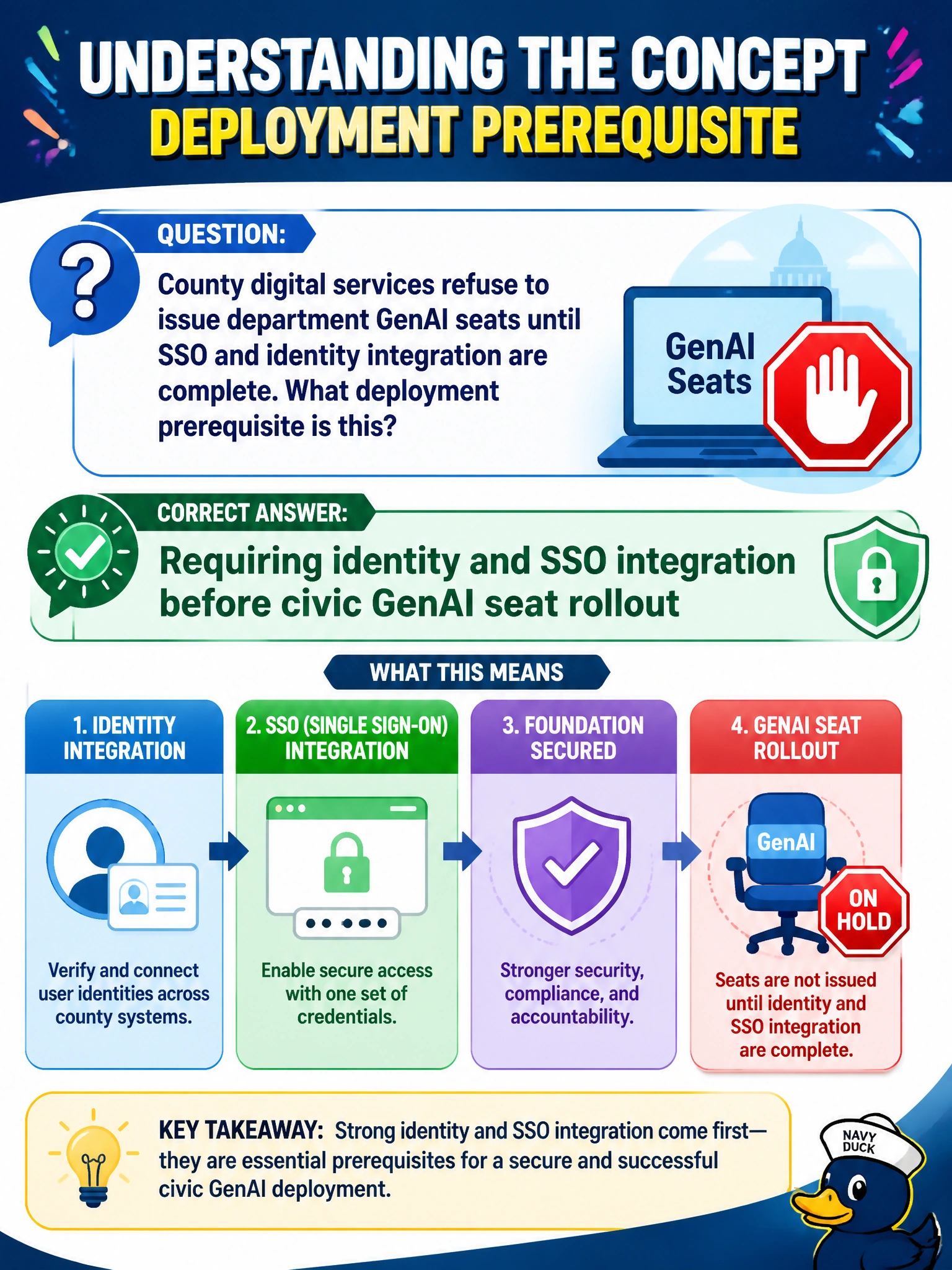
County digital services refuse to issue department GenAI seats until SSO and identity integration are complete. What deployment prerequisite is this?
Select an answer to reveal the explanation.
Short Explanation
Seats without SSO are like master keys left on the front desk. Wire identity first, then hand out GenAI access—shared logins and personal accounts turn accountability into fog.
Full Explanation
Requiring identity and SSO integration before civic GenAI seat rollout is the correct deployment prerequisite. Without SSO and proper identity binding, the city cannot reliably authenticate users, enforce role-based access, audit who used which tools, or offboard staff when roles change. Issuing seats first and wiring identity later creates shared-password habits, orphaned accounts, and weak accountability exactly when GenAI may touch sensitive municipal content. The practice works because access control and auditability are foundational controls for municipal GenAI, not optional polish after adoption momentum builds.
Handing out shared generic logins so seats can start immediately fails by concept: shared logins destroy individual accountability and complicate incident response. Allowing personal consumer accounts as the official city identity path fails by concept—personal accounts are outside municipal identity lifecycle, retention, and offboarding controls. Delaying identity work until after a major data-leak incident fails by concept and sequencing: identity should prevent and contain misuse before a breach forces emergency remediation.
Exam caveat: SSO-first does not mean every GenAI feature must wait forever—it means seats should not be issued as an official deployment until identity integration meets the city’s standard. Keep county digital-services framing. Operational check: complete SSO/IdP integration and group-based entitlements; ban shared generic logins; disallow personal consumer accounts for official city use; then issue seats with logging and offboarding hooks verified.