
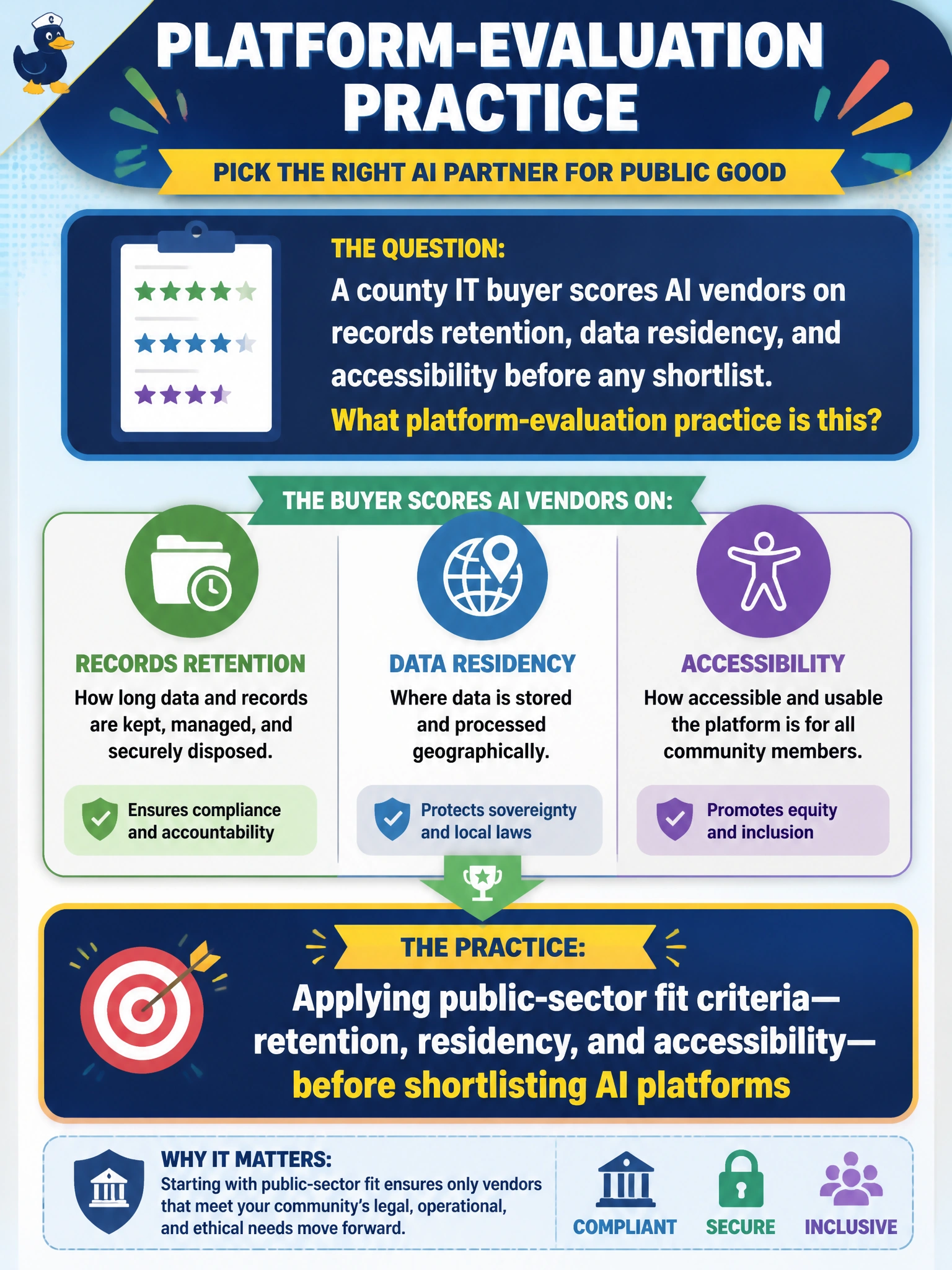
A county IT buyer scores AI vendors on records retention, data residency, and accessibility before any shortlist. What platform-evaluation practice is this?
Select an answer to reveal the explanation.
Short Explanation
Think of it like picking a dump truck for winter roads: speed ratings don’t matter if it can’t haul salt. Score retention, residency, and accessibility first—or the shortlist is just pretty toys that won’t pass civic muster.
Full Explanation
Scoring AI vendors on records retention, data residency, and accessibility before any shortlist is applying public-sector fit criteria early—exactly when those constraints can eliminate otherwise flashy products. Municipal buyers cannot treat retention schedules, where data lives, and WCAG-class accessibility as afterthoughts; they are often non-negotiable for resident-facing and records-bearing systems. Applying them before shortlisting prevents sunk-cost attachment to vendors that cannot meet civic requirements and keeps procurement energy on platforms that can operate legally and inclusively. The practice works because public-sector constraints are selection filters, not polish features added after award.
Ignoring public-sector constraints and scoring only on chat response speed fails by concept: latency does not satisfy records law, residency policy, or accessibility obligations. Shortlisting vendors before checking retention, residency, or accessibility at all fails by sequencing—late discovery forces painful rework, waivers, or cancelled awards. Selecting the cheapest chatbot and hoping procurement can fix gaps later fails by concept: contract hope cannot retrofit missing residency controls or inaccessible UIs after the tool is embedded in workflows.
Exam caveat: public-sector fit criteria vary by jurisdiction, but retention, residency, and accessibility are representative hard gates—not optional nice-to-haves. Keep county/municipal buyer framing. Operational check: put retention, residency, and accessibility on the RFI/RFP scorecard as pass/fail or heavily weighted gates before shortlist; require vendor evidence (DPA language, region options, VPAT/accessibility statements); and refuse to advance vendors that fail those civic gates regardless of demo speed.