
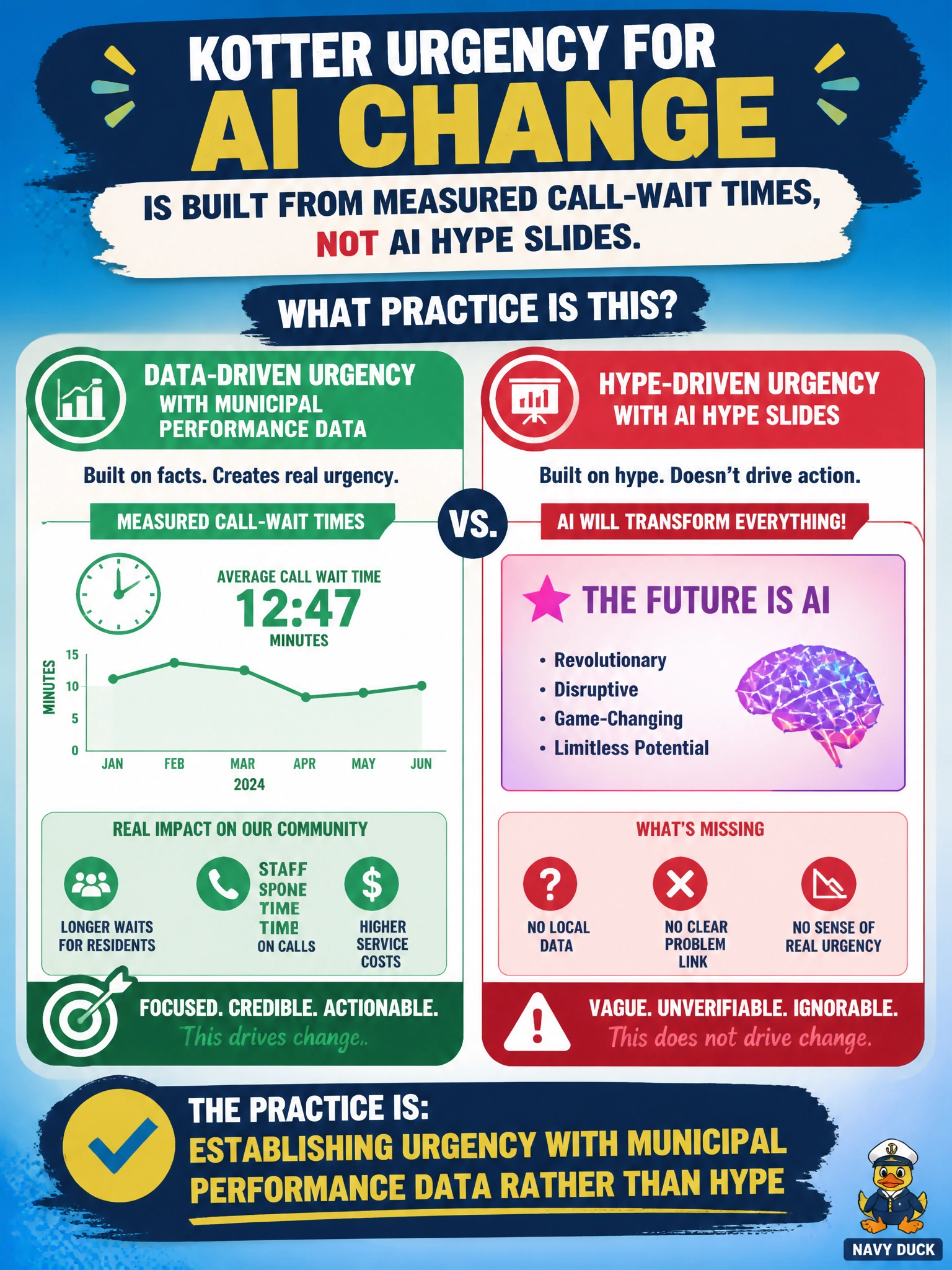
Kotter urgency for AI change is built from measured call-wait times, not AI hype slides. What practice is this?
Select an answer to reveal the explanation.
Short Explanation
Show the wait-time clock, not the fireworks deck. Real numbers make urgency honest; hype slides just make people roll their eyes.
Full Explanation
Kotter urgency must be grounded in credible performance pain, not vendor theater. Building urgency for AI change from measured call-wait times rather than AI hype slides establishes urgency with municipal performance data. That practice works because wait-time metrics are shared, auditable, and resident-visible; they justify 'why now' without requiring staff to accept speculative AI mythology. Data-backed urgency also sets a baseline against which later wins can be judged.
Creating urgency only with vendor hype slides and no service metrics fails by concept: hype lacks local legitimacy and invites eye-rolls. Claiming urgency while refusing to share call-wait performance data fails transparency—the urgency claim becomes unverifiable. Delaying urgency messaging until wait times become a public crisis headline fails proactive leadership; cities should act on measured degradation before reputational freefall.
Exam caveat: urgency ≠ fearmongering or vendor FOMO. Prefer answers that cite municipal KPIs. Operational check: publish current wait-time trends to sponsors and staff, tie the AI initiative’s problem statement to those numbers, and revisit the same metrics after pilots to validate whether urgency was well placed.