
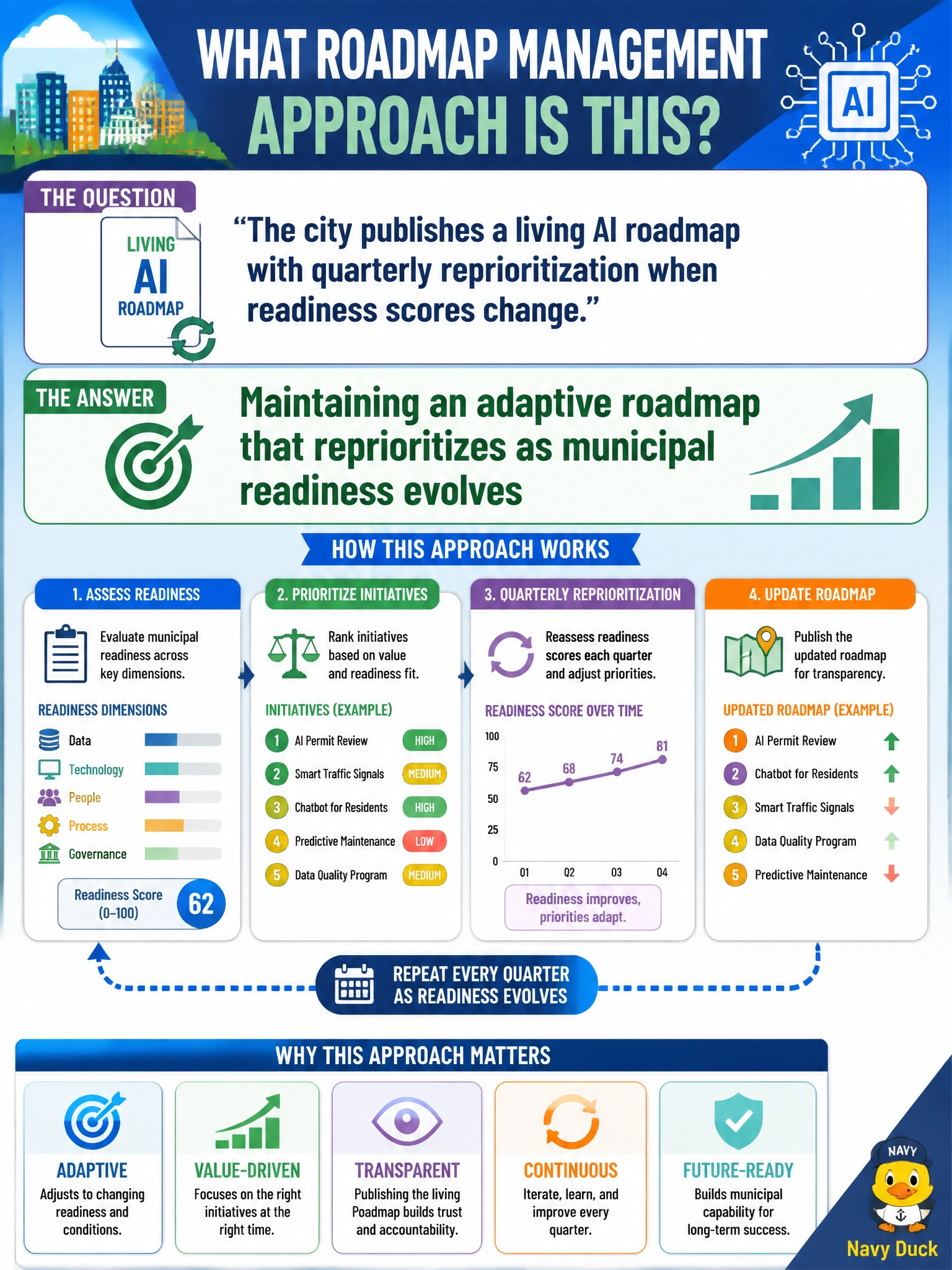
The city publishes a living AI roadmap with quarterly reprioritization when readiness scores change. What roadmap management approach is this?
Select an answer to reveal the explanation.
Short Explanation
Roadmaps aren’t carved in granite—they’re living maps. When readiness scores move, the city reshuffles quarterly instead of pretending nothing changed.
Full Explanation
Adaptive roadmap management treats the municipal AI plan as a living artifact: readiness scores, capacity, risk, and policy change, so priorities are revisited on a cadence—here, quarterly. Publishing the living roadmap and reprioritizing when readiness shifts keeps departments aligned to reality instead of a frozen slide deck that no longer matches data platform status or pilot evidence. That approach supports transparency and portfolio control when platforms slip or a pilot proves higher value than expected.
Freezing the roadmap forever even when readiness shifts fails adaptability and produces fiction that departments stop trusting. Hiding the roadmap from departments to avoid feedback fails collaboration and surfaces conflicts too late for orderly replanning. Reprioritizing only when a vendor demands a new slot fails because vendor pressure is not a readiness-based governance input and can distort civic priorities.
Exam caveat: adaptivity needs rules—who may reprioritize, what evidence is required, how conflicts are escalated—so quarterly changes are disciplined, not chaotic reshuffles. Operational check: run a quarterly readiness review with scored criteria (data, integration, risk, staffing), publish changes to the living roadmap, and record rationale for each reprioritization for audit and council visibility.