
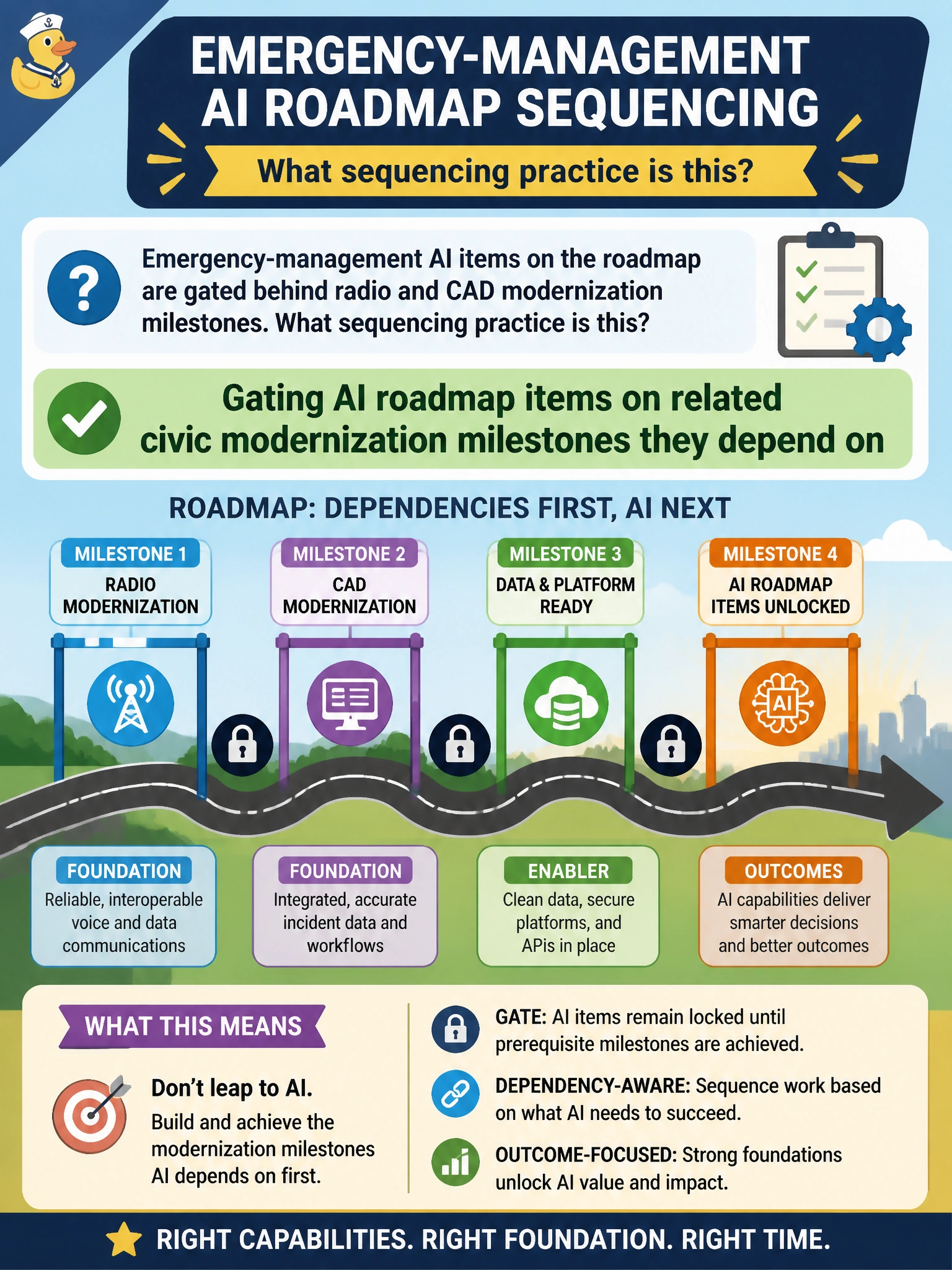
Emergency-management AI items on the roadmap are gated behind radio and CAD modernization milestones. What sequencing practice is this?
Select an answer to reveal the explanation.
Short Explanation
AI that talks over broken radios is theater. Gate those emergency AI items until radio and CAD modernization actually land.
Full Explanation
Gating AI roadmap items on related civic modernization milestones is correct sequencing when AI depends on those systems for data and operations. Emergency-management AI that needs reliable radio and CAD feeds cannot safely launch ahead of modernization if those feeds are incomplete, inconsistent, or unavailable under load. Explicit gates tie AI timing to radio and CAD milestones so the roadmap reflects operational reality rather than an arbitrary AI calendar that looks green on slides while field systems remain brittle.
Launching AI assistants before radios and CAD can feed reliable data fails because the assistant inherits broken situational awareness and can mislead responders. Treating modernization programs as unrelated to AI timing fails dependency management and invites parallel plans that conflict at go-live. Removing all gates so emergency AI ships on an arbitrary calendar date fails risk control in a life-safety context where false confidence is itself a hazard.
Exam caveat: gates should be evidence-based (feed quality, latency, failover tests), not merely “project marked complete” in a status report. Operational check: define measurable readiness criteria for radio/CAD data that emergency AI consumes, keep the AI item behind those criteria in the roadmap tooling used by emergency management and IT leadership, and require joint sign-off before production use.