
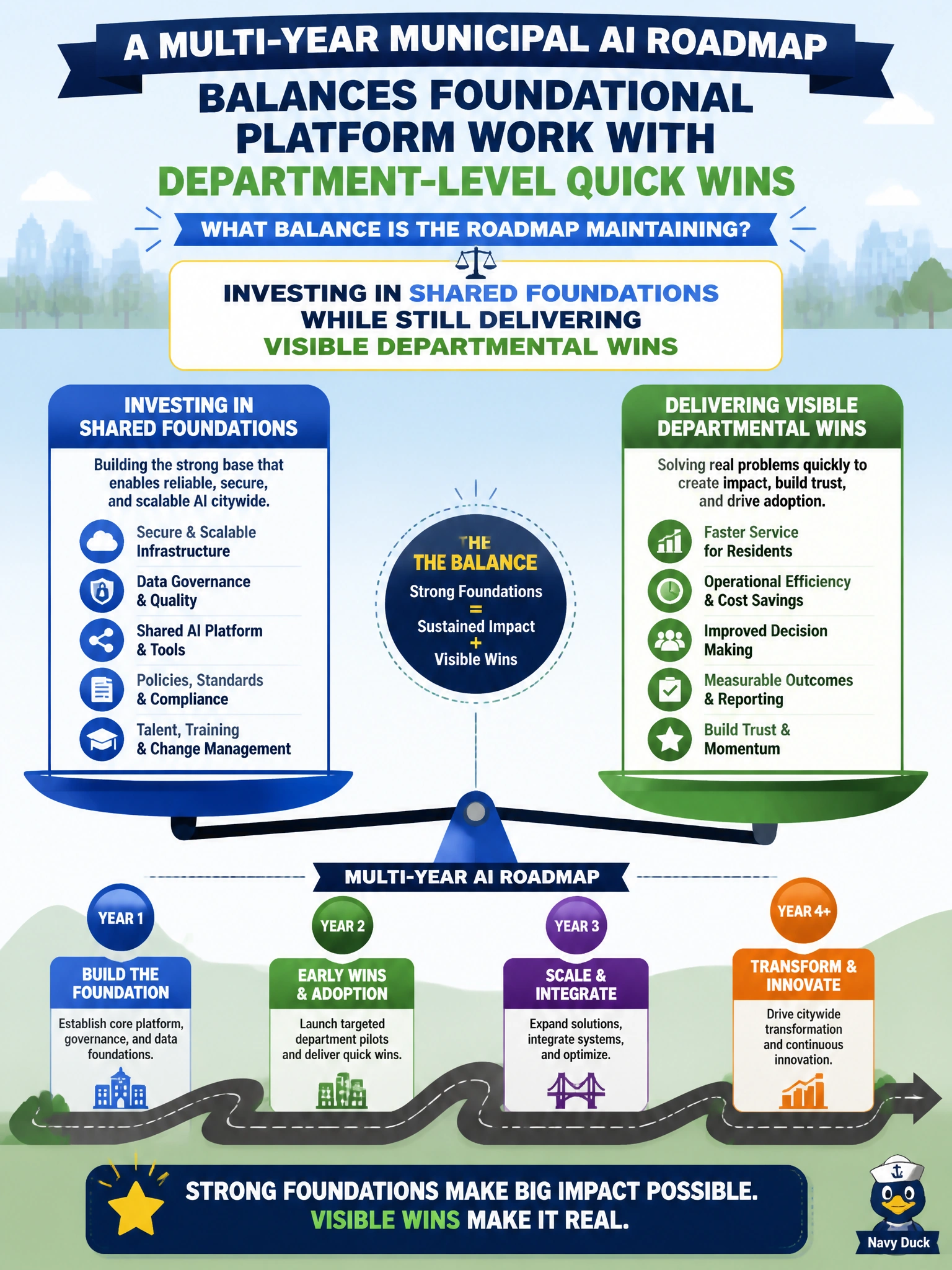
A multi-year municipal AI roadmap balances foundational platform work with department-level quick wins. What balance is the roadmap maintaining?
Select an answer to reveal the explanation.
Short Explanation
Build the highway and still open a few exits people can use. Shared platforms plus departmental quick wins keep the roadmap honest and visible.
Full Explanation
Multi-year municipal AI roadmaps should invest in shared foundations while still delivering visible departmental wins. Platforms—identity, data services, evaluation tooling, vector retrieval, logging—compound value across departments and reduce duplicated spend. Quick wins in a single department prove resident or staff value and sustain political support through budget cycles. Balancing both avoids the “platform forever, no outcomes” trap and the “one-off bots everywhere, no shared capability” trap that fragments civic technology.
Platform work only with a ban on any departmental delivery for years fails credibility, learning, and the need to show tangible service improvement. Quick wins only with no shared platform investment fails long-term efficiency and creates fragmented shadow stacks that security and data teams cannot govern. Neither platforms nor departmental outcomes until a perfect plan exists fails because perfectionism delays both capability and service improvement residents can feel.
Exam caveat: quick wins should still reuse or approach the emerging platform standards so they do not become permanent exceptions that undermine the shared foundation. Operational check: each roadmap quarter should show at least one platform milestone and one departmental outcome with shared architecture alignment notes, reviewed by the municipal AI program office and recorded for portfolio reporting.