
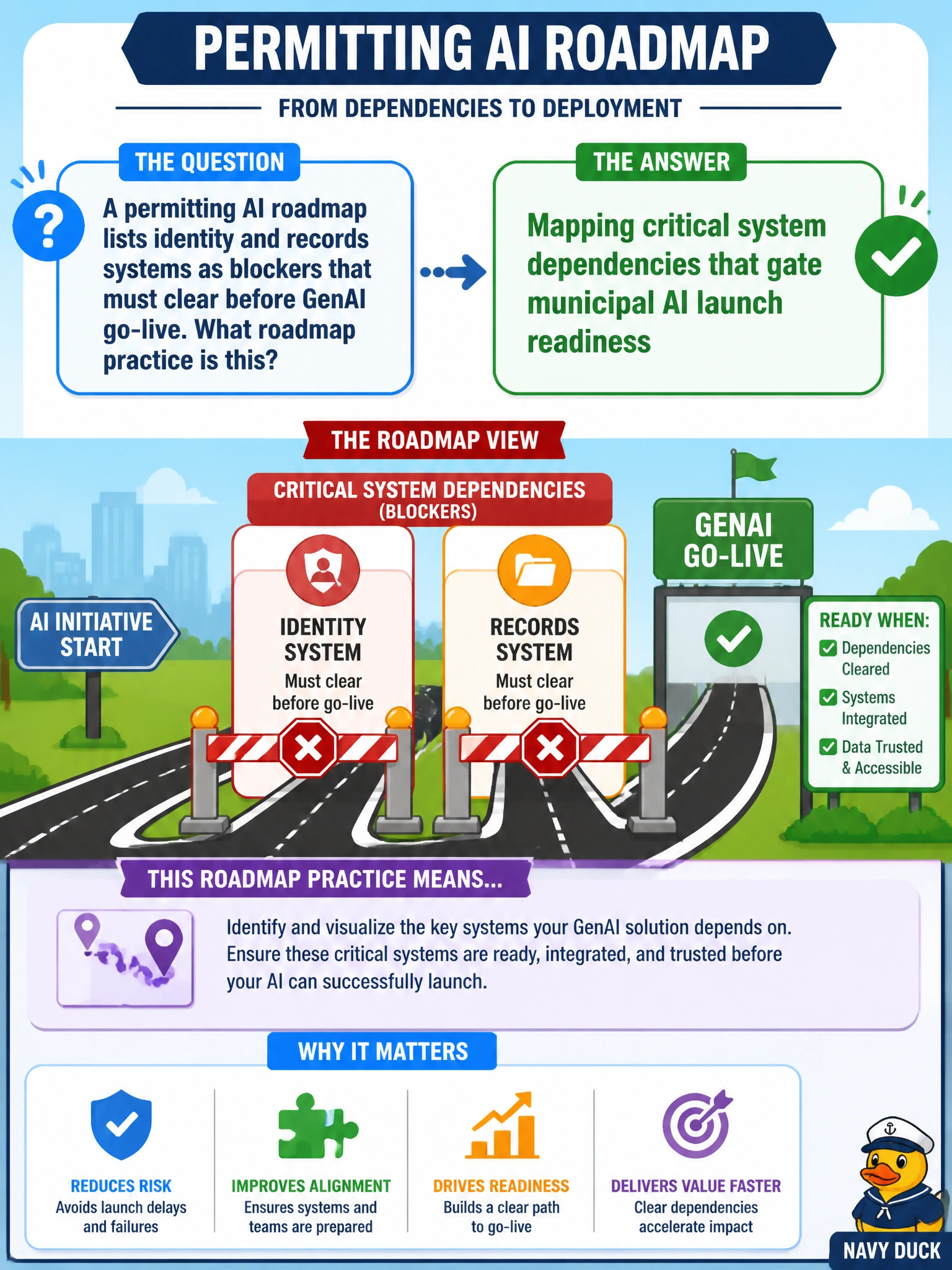
A permitting AI roadmap lists identity and records systems as blockers that must clear before GenAI go-live. What roadmap practice is this?
Select an answer to reveal the explanation.
Short Explanation
When identity and records aren’t ready, you’re putting a race car on the road without tires. Make those blockers visible on the roadmap so you can plan a safe launch.
Full Explanation
Mapping critical system dependencies that gate launch readiness is essential roadmap practice. For permitting GenAI, identity and records systems often determine whether the assistant can authenticate users, retrieve authoritative case history, and avoid hallucinated status. Listing those systems as blockers makes readiness visible to executives who might otherwise treat GenAI as a standalone app release. The roadmap then sequences prerequisite work instead of hiding it. Hiding system blockers so the go-live date looks green on slides fails transparency and sets up public failure. Assuming identity and records systems never matter for GenAI fails technically for permitting and most transactional civic services. Deploying GenAI before identity and records dependencies are resolved, then addressing them after launch, fails proactive risk management and can harm trust. Exam caveat: blockers should include owners, milestones, and alternate paths—for example, a staff-only pilot while identity modernizes—not merely red labels. Practical check: maintain a dependency register on the AI roadmap with status for identity, records, and other systems of record; prohibit GenAI go-live declarations while critical blockers remain open without an approved interim control.