
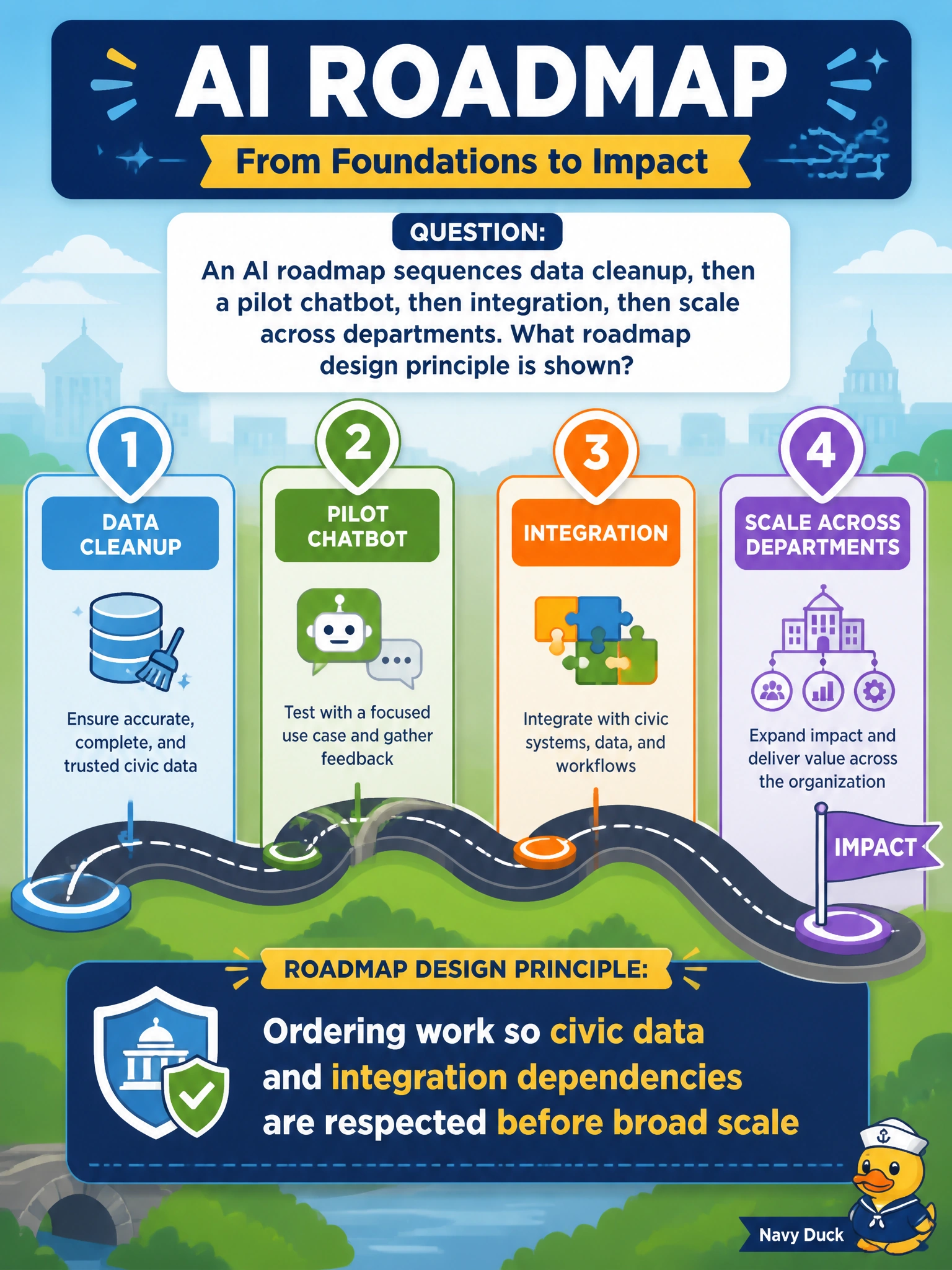
An AI roadmap sequences data cleanup, then a pilot chatbot, then integration, then scale across departments. What roadmap design principle is shown?
Select an answer to reveal the explanation.
Short Explanation
Clean the pantry, cook a small batch, then open the cafeteria. The roadmap respects data and integration steps before citywide scale.
Full Explanation
AI roadmap design should respect dependencies: data cleanup, constrained pilots, integration, then scale. Sequencing data cleanup before a pilot chatbot, then integration, then cross-department scale mirrors how municipal systems actually fail or succeed. Dirty identity, ticket, or knowledge data produces unreliable answers; unintegrated bots create swivel-chair work for staff; premature citywide scale multiplies those defects across every channel residents use. Ordered roadmaps reduce that failure mode and give councils a credible story about readiness rather than calendar ambition alone.
Scaling to every department before any data cleanup occurs fails dependency logic and spreads bad data impacts citywide before anyone can contain them. Skipping pilots and jumping straight from messy data to citywide go-live fails learning and risk containment that small municipal pilots are meant to provide. Treating integration as optional after scale is already complete fails because integration debt after scale is costlier, more politically painful, and harder to unwind without service disruption.
Exam caveat: sequencing is iterative—some cleanup continues during pilots—but the roadmap must still show foundation-before-scale intent with explicit gates. Operational check: gate each municipal AI scale decision on evidence from a pilot plus defined data-quality and integration exit criteria; do not schedule citywide rollout on calendar ambition alone, and record who signed the gate decision.