
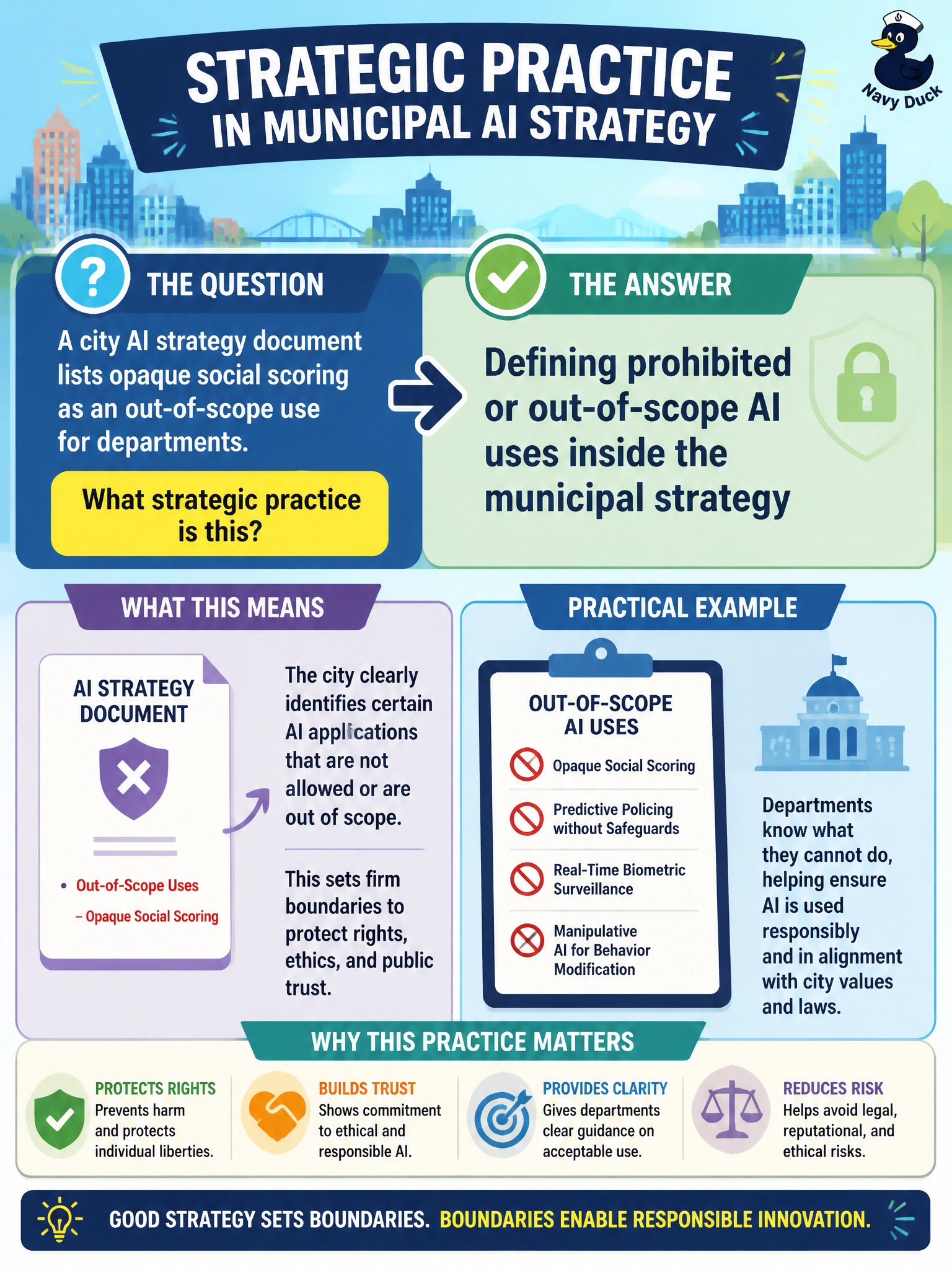
A city AI strategy document lists opaque social scoring as an out-of-scope use for departments. What strategic practice is this?
Select an answer to reveal the explanation.
Short Explanation
Good strategy says yes—and also says no. Putting opaque social scoring on the out-of-scope list keeps departments from wandering into forbidden territory.
Full Explanation
Municipal AI strategy should define prohibited or out-of-scope uses so departments have bright lines. Listing opaque social scoring as out of scope is that practice: it prevents experimental or vendor-driven scoring of residents that lacks transparency, contestability, and democratic legitimacy. Written boundaries reduce “innovation theater” that drifts into high-harm territory and give procurement and legal clear grounds to refuse proposals.
Encouraging every department to invent secret resident scores fails ethics, transparency, and usually law or policy. Avoiding any written boundaries so pilots can expand unchecked fails governance by design. Requiring social scoring before any other AI project may start fails by mandating a prohibited pattern as a prerequisite.
Exam caveat: out-of-scope lists should be reviewed as law, vendor offerings, and risk appetite change—but expansion of high-harm uses needs explicit public and legal process, not quiet pilot creep. Operational check: publish the out-of-scope list with the AI strategy, train department sponsors on it, and add a mandatory intake question: “Does this proposal involve resident scoring or ranking?” with automatic escalation if yes.