
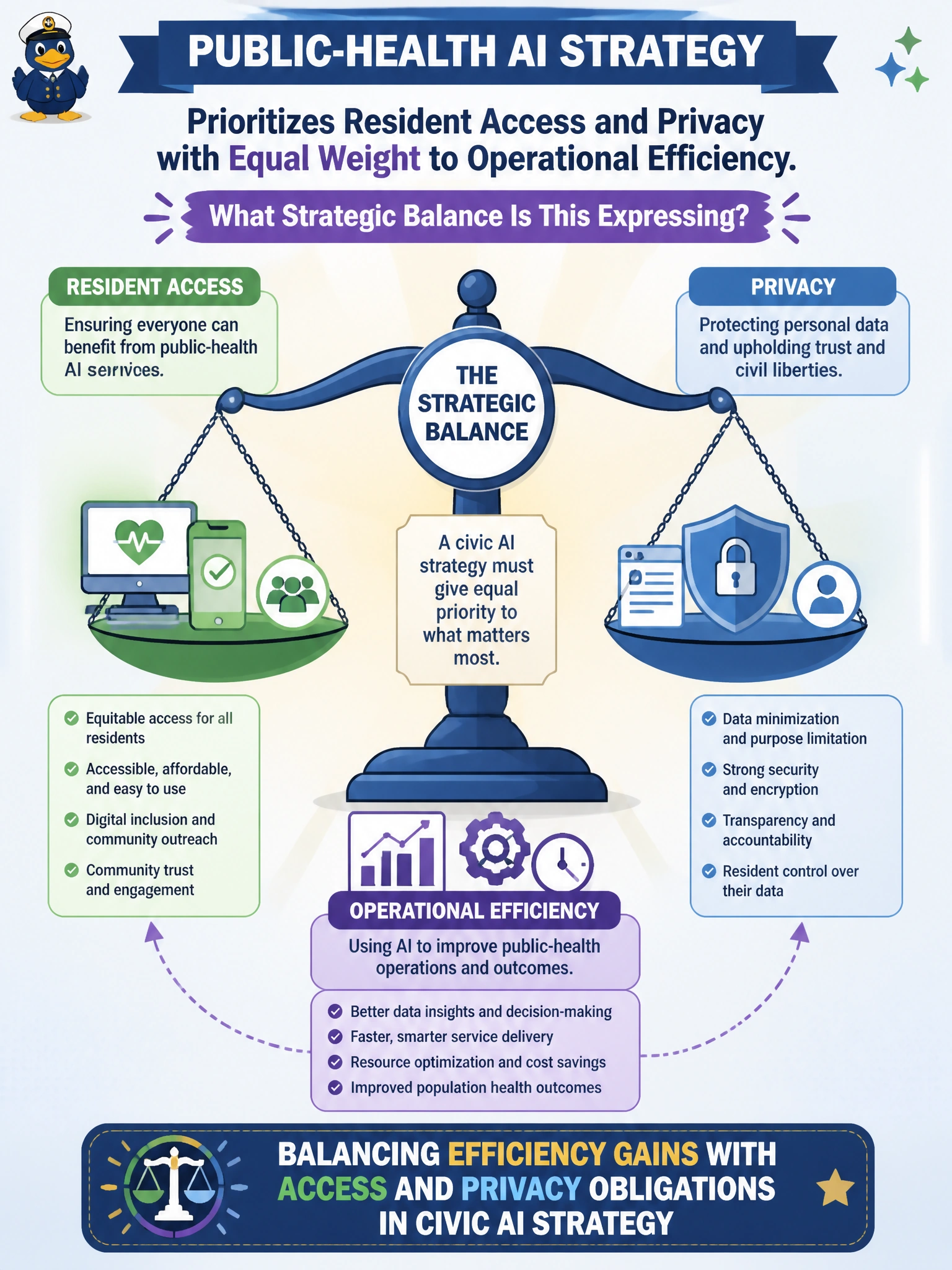
A public-health AI strategy prioritizes resident access and privacy with equal weight to operational efficiency. What strategic balance is this expressing?
Select an answer to reveal the explanation.
Short Explanation
Faster isn’t better if folks can’t reach care or privacy takes a hit. Public-health AI strategy has to hold efficiency, access, and privacy in the same hand.
Full Explanation
Public-health AI strategy must balance operational efficiency with access and privacy obligations. Efficiency alone can push chatbots or triage tools that leave digitally excluded residents behind or that over-collect sensitive health information. Weighting resident access and privacy equally with efficiency forces design choices such as multilingual channels, non-digital alternatives, minimization of data, retention limits, and strong access controls. That balance is a strategic stance, not a single project tweak.
Optimizing only for speed and discarding privacy protections fails public-health duties and trust. Treating access as optional once chatbots go live fails equity: go-live without access pathways widens service gaps. Declaring privacy irrelevant to public-health AI programs fails because health-related data is among the most sensitive categories municipalities handle.
Exam caveat: balance does not mean every efficiency initiative is blocked; it means access and privacy are non-negotiable constraints in scoring and design. Operational check: for each public-health AI proposal, require an access impact note (who cannot use the channel) and a privacy review (data types, lawful basis, retention) before efficiency ROI is even scored.