
Transit buys a vendor ETA model but partners with specialists to integrate it into its CAD/AVL stack. What sourcing pattern is this?
Select an answer to reveal the explanation.
Short Explanation
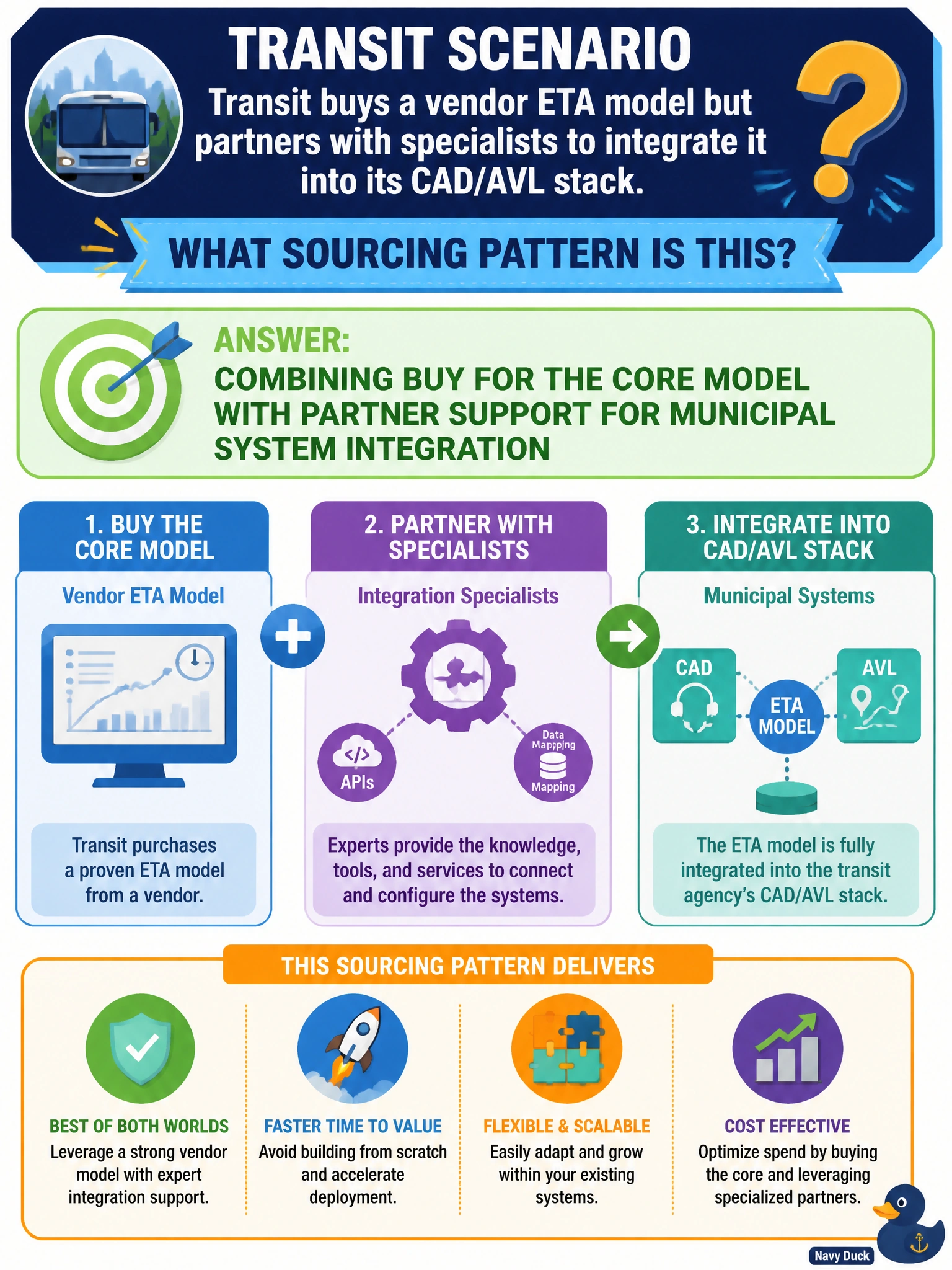
Buy the brains, partner for the plumbing. Transit gets a vendor ETA model and help hooking it into the real CAD/AVL world.
Full Explanation
Municipal AI sourcing frequently combines models: buy a proven capability and partner for complex integration into operational systems. Transit purchasing a vendor ETA model while partnering with specialists to integrate it into CAD/AVL is that pattern. The vendor supplies forecasting that would be costly to recreate; partners help wire predictions into the agency’s computer-aided dispatch and automatic vehicle location stack, where operational trust, latency, and failure modes matter. The municipality still owns service outcomes and acceptance criteria.
Rejecting all vendor products and rewriting ETA math from scratch only fails when a mature product already exists and the scarce skill is integration and operations, not reinventing arrival math. Buying nothing and hoping CAD/AVL invents ETA predictions alone fails because hoping is not a delivery model and leaves riders without improved estimates. Partnering only to market the vendor logo on bus wraps fails because branding is not integration or sourcing for operational AI capability.
Exam caveat: hybrid buy-plus-partner still needs clear RACI for model updates, data feeds, and incident response when ETA quality degrades. Operational check: for any civic AI that touches CAD/AVL or similar operational systems, document the buy component, the partner integration scope, data ownership, rollback, and who validates predictions against field performance before rider-facing release.