
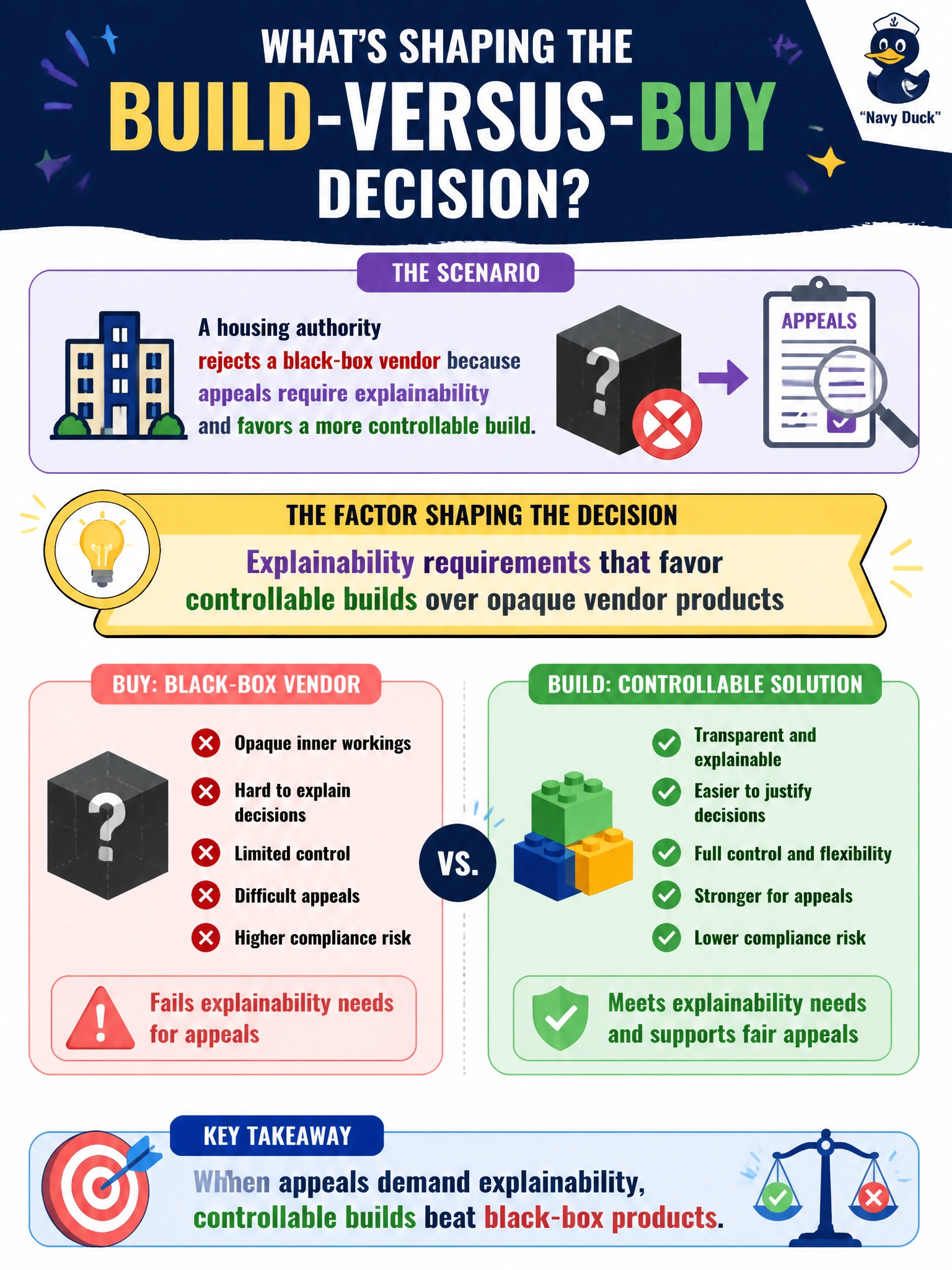
A housing authority rejects a black-box vendor because appeals require explainability and favors a more controllable build. What factor is shaping the build-versus-buy decision?
Select an answer to reveal the explanation.
Short Explanation
If residents can appeal, someone has to explain the why. Opaque black boxes fail that test, so a controllable build wins the day.
Full Explanation
Explainability requirements can force a municipality away from opaque vendor products toward more controllable builds or transparent solutions. Housing authority appeals and due-process workflows require staff to explain why an applicant received an adverse or disputed outcome. If a black-box vendor cannot produce understandable factors, audit trails, or contestable rationale, it fails operational and legal expectations even if raw accuracy looks strong. Favoring a controllable build is therefore driven by explainability as a decision criterion in build-versus-buy analysis.
Choosing vendors only by how opaque their marketing slides are fails because opacity is a risk, not a selection virtue. Preferring unexplained outcomes for every resident appeal fails due-process and service fairness expectations. Banning all AI from housing operations regardless of transparency fails because the reasoned factor here is explainability and control—not a categorical ban; transparent, reviewable systems may still be appropriate.
Exam caveat: “build” does not automatically equal explainable; custom models can also be opaque unless interpretability, logging, and human review are designed in. Operational check: before accepting any housing AI vendor or build, run a sample appeal scenario and verify staff can produce a resident-facing explanation with evidence from the system; treat inability to explain as a go/no-go failure.