
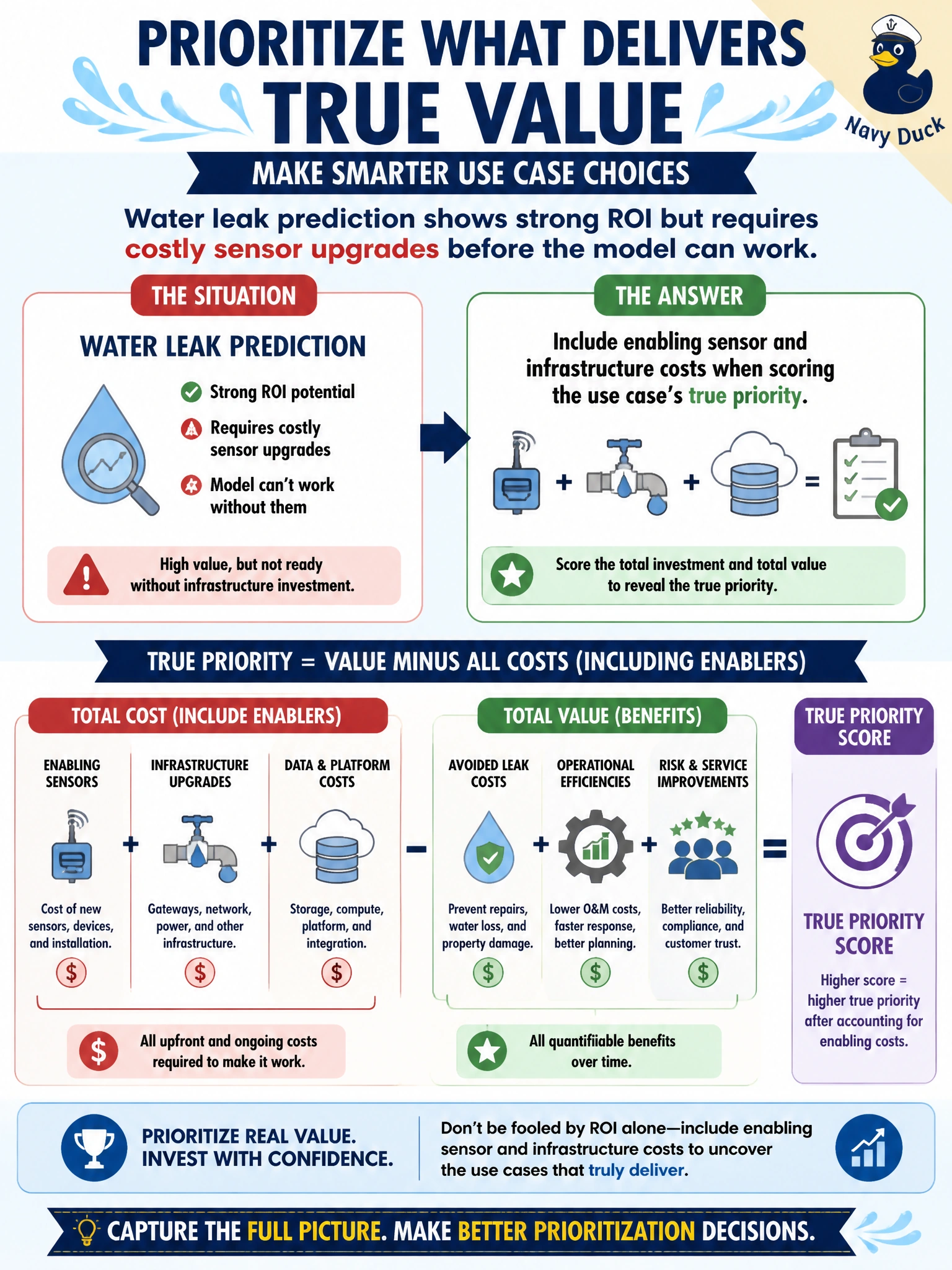
Water leak prediction shows strong ROI but requires costly sensor upgrades before the model can work. How should prioritization capture that?
Select an answer to reveal the explanation.
Short Explanation
A leak model without sensors is a weather app with no sky. Fold the upgrade bill into prioritization, or the ‘high ROI’ story is only half true.
Full Explanation
When water leak prediction shows strong ROI but requires costly sensor upgrades before the model can work, prioritization should include enabling sensor and infrastructure costs when scoring the use case’s true priority. Model license fees or algorithm enthusiasm are incomplete cost pictures if the predictive signal does not exist without capital upgrades. The correct approach works because total cost of enabling the AI—not just the AI component—determines whether apparent ROI survives contact with the capital plan.
Ignoring enabling infrastructure costs and scoring only the model license fee fails because it understates investment and overstates net return. Assuming sensors magically appear without budget once ROI looks high fails conceptually—high modeled benefits do not conjure funded field instrumentation. Rejecting any water utility AI forever because sensors exist fails because the presence of sensor requirements is a costing and sequencing issue, not a categorical ban on utility AI.
Exam caveat: sometimes sensor programs have independent operational value (non-revenue water reduction) and can be justified as shared infrastructure; still, that cost must be visible in the AI business case rather than hidden. Operational check: build a full cost stack (sensors, communications, integration, model, operations), show dependency sequencing, compare net ROI after enabling costs, and only elevate priority when funding for those enablers is realistic.