
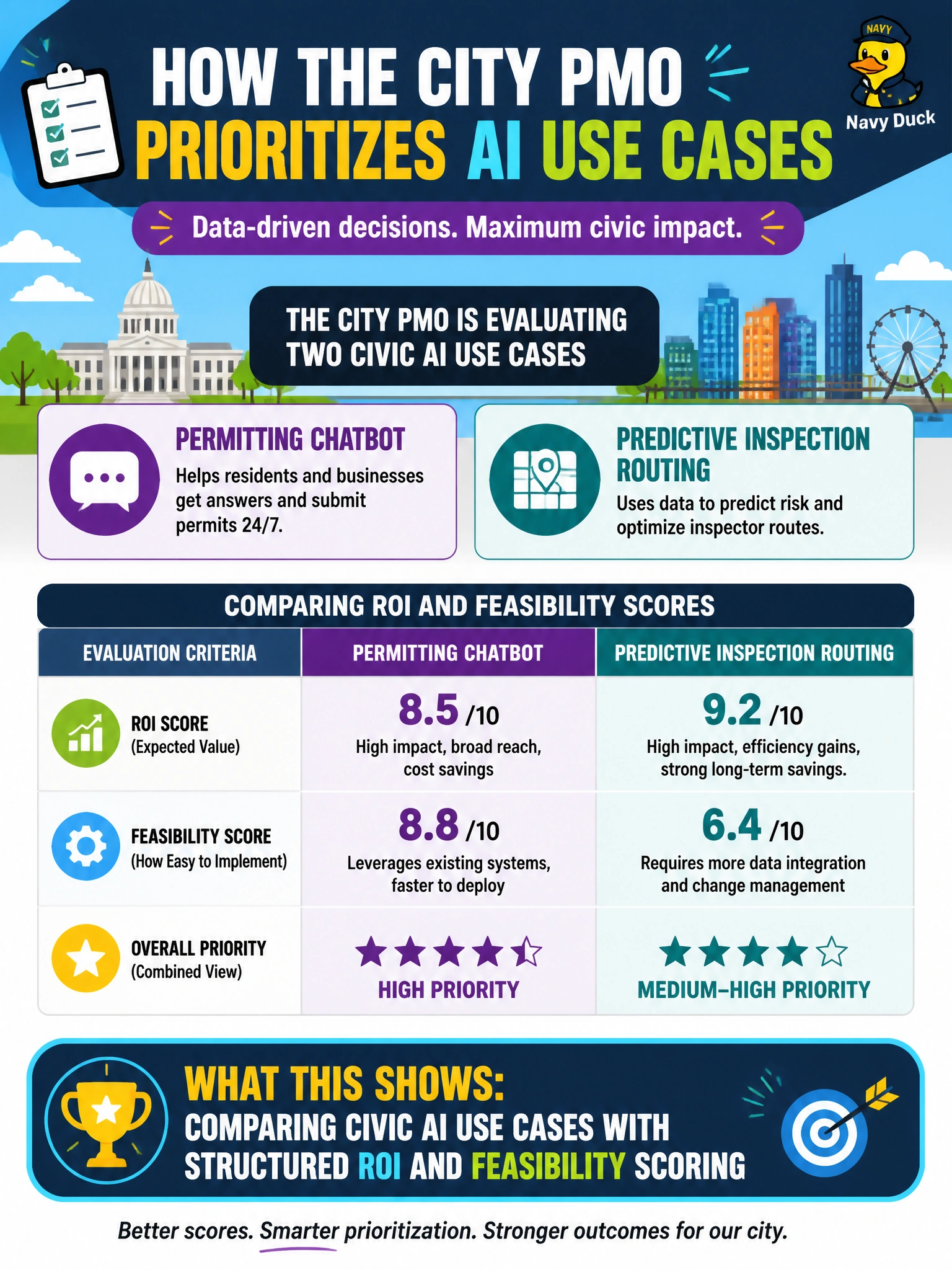
A city PMO ranks a permitting chatbot against predictive inspection routing using ROI and feasibility scores. What prioritization practice is shown?
Select an answer to reveal the explanation.
Short Explanation
ROI and feasibility scores are the city PMO’s weigh station. Chatbot versus inspection routing gets honest numbers—no concept-video beauty pageants.
Full Explanation
When a city PMO ranks a permitting chatbot against predictive inspection routing using ROI and feasibility scores, the prioritization practice shown is comparing civic AI use cases with structured ROI and feasibility scoring. Portfolio management needs a common scale so unlike ideas compete on expected value and deliverability rather than storytelling. The correct answer works because dual scoring prevents funding high-ROI fantasies that cannot be integrated and equally prevents easy-but-low-value work from crowding out harder, higher-impact civic AI.
Funding whichever idea has the flashiest concept video fails because marketing polish is not ROI or feasibility evidence. Prioritizing only ideas that avoid any feasibility discussion fails conceptually—it deliberately removes the constraint that protects municipalities from unbuildable commitments. Choosing randomly so every department feels equally surprised fails because random selection abandons value and readiness discipline and produces arbitrary civic outcomes.
Exam caveat: scores are decision aids, not oracles; equity, legal sensitivity, and strategic mandate can override a pure score rank, but those overrides should be explicit. Operational check: publish scoring criteria and weights, record evidence behind each ROI/feasibility input, compare chatbot versus routing on the same sheet, and document any executive override with rationale before committing budget.