
Housing caseworkers propose AI that summarizes long case notes before hearings. Why is this a strong opportunity candidate?
Select an answer to reveal the explanation.
Short Explanation
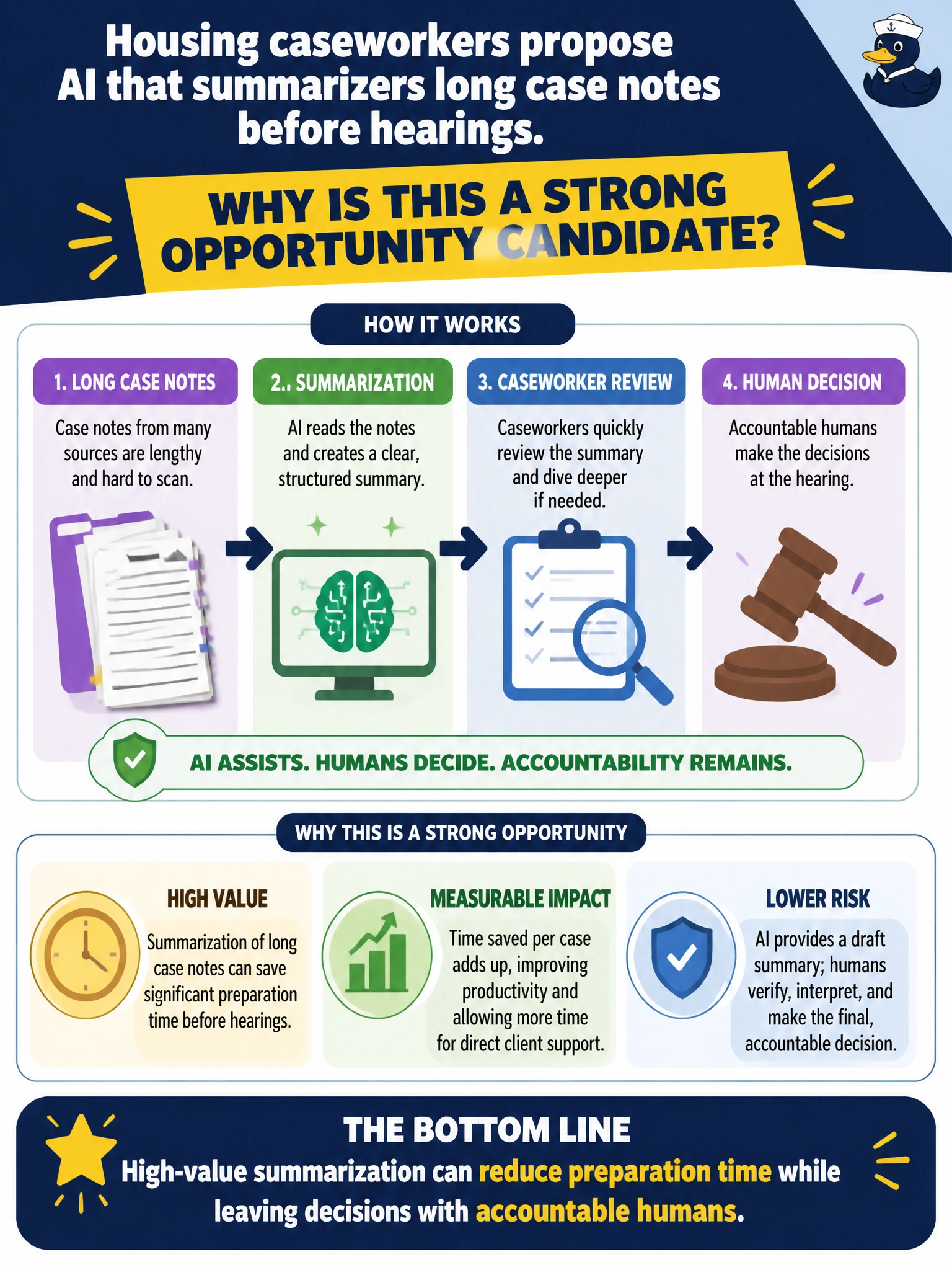
Thick case files are a maze before a hearing. A summarizer is a flashlight for the caseworker—not a robot judge and not an excuse to toss retention rules.
Full Explanation
Housing caseworkers proposing AI that summarizes long case notes before hearings present a strong opportunity because high-value summarization can reduce preparation time while leaving decisions with accountable humans. Case files are text-heavy and time-consuming to re-read under hearing deadlines; assistive compression improves readiness without transferring adjudicative power to a model. The correct rationale works because opportunity quality in social services often peaks where cognitive load is high and decision rights must remain human.
Claiming summaries remove the need for any case records retention fails because summarization tools do not repeal retention or audit obligations; source notes remain records. Asserting AI summaries should silently replace hearing officers without disclosure fails conceptually and ethically—decision substitution without transparency is inappropriate for housing adjudications. Claiming long notes never contain information relevant to hearings fails because the opportunity exists precisely because notes are relevant and burdensome to synthesize.
Exam caveat: summarizers can omit material facts or amplify bias present in notes; caseworkers must verify against sources, and high-stakes uses need disclosure and quality controls. Operational check: define summary as assistive only, require source-linked review before hearings, prohibit automated hearing decisions, and monitor error types (omissions, incorrect entities, tone distortion) during pilot evaluation.