
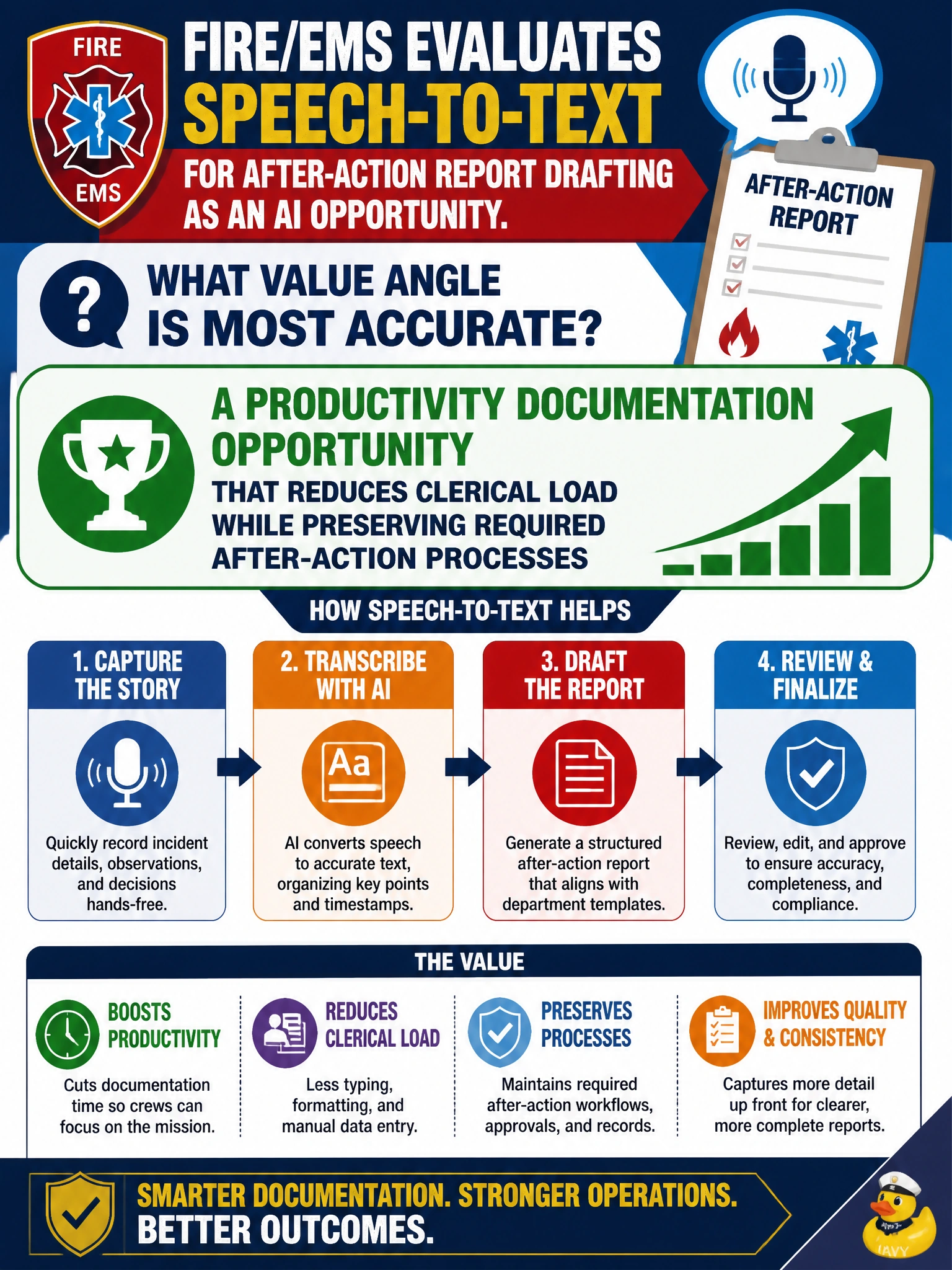
Fire/EMS evaluates speech-to-text for after-action report drafting as an AI opportunity. What value angle is most accurate?
Select an answer to reveal the explanation.
Short Explanation
After-action write-ups eat precious hours. Speech-to-text is a paperwork plow—help the humans document, do not hand the incident command to a voice model.
Full Explanation
When Fire/EMS evaluates speech-to-text for after-action report drafting, the most accurate value angle is a productivity documentation opportunity that reduces clerical load while preserving required after-action processes. Emergency services already mandate structured reviews; AI that drafts from audio can reclaim hours without replacing command judgment or formal review. The correct framing works because it separates documentation assistance from operational decision authority—an essential boundary in public-safety AI opportunity assessment.
Eliminating all incident reviews because audio files alone are sufficient forever fails because after-action processes exist for learning, accountability, and continuous improvement; raw audio is not a substitute for reviewed findings. Using AI only to generate public entertainment clips from emergency calls fails conceptually—and ethically—because emergency audio is sensitive operational content, not entertainment feedstock. Replacing certified responders with voice models for field decisions fails because the opportunity is clerical drafting support, not autonomous incident command.
Exam caveat: speech-to-text drafts can contain transcription errors and sensitive details; human review, retention rules, and access controls remain mandatory before reports are finalized or shared. Operational check: keep after-action ownership with designated officers, require human edit/approval of AI drafts, validate accuracy on sample incidents, and confirm records-retention handling for audio, transcripts, and final reports.