
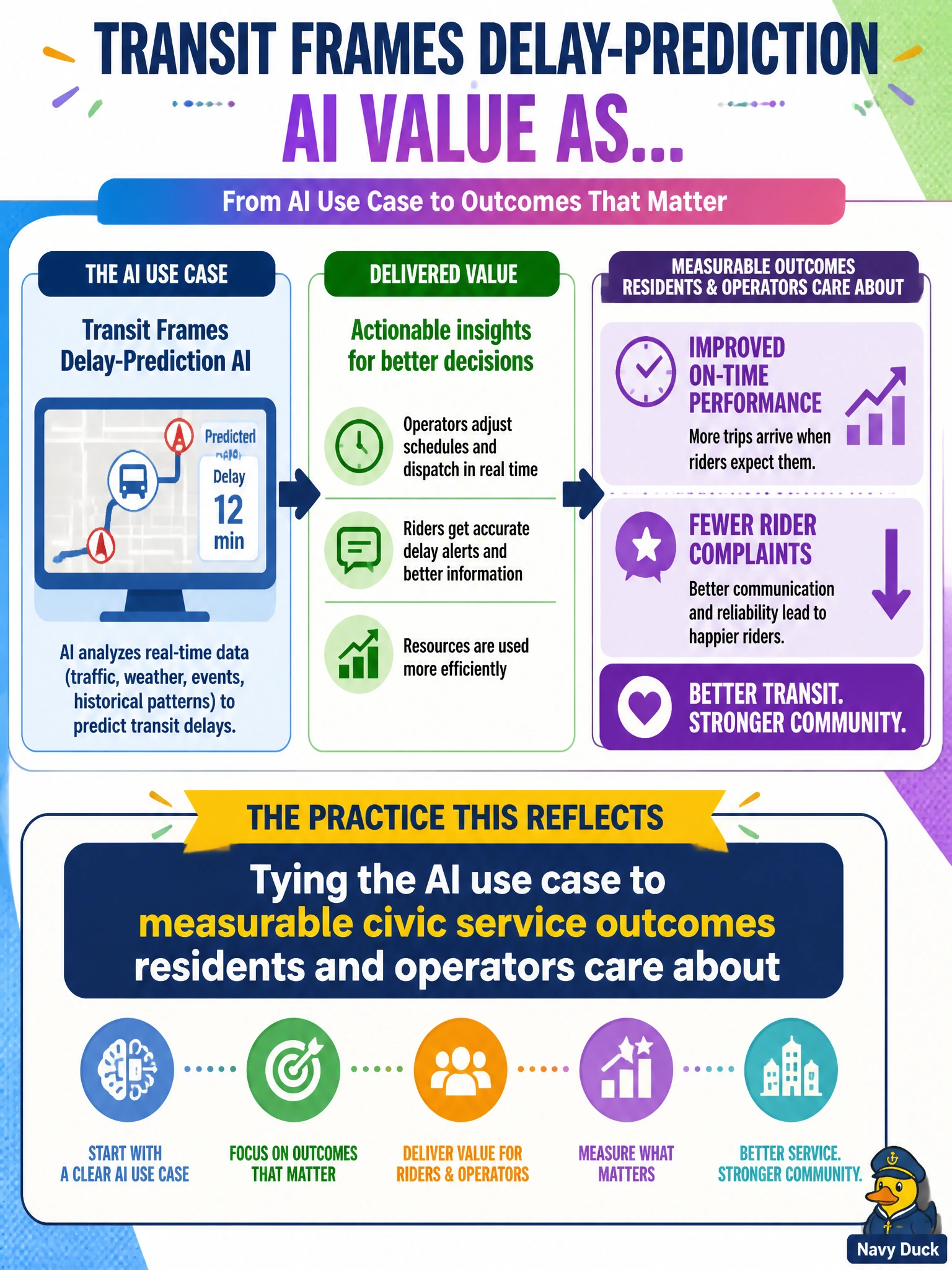
Transit frames delay-prediction AI value as improved on-time performance and fewer rider complaints. What practice does this reflect?
Select an answer to reveal the explanation.
Short Explanation
If the buses run on time and the complaint line calms down, riders feel the AI win. Tie the use case to those meters—not to how thick the vendor slide deck is.
Full Explanation
When transit frames delay-prediction AI value as improved on-time performance and fewer rider complaints, the practice reflected is tying the AI use case to measurable civic service outcomes residents and operators care about. On-time performance and complaint volume are established service KPIs; linking AI to them makes the opportunity testable and communicable to boards and riders. The correct answer works because it replaces vague AI enthusiasm with outcome hypotheses that can later be proven or falsified.
Defining value only as the number of slides in the vendor deck fails because presentation volume is sales theater, not service performance. Avoiding any link between AI and published service metrics fails conceptually—it prevents accountability and prioritization. Treating rider complaints as unrelated to AI outcomes forever fails because complaint reduction is a legitimate, resident-facing outcome signal for delay and communication performance when measured carefully.
Exam caveat: predicted improvements must account for confounding factors (weather, construction, staffing); attribution design matters or benefits claims will not survive scrutiny. Operational check: baseline on-time and complaint metrics by route/period, define how delay predictions will change dispatch or rider communications, and schedule a benefits review that separates model accuracy from operational response quality.