
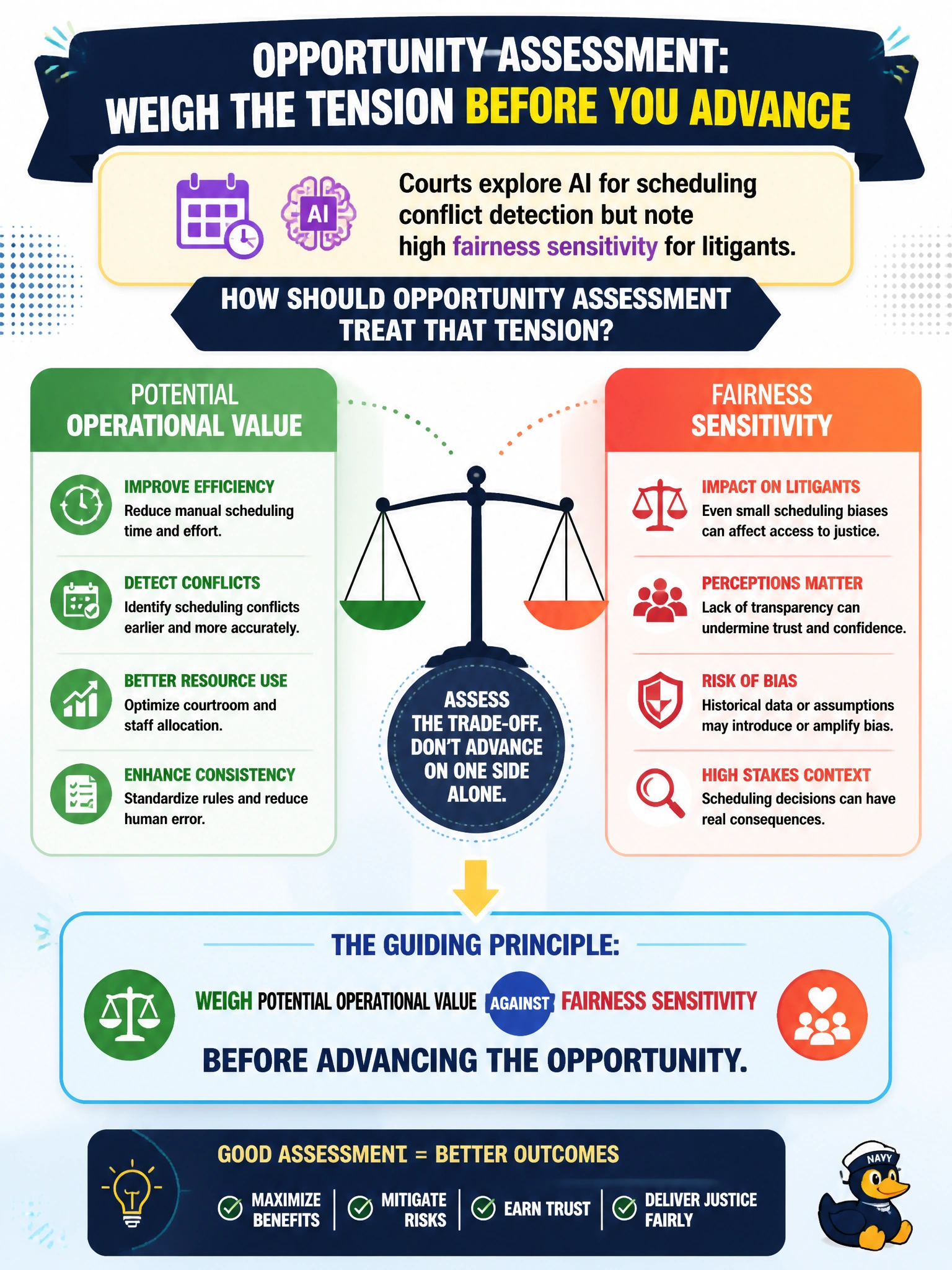
Courts explore AI for scheduling conflict detection but note high fairness sensitivity for litigants. How should opportunity assessment treat that tension?
Select an answer to reveal the explanation.
Short Explanation
You can recognize the real operational value of detecting scheduling conflicts while taking fairness for litigants seriously. Weighing both before advancing the opportunity keeps fairness in view alongside efficiency.
Full Explanation
When courts consider AI for scheduling conflict detection and recognize high fairness sensitivity for litigants, opportunity assessment should weigh potential operational value against fairness sensitivity before advancing the opportunity. Scheduling efficiency may offer real benefits, but errors or opaque prioritization can burden parties unequally and undermine trust. Considering both value and potential harm is appropriate because efficiency alone is not enough in a justice setting. Ignoring fairness on the assumption that scheduling is never consequential fails because scheduling can affect access to justice, delays, and case outcomes. Maximizing automation without human review, while treating efficiency as more important than fairness risks, fails because it discounts those risks and removes a human check from a sensitive process. Selecting the opportunity solely because a vendor demo looked impressive fails because a polished demonstration does not establish that the system is fair or suitable for court use. Exam caveat: high fairness sensitivity may call for a constrained scope, such as assistive conflict flags, and for audit logs, human final control, and stakeholder consultation; an opportunity may need to wait until governance is ready. Practical check: document who scheduling changes affect, define human review of AI-suggested conflicts, assess pilot results for disparate impact, and obtain justice-system stakeholder sign-off before expansion.