
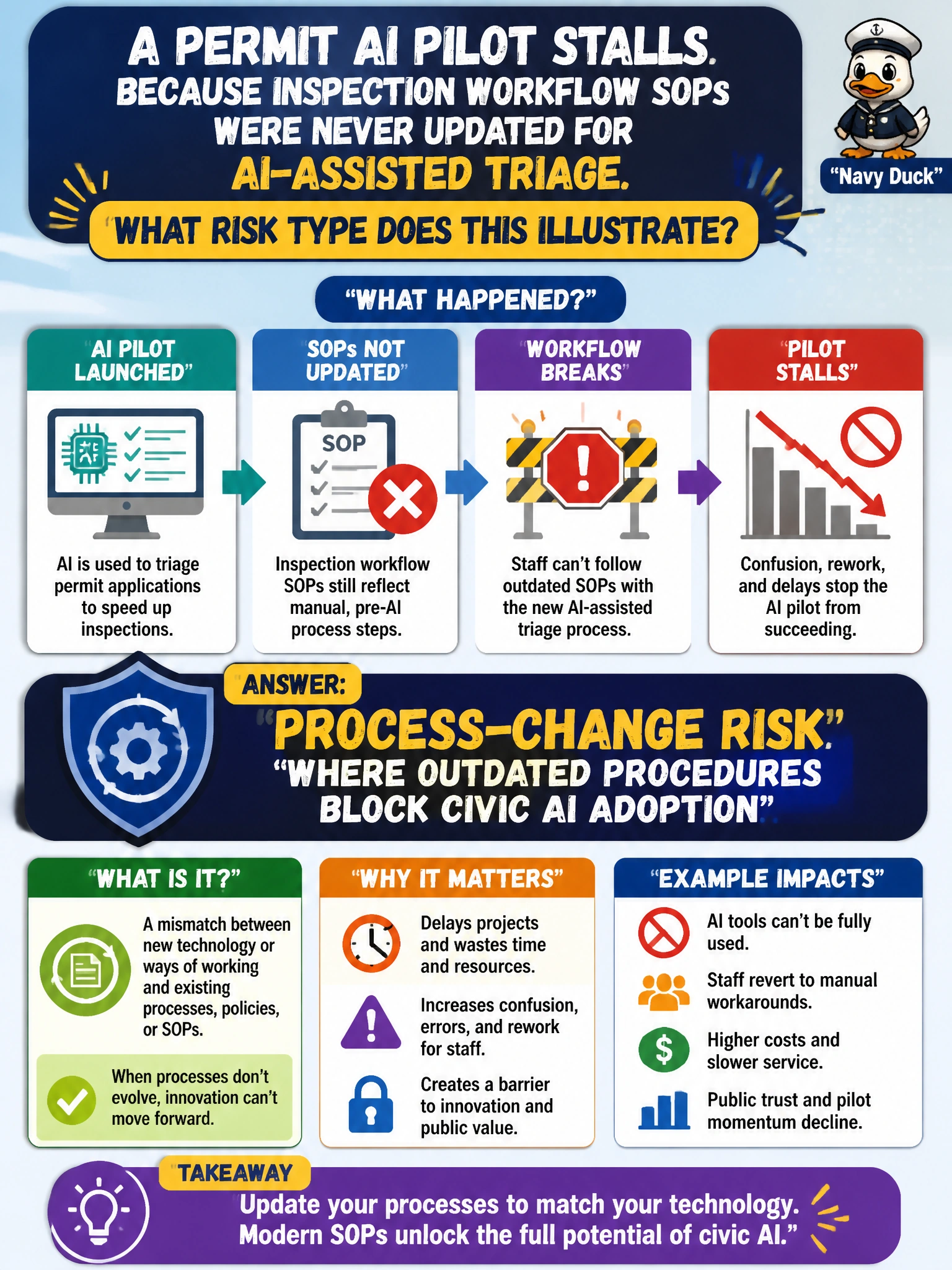
A permit AI pilot stalls because inspection workflow SOPs were never updated for AI-assisted triage. What risk type does this illustrate?
Select an answer to reveal the explanation.
Short Explanation
AI cannot follow a playbook that still pretends the old paper shuffle is law. Stale SOPs are process risk—update the workflow, or the pilot stays stuck in the driveway.
Full Explanation
A permit AI pilot that stalls because inspection workflow SOPs were never updated for AI-assisted triage illustrates process-change risk where outdated procedures block civic AI adoption. Staff cannot legitimately use model outputs if official procedures still describe only the pre-AI handoffs, documentation, and escalation rules. The correct answer works because process readiness is part of adoption: technology can be live while the operating system of work remains frozen, producing stalled value and shadow workarounds.
Claiming perfect process readiness with no further changes required fails because the stem states SOPs were never updated—the opposite of process readiness. Asserting risk caused only by an excess of documented SOPs that already include AI fails conceptually; the problem is outdated SOPs, not surplus AI-aware documentation. Calling it a marketing risk about brochure gloss levels fails because external collateral quality is unrelated to whether inspectors can follow authorized procedures when using triage outputs.
Exam caveat: updating SOPs is not merely clerical—changes may require quality, legal, and union review, and temporary work instructions may be needed during pilots. Operational check: rewrite inspection triage procedures to specify when to use AI scores, required human verification, documentation of overrides, and escalation; train on the new SOP; and measure compliance before calling the pilot successful.