
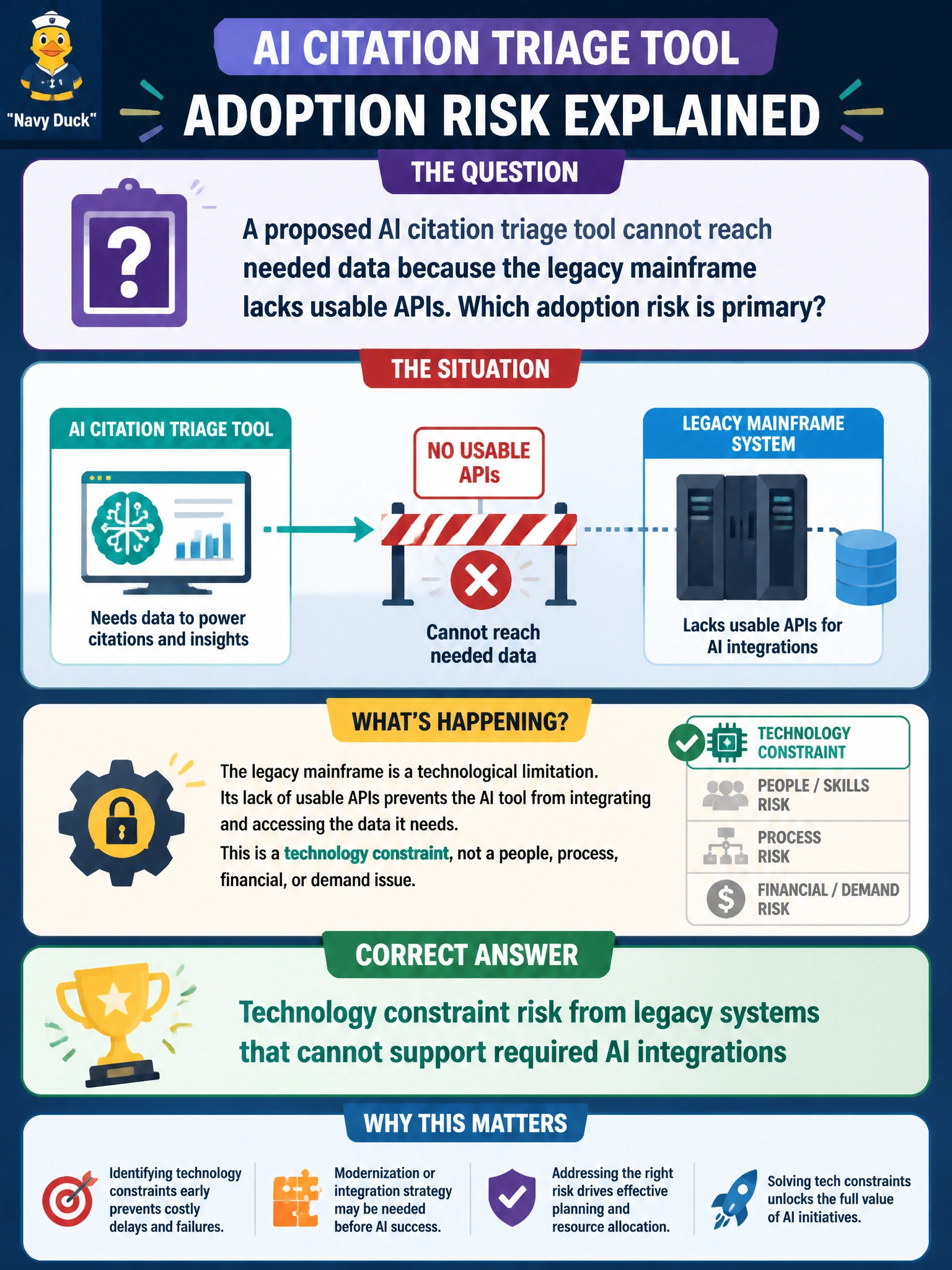
A proposed AI citation triage tool cannot reach needed data because the legacy mainframe lacks usable APIs. Which adoption risk is primary?
Select an answer to reveal the explanation.
Short Explanation
No API is like a vault with no door—the triage AI can knock forever. That is technology risk: legacy platforms blocking the pipes AI needs.
Full Explanation
When a proposed AI citation triage tool cannot reach needed data because the legacy mainframe lacks usable APIs, the primary adoption risk is technology constraint risk from legacy systems that cannot support required AI integrations. Civic AI value frequently depends on timely access to authoritative operational data; without interfaces, extracts, or modern middleware, the model cannot operate on the records that matter. The correct answer works because it locates the blocker in platform integration capacity, not in algorithm fashion or branding.
Claiming unlimited modern APIs already exist for every municipal system fails because the stem states the opposite condition for the mainframe. Limiting risk to the shade of blue on citation envelopes fails conceptually—print aesthetics do not enable data access. Guaranteeing success if the mainframe logo is redesigned fails because visual identity changes do not create APIs, secure data paths, or integration contracts.
Exam caveat: technology constraint risk can sometimes be mitigated with controlled batch extracts or an anti-corruption layer, but those patterns introduce latency, freshness, and security tradeoffs that must be assessed explicitly—not assumed away. Operational check: run an integration feasibility spike before promising triage AI; document available interfaces, data latency, auth model, and cost of remediation; and only prioritize the use case if enabling integration work is funded.