
A city attorney joins AI readiness fieldwork to review records-retention impacts of proposed GenAI pilots. Why include that stakeholder?
Select an answer to reveal the explanation.
Short Explanation
GenAI drafts can still be records, and records have rules. Bringing the city attorney along on readiness fieldwork is like inviting the building inspector before you pour concrete.
Full Explanation
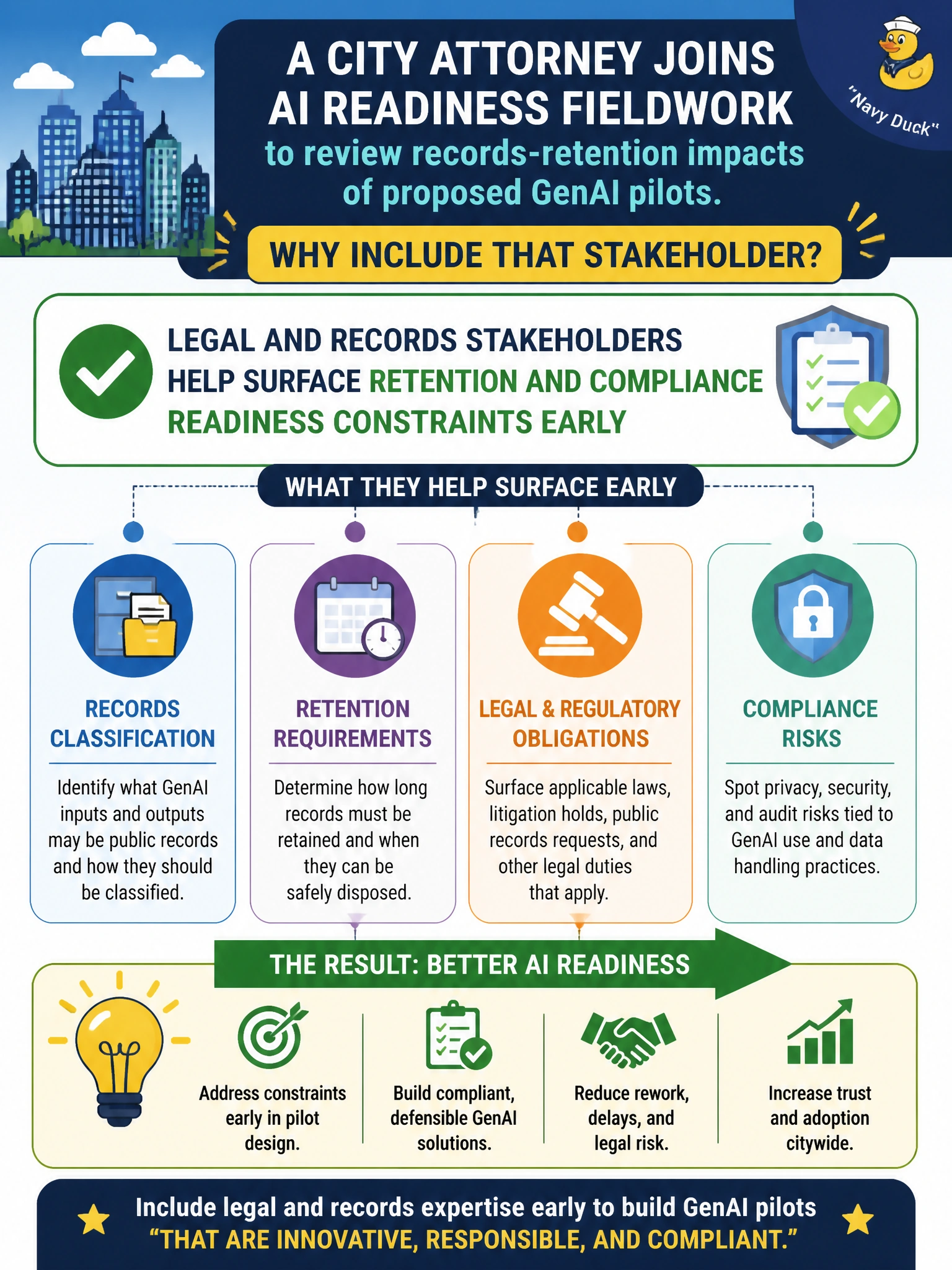
Including the city attorney in AI readiness fieldwork to review records-retention impacts of proposed GenAI pilots is correct because legal and records stakeholders help surface retention and compliance readiness constraints early. Generative assistants can create drafts, chats, and summaries that may still be public records, discovery material, or retention-scheduled content depending on jurisdiction and use. The correct answer works because early counsel involvement prevents pilots from hard-coding retention-blind architectures, ephemeral chat habits that violate policy, or retention gaps that later create legal exposure.
Claiming attorneys only select office furniture for AI teams fails because it trivializes a core civic control function unrelated to facilities shopping. Asserting legal review is unnecessary for any municipal GenAI use fails conceptually—public bodies remain subject to records, privacy, and process laws regardless of whether software is generative. Claiming records rules never apply to AI-assisted drafts or chats fails because many jurisdictions treat substantive work product and communications by retention schedules irrespective of the authoring tool.
Exam caveat: counsel participation is necessary but not sufficient; records officers, privacy officers, and IT must jointly define retention, hold, and disposal behaviors for prompts, outputs, and logs. Operational check: before GenAI pilot kickoff, document which output classes are records, where they are stored, retention periods, and who can export or delete—then test those controls in the pilot environment.