
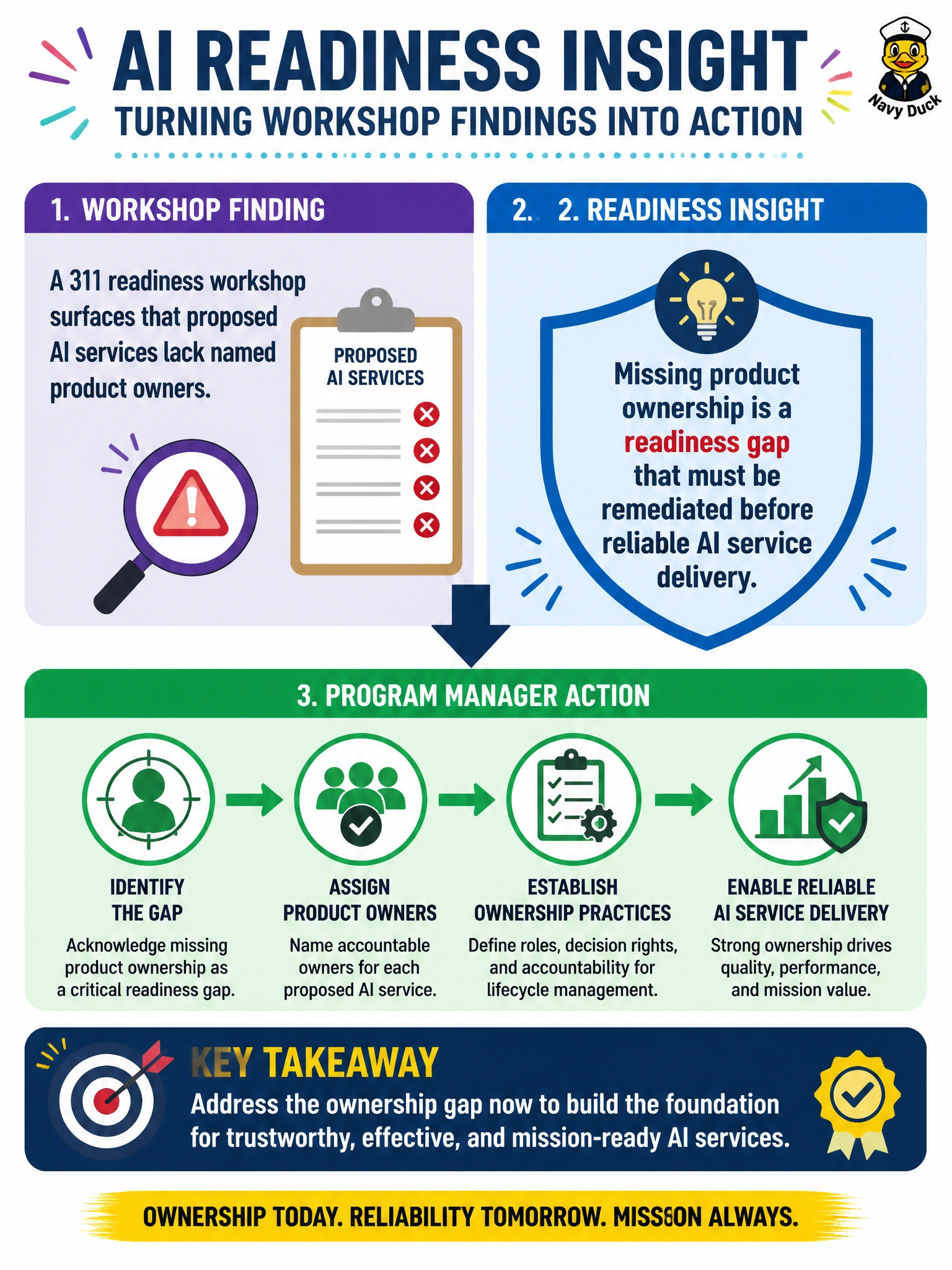
A 311 readiness workshop surfaces that proposed AI services lack named product owners. What readiness insight should the program manager act on?
Select an answer to reveal the explanation.
Short Explanation
If nobody owns the AI service, it is an orphan with a fancy badge. Readiness workshops earn their keep when they expose missing product owners before launch day drama.
Full Explanation
When a 311 readiness workshop surfaces that proposed AI services lack named product owners, the program manager should treat missing product ownership as a readiness gap that must be remediated before reliable AI service delivery. Product owners provide backlog authority, quality standards, escalation paths, and accountability for resident-facing outcomes. The correct insight works because AI services without owners become orphans: models drift, content goes stale, complaints have nowhere to land, and no one can decide when to pause or retrain.
Claiming ownership gaps are irrelevant once a chatbot logo is approved fails because branding is not an operating model; logos do not create decision rights or service-level accountability. Restricting workshops to cafeteria menus for morale fails conceptually—workshops exist to expose delivery blockers, not to substitute for facilities catering discussions. Asserting that any volunteer from facilities can own AI without role clarity fails because ownership requires domain authority, time allocation, and escalation access, not casual volunteering.
Exam caveat: naming an owner on a slide is insufficient if that person lacks budget influence, vendor management authority, or protected time; paper ownership still leaves a readiness gap. Operational check: for each proposed AI service, assign a named product owner and deputy, define decision rights in a RACI, and block go-live until ownership is accepted in writing by the responsible department.