
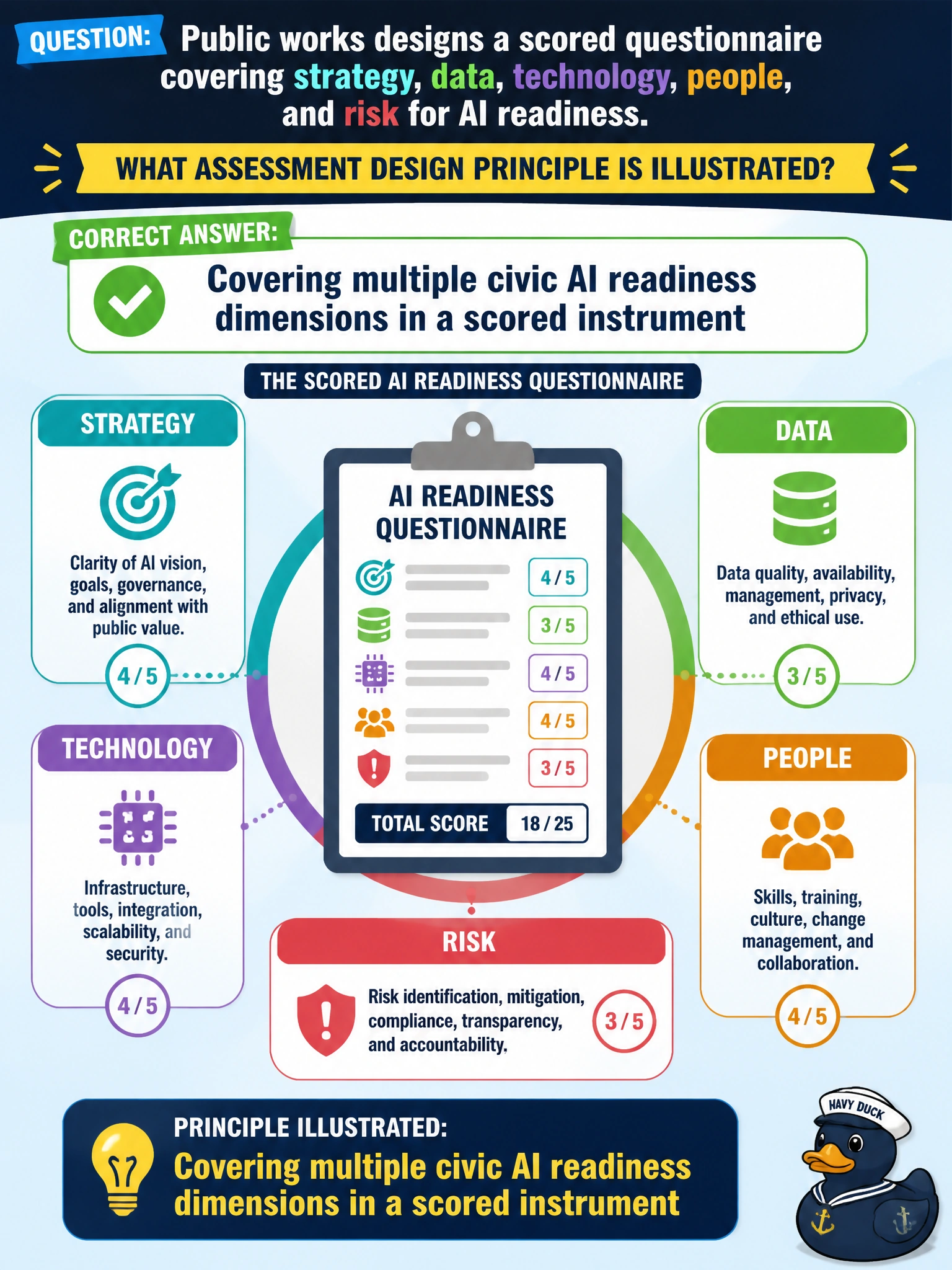
Public works designs a scored questionnaire covering strategy, data, technology, people, and risk for AI readiness. What assessment design principle is illustrated?
Select an answer to reveal the explanation.
Short Explanation
A good readiness quiz hits strategy, data, tech, people, and risk—the full toolbox. One cute question about logos leaves you flying blind when the digger trucks need real AI help.
Full Explanation
Designing a scored questionnaire that covers strategy, data, technology, people, and risk illustrates the assessment design principle of covering multiple civic AI readiness dimensions in a scored instrument. Multi-dimension instruments let public works compare unlike gaps on a common scale and prioritize remediation rather than debating anecdotes. The correct answer works because AI failure modes in municipal settings are rarely single-factor: a strong strategy memo cannot rescue unusable data, and strong technology without workforce and risk controls still fails adoption.
Asking only about preferred coffee brands in the field yard fails because trivial workplace preferences are not readiness dimensions and produce no actionable AI investment signal. Limiting the survey to a single question about logo colors fails conceptually for the same reason—brand cosmetics do not measure capability to deliver AI services. Excluding data and risk topics because they feel inconvenient fails because those dimensions are often where civic AI programs actually break; omitting them creates a falsely green scorecard.
Exam caveat: a scored instrument is only as good as consistent scoring guidance and rater calibration; without definitions, departments will interpret ‘yellow’ differently and the portfolio will mis-sequence work. Operational check: define each dimension with observable criteria, pilot the questionnaire with one bureau, calibrate scoring examples, then roll out—and always pair scores with narrative evidence, not numbers alone.