
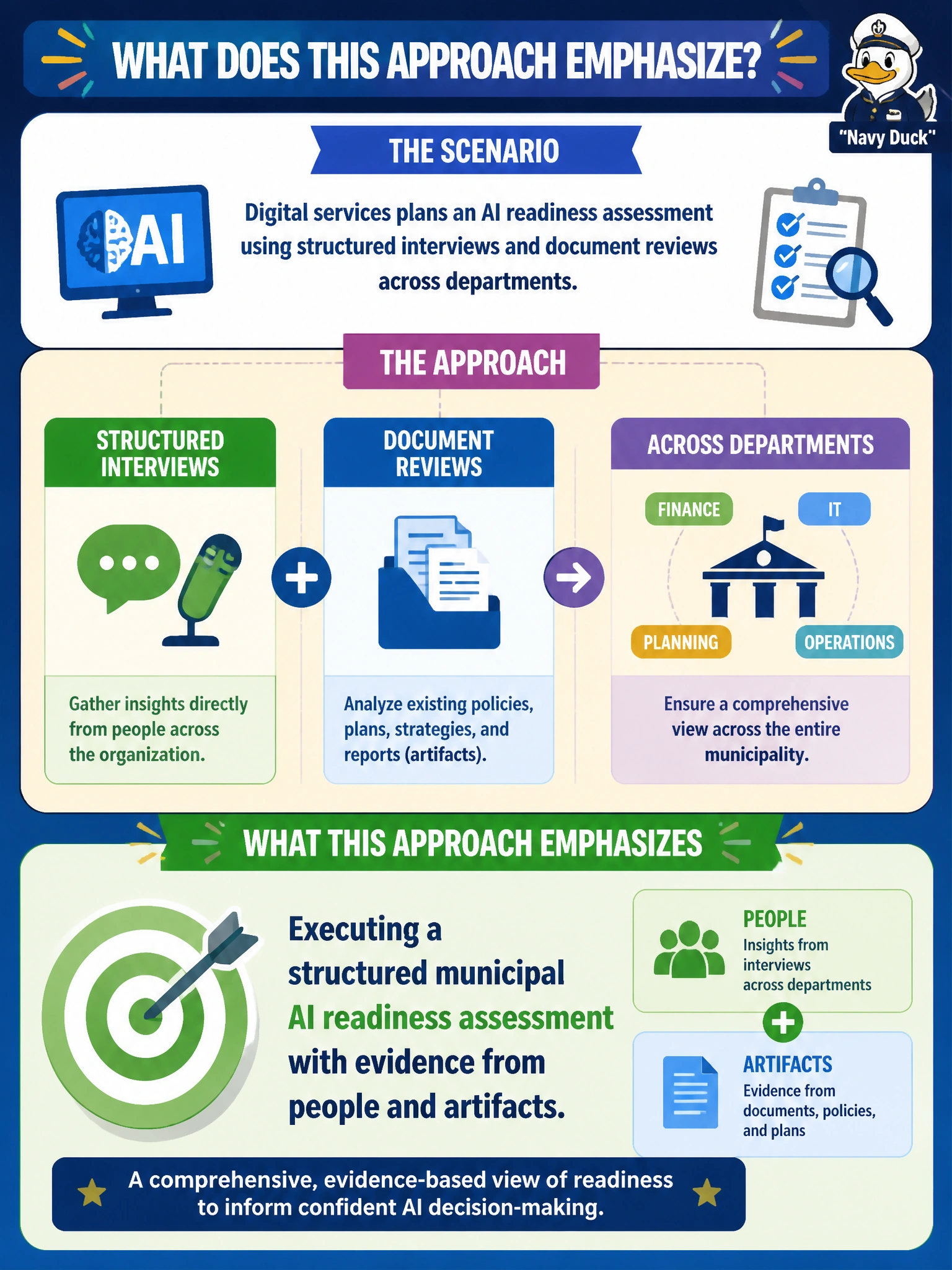
Digital services plans an AI readiness assessment using structured interviews and document reviews across departments. What does this approach emphasize?
Select an answer to reveal the explanation.
Short Explanation
You get a fuller picture when you pair structured interviews with document reviews, rather than relying on hallway rumors or equipment counts. This evidence-based approach lets you compare what people report with the policies and procedures they use.
Full Explanation
Executing a structured municipal AI readiness assessment with evidence from people and artifacts emphasizes checking both how work happens and what the organization has documented. Structured interviews can reveal sponsorship quality, cultural constraints, and real workflows; document reviews can test whether policies, data inventories, architectures, and operating procedures exist and are used. The two sources support triangulation: staff anecdotes alone or unread policy documents alone are insufficient. Relying only on hallway rumors about which tools staff like fails because informal preferences are not a controlled evidence method and miss policy, data, and risk realities. Relying on vendor assurances and demos without internal interviews or document reviews fails because product capability does not establish a municipality’s readiness to adopt that product safely. Counting unused mice and keyboards alone fails because peripheral inventory says little about strategy, data quality, skills, governance, or integration readiness. Exam caveat: even a structured assessment is a sample, so skipping high-risk departments such as health, public safety, or social services can create false confidence. Practical check: publish the interview roles, artifact types, and scoring rubric; retain evidence pointers; and have departments acknowledge findings before scores inform budget decisions.