
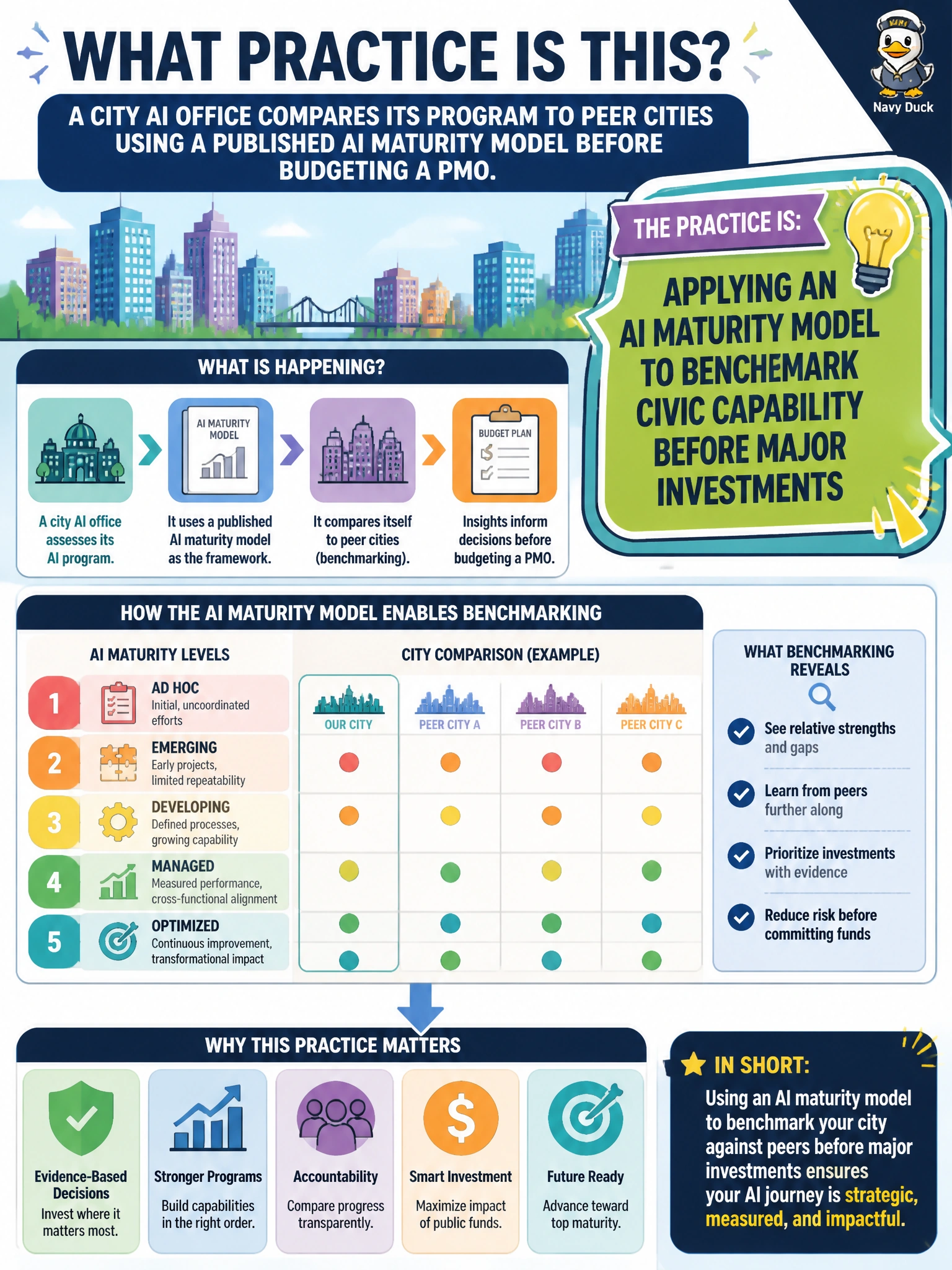
A city AI office compares its program to peer cities using a published AI maturity model before budgeting a PMO. What practice is this?
Select an answer to reveal the explanation.
Short Explanation
Peer cities are like nearby fleets—you peek under their hoods before you buy the same truck. A maturity model turns that peek into a structured score so the PMO budget follows capability gaps, not vibes.
Full Explanation
Applying a published AI maturity model before budgeting a municipal PMO is peer benchmarking of civic capability: the city AI office scores itself against structured dimensions and levels so investment follows evidence rather than vendor theater. Maturity models typically cover strategy, governance, data, technology, workforce, and delivery practices, giving program managers a shared vocabulary for comparing peer cities and for explaining to boards why certain readiness work must precede flashy builds. The correct practice works because it converts anecdotal peer stories into comparable scores that justify PMO scope, staffing, and sequencing.
Skipping comparison and funding every vendor demo equally fails because it treats procurement as entertainment rather than capability building; scarce civic budgets then chase demos instead of closing measured gaps. Ranking peers by skyline height and tourism slogans fails conceptually because physical or marketing prestige is not AI operating maturity—those proxies do not predict data readiness, governance discipline, or delivery capacity. Replacing maturity review with a single social-media poll of residents fails because public sentiment about AI is not a substitute for assessing internal processes, skills, controls, and integration maturity that determine whether services can be run safely.
Exam caveat: maturity models are diagnostic and directional, not pass/fail licenses; a peer score does not authorize skipping privacy, procurement, or labor review for a specific use case. Operational check: document the model version and dimensions used, map each low score to a funded remediation owner, and require that PMO charter language cite those gaps before approving multi-year AI portfolio spend.