
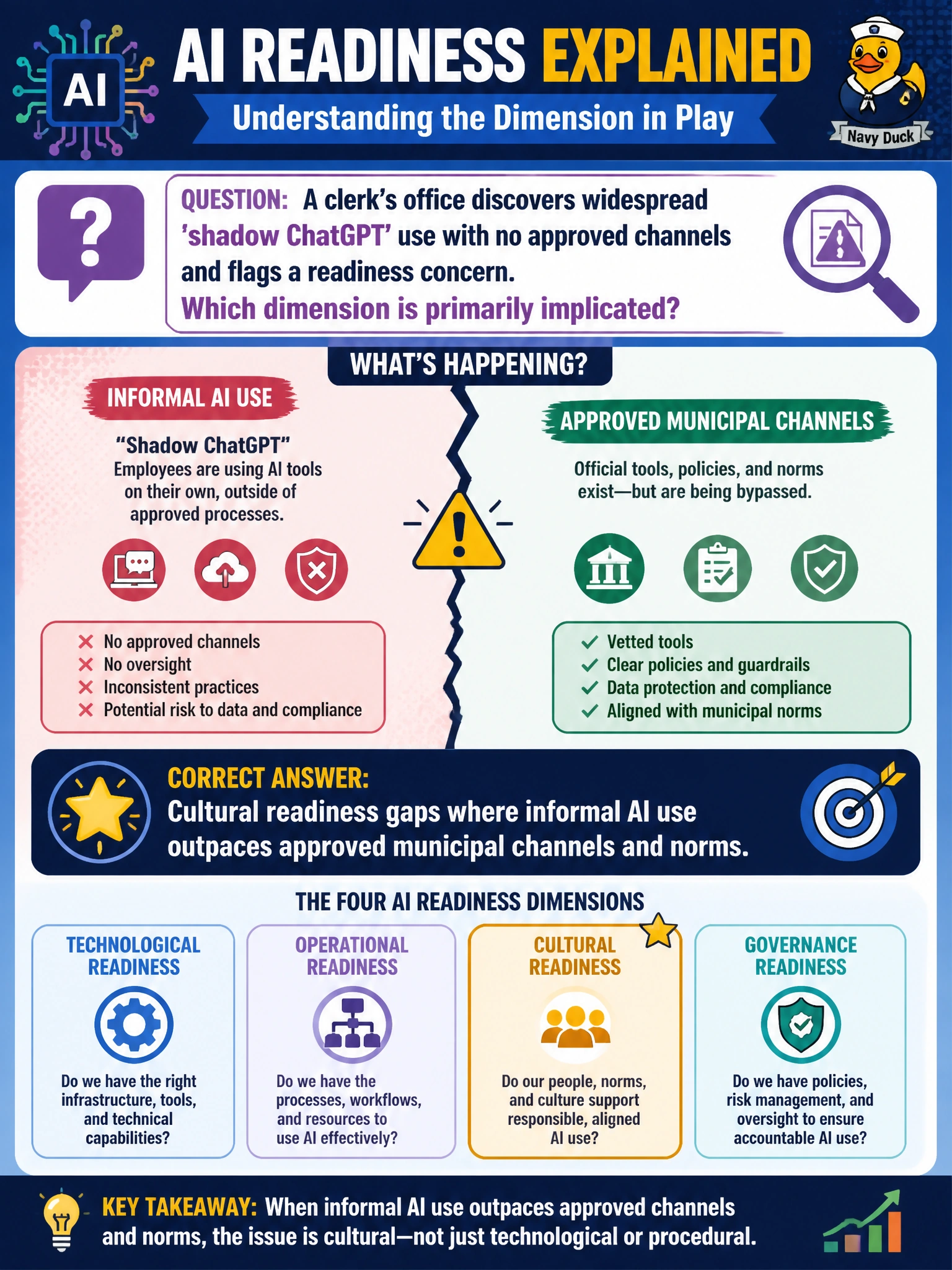
A clerk’s office discovers widespread ‘shadow ChatGPT’ use with no approved channels and flags a readiness concern. Which dimension is primarily implicated?
Select an answer to reveal the explanation.
Short Explanation
When everyone sneaks the same public chatbot under the desk, culture is writing its own AI policy—badly. That shadow use screams a readiness gap: people want help, but approved paths and norms are missing.
Full Explanation
Discovering widespread "shadow ChatGPT" use with no approved channels flags cultural readiness gaps: informal generative-AI use outpaces approved municipal norms, training, sanctioned tools, and records practices. Staff demand for assistance is real, but governance-aligned pathways are missing, which elevates data-leak, privacy, public-records, and answer-quality risks. Program managers should treat shadow use as a diagnostic signal to provide safe official options and clear norms—not as evidence that culture is already aligned. Claiming perfect cultural alignment with documented AI standards already followed by all staff contradicts the shadow-use finding. Excess formal training hours with zero unsanctioned tool use also contradicts the stem’s evidence. Asserting a complete absence of generative tools in the labor market is false and irrelevant; consumer tools are ubiquitous, which is precisely why unsanctioned use appears in clerk workflows. Exam caveat: shadow AI indicates culture and governance lag, not completed cultural readiness. Operational check: publish approved GenAI tools and data-handling rules, deliver role-based training, provide enterprise tenants with logging and DLP, run an amnesty-and-migrate path for shadow workflows, measure policy acknowledgment plus reduction in unsanctioned public-chatbot use, and equip supervisors to reinforce norms without driving usage further underground.