
A city innovation lab tracks agentic orchestration trends for cross-department service bundles. How should that inform AI program planning?
Select an answer to reveal the explanation.
Short Explanation
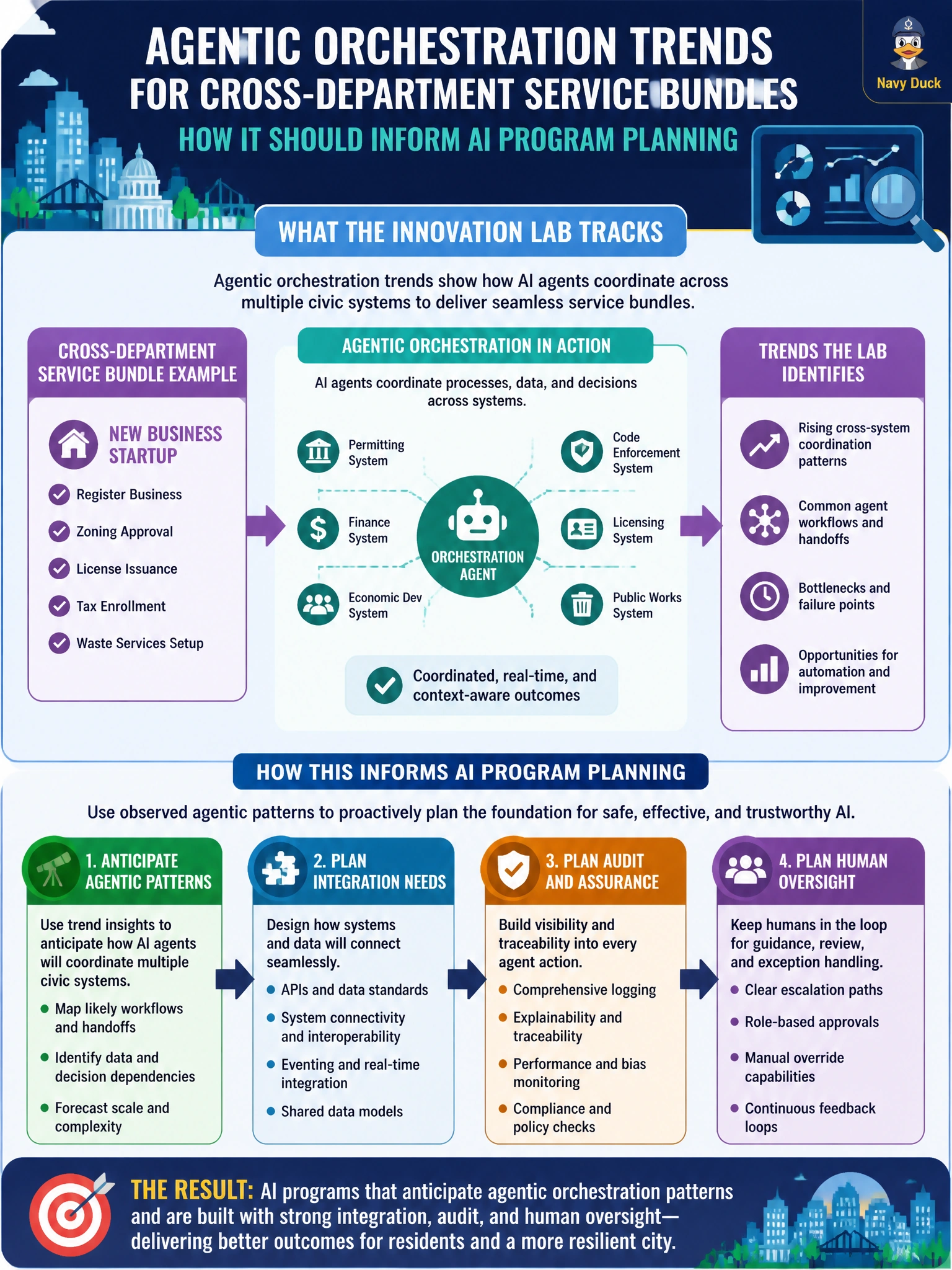
Imagine a concierge that talks to permits, utilities, and 311 in one breath—that is the agentic bundle buzz. Plan the plumbing and the adult supervision now, not after a flashy demo wires itself into half the city.
Full Explanation
Agentic orchestration trends for cross-department service bundles matter because real resident journeys often span permits, utilities, benefits, and 311. AI program planning should anticipate patterns that coordinate multiple civic systems, then deliberately design integration architecture, identity and authorization, end-to-end audit logging, and human oversight for consequential steps. Scanning the trend informs roadmaps and controls; it does not authorize ungoverned automation across city hall. Ignoring agentic trends because municipal services never span departments denies lived cross-agency reality that residents experience daily. Replacing the entire ERP overnight with an ungoverned multi-agent swarm is reckless concentration of operational and financial risk. Treating agent demos as proof that DataOps and governance are obsolete inverts priorities—agents increase the need for reliable data, clear permissions, and oversight. Exam caveat: trend awareness should drive control design and staged integration, not deregulation or big-bang replacement fantasies. Operational check: map candidate multi-system journeys, require tool allow-lists and step-level logs, keep human approval on entitlement and payment actions, stage pilots behind non-production connectors, and expand only after identity, audit, and rollback proofs satisfy municipal risk owners.